Security | Threat Detection | Cyberattacks | DevSecOps | Compliance

What the Convergence of Security and Operations Means for Your Organization

These are incredibly exciting times at Devo, as we continue to help customers solve their ever-growing security and analytics challenges. Our market momentum is continuing, as Devo was recently recognized with a CISO Choice award as the best SIEM solution, earned a place on the 2020 Deloitte Technology Fast 500, and was named a Leader in The Forrester Wave™: Artificial Intelligence For IT Operations, Q4 2020.


The 2025 Playbook for Securing Sensitive Data in LLM Applications

Organizations worldwide are racing to deploy large language models for competitive advantage. Yet most executives remain unaware of the hidden security risks lurking within their AI systems. A single misconfigured LLM can expose customer data, violate regulations, and destroy years of trust-building efforts. Securing sensitive data in LLM applications requires more than traditional cybersecurity approaches. These AI systems present unique vulnerabilities that demand specialized protection strategies.

Why VPNs on mobile devices are a crucial part of securing access to corporate data

Securing access to business resources has always been of high priority for admins and IT teams. In the wake of the pandemic, workforces are more distributed than ever before, and 76 percent of global office workers state that they would like to work from home even when the pandemic is over.

Could electric vehicles present a Cybersecurity risk to the grid?

With many countries now participating in the Paris Agreement to address climate change, coupled with the rising popularity of electric vehicles, it is expected that 125 million electric cars will be on the road worldwide by 2030. But these cars, although beneficial to the environment, come with cybersecurity risks. According to experts, security concerns should be addressed before a massive rollout of electric vehicles take place.

2021 Predictions: The Year that Cloud-Native Transforms the IT Core

Continued Kubernetes adoption, unified authorization, DevSecOps redefined, open source dominance and more key changes for the enterprise Amid a year of unprecedented global change, it may seem incautious at best to make confident predictions about the future of cloud-native business. However, there are strong indications of the trends that 2021 will hold — precisely because they are predicated on significant enterprise change.

What is the best way to protect my PHP code?

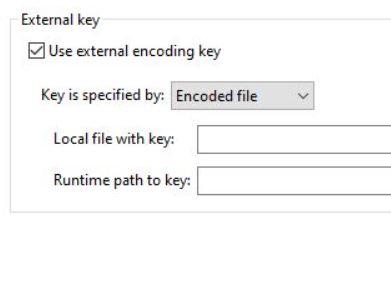
The simple answer is to use a compiled code tool and implement as many security features as possible, but sometimes time can be a factor and other matters take precedence so less time goes into security. If your code is valuable then you really should spend time adding more layers of code protection (obfuscation, script licensing, encryption) and there is one feature in particular which sets ionCube apart from other tools, offers advanced protection for your PHP code and is fairly quick to setup.

Nature vs. Nurture Tip 2: Scan Frequently and Consistently

In our first blog in this series, Nature vs. Nurture Tip 1: Using SAST With DAST, we discussed how this year’s State of Software Security (SOSS) report looked at how both “nature” and “nurture” contribute to the time it takes to close out a security flaw. We found that the “nature” of applications – like size or age – can have a negative effect on how long it takes to remediate a security flaw.

4 Things a Good Vulnerability Management Policy Should Include

Organizations face an ever-evolving threat landscape. With this in mind, it is imperative that organizations keep an up-to-date vulnerability management policy for remediating and controlling security vulnerabilities that may lead to a breach. A good vulnerability management policy should contain the following.

Customized Autoscaling: Minimize Your Cloud Cost

Kubernetes clusters have become the go-to solution for hosting applications in the cloud. Most cloud providers offer Kubernetes services, such as the Azure Kubernetes Service (AKS), Amazon Elastic Kubernetes Service (Amazon EKS), or Google Kubernetes Engine (GKE). But are you spending too much on compute resources in the cloud? Is your load pattern complex and difficult to predict? Is the load growing inconsistently or are you running applications on-demand that could cause sudden bursts?