Organizations keep their databases behind firewalls for a reason: the data inside is the data they can least afford to lose. A new class of AI middleware–Model Context Protocol (MCP) servers–exists specifically to reach into those protected systems on an AI model's behalf. One of them, DBHub, connects directly to SQL databases.
Phishing sites now live for under 24 hours. By the time a manual review cycle completes, the credential harvesting is done. That window is why threat intelligence automation has moved from a nice-to-have to an operational necessity for security and fraud teams managing external threats. Threat intelligence automation solves the prioritization problem by enriching raw signals before they reach analysts.
Healthcare cybersecurity is usually discussed in terms of patient data and regulations like HIPAA. But software teams in healthcare need to protect the development layer with the same rigor. After an incident, teams need a trusted record of the codebase and the project context around it. Without this safeguard, they’re guessing at what changed and what’s safe to restore.
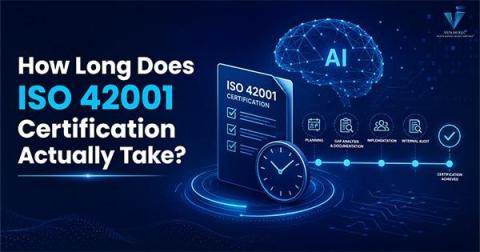
ISO 42001 certification usually takes four to twelve months. This runs from the gap assessment to the certificate. For a 50 to 200-person organization, first-year costs are about $85,000 to $150,000. Businesses with an existing ISO 27001 system can often certify in three to four months. This guide is for compliance and AI leaders planning an ISO 42001 project. It gives a realistic timeline and budget, not a vendor’s best-case pitch.
Security teams today face an overwhelming volume of alerts, making it increasingly difficult to distinguish genuine threats from everyday noise. As attackers become more adept at blending into legitimate activity, organizations need smarter ways to prioritize, investigate, and respond.
AI has swiftly shifted from a browser-based chat interface to an autonomous actor operating within enterprise environments. Agents run locally on endpoints, inherit employee permissions, access sensitive data in bulk, and execute multi-step workflows with no human approving each step. That shift fundamentally changes the enforcement surface. The governance programs most organizations have built were designed for a different model: one user, one prompt, one decision.
Nine seconds. One API call. A car rental software company’s production data was gone. That’s the headline from the PocketOS incident, and it’s the reason this story spread across engineering and security circles the way it did in late April. Two months later, the incident is no longer breaking news. But it hasn’t aged out of relevance; it has aged into a pattern.
In the March / April 2026 AV-TEST Advanced Threat Protection evaluation, Acronis Cyber Protect Cloud once again earned Advanced Approved Endpoint Protection certification with a perfect 35 out of 35 protection score. The result was achieved in testing against advanced ransomware and infostealer attacks on Windows 11, where Acronis successfully defended against all 10 attack scenarios evaluated by AV-TEST.
Bot mitigation is an adversarial game: attackers adapt, defenders respond, and the cycle continues. At Cloudflare, we stay ahead by combining visibility across our global network with signals from the client-side environment. At the network level, we analyze over 1 trillion requests per day to understand reputation, patterns, and anomalies across more than 20% of the web.