Security | Threat Detection | Cyberattacks | DevSecOps | Compliance

The Evolving Landscape of Cybersecurity: Why Risk Management Is More Important Than Ever

In today's interconnected business world, every organization relies on a network of partners - from software providers and payment processors to data storage and cloud services. While this interconnectedness drives innovation and efficiency, it also introduces serious cybersecurity risks. A single vulnerability in your vendor ecosystem can open the door to data breaches, ransomware attacks, and compliance failures.

How to Detect and Mitigate Common Active Directory Attacks

Active Directory is the heart of enterprise identity and access management, and its crucial role makes it a target for hackers looking for control, persistence, and privileged access. The fact that AD is central to organizational functions makes proactive, multi-layered, and intelligence-driven security strategies a must in order to ensure it is always able to withstand even the most sophisticated, continuously evolving threat actors.

Browser Agent Security Risk - ChatGPT Atlas Corporate Adoption Trends

Last Tuesday, October 21st, OpenAI released ChatGPT Atlas, an AI-powered browser that allows users to interact with ChatGPT directly from any browser tab. Throughout last week, the Cyberhaven Labs team tracked its adoption in corporate environments and actively investigated its security vulnerabilities.

The Howler Episode 23 - Matthew Trushinski, Vice President of Product Marketing

This month we sit down with Matthew Trushinski, Vice President of Product Marketing, as he shares how he cultivates creativity & innovation within himself and his team, skills he thinks all product marketers should have, and so much more! Matthew Trushinski has a diverse technology marketing background including carrier networks, IoT, smart cities, AI and security. As the Vice President of Product Marketing for Arctic Wolf, he works with customers and prospects to improve their security operations.

PCI DSS 4.0.1: A Field Guide to Requirements 6.4.3 & 11.6.1

By the time you reach PCI DSS 4.0.1 Requirements 6.4.3 and 11.6.1, the easy wins are behind you. This is the point where compliance turns into configuration. Tag managers, consent scripts, and payment flows all intersect here, and the guidance feels just vague enough to slow everything down. Which tag rules belong in scope? How do you prove a script was authorized? What’s the right way to detect a change without flooding alerts?

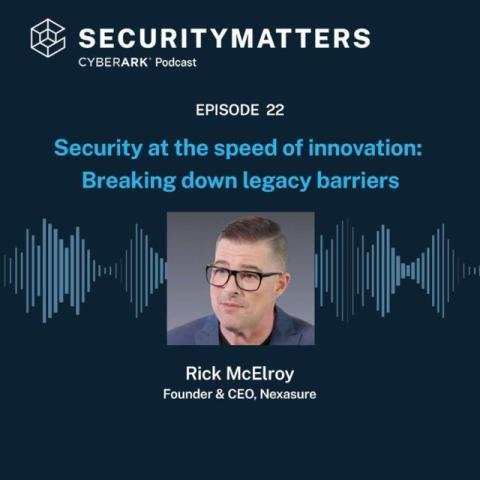
EP 18 - The humanity of AI agents: Managing trust in the age of agentic AI

In this episode of Security Matters, host David Puner sits down with Yuval Moss, CyberArk’s VP of Solutions for Global Strategic Partners, to explore the fast-evolving world of agentic AI and its impact on enterprise security. From rogue AI agents deleting production databases to the ethical blind spots of autonomous systems, the conversation dives deep into how identity and Zero Trust principles must evolve to keep pace. Yuval shares insights from his 25-year cybersecurity journey, including why AI agents behave more like humans than machines—and why that’s both exciting and dangerous.

When AI Joins the Cybercrime Underworld: How Far Ahead Are Hackers Now?

In this week's episode, discover how AI-driven attacks are rewriting the rules of cybersecurity. Phishing is nearly impossible to spot, deepfakes target companies, and self-evolving malware is changing the game. Meet the new adversary: artificial intelligence. Watch the full discussion in this week's show.

Meet Jit's AI Agents: The Future of Product Security Work

Application security has become too complex — too many scanners, too much noise, and not enough time. Jit’s AI Agents change that. Built on Jit’s Agentic ASPM Platform, these intelligent agents don’t just detect issues — they think like your best AppSec engineer. They correlate findings across systems, validate real attack paths, generate human-in-the-loop fixes, and continuously monitor what actually matters to your business.

Continuous PCI DSS Compliance with File Integrity Monitoring

PCI DSS compliance is often seen as a one-off task, that is, you do the audit, implement controls, and then move on. But then there comes the problem - systems aren’t static, meaning that files, scripts, and configurations change constantly, and even small untracked changes can create gaps that lead to non-compliance or security issues. This is where File Integrity Monitoring (FIM) comes in.

5 Essential Steps to Strengthen Kubernetes Egress Security

Securing what comes into your Kubernetes cluster often gets top billing. But what leaves your cluster, outbound or egress traffic, can be just as risky. A single compromised pod can exfiltrate data, connect to malicious servers, or propagate threats across your network. Without proper egress controls, workloads can reach untrusted destinations, creating serious security and compliance risks.