Security | Threat Detection | Cyberattacks | DevSecOps | Compliance

What Is SOC (Security Operations Centre) and Does Your Business Need One?

A security operations centre (SOC) is the team that watches your systems around the clock and steps in when an attacker gets past your defences. Its job is to find intruders quickly and contain them before reaching anything critical. Few businesses have their own in-house SOC. Most get the same 24/7 cover from a managed SOC, run by a specialist provider. Either way, what happens in the first few hours of an attack determines how much damage is done.


Top-Down vs Bottom-Up Cyber Risk Quantification

Run both approaches against one company and the figures differ, which is expected. The useful part is that they differ in a predictable direction, which makes the distance between them informative rather than embarrassing. ‍ Bottom-up tends to come in lower and top-down higher, for reasons that follow from how each is built. Knowing which way each one leans is more useful than choosing between them. ‍

What an AI Agent Registry Should Record

Seven fields carry an agent registry, and they split into two kinds. Some a person has to state, because the answer exists only in somebody's intention. The rest can be read from systems that already hold them. ‍ Which kind each field belongs to decides whether the registry drifts. Typing an observable value creates a record that was accurate on the day somebody typed it, and recording a declared value is the only way to capture it at all. ‍

What is remote code execution (RCE)? How AI speeds up exploitation and how to limit the damage

Remote code execution (RCE) lets an attacker run commands on a system they don't own, usually through a flaw in a web application, CMS, VPN portal, or API. A successful exploit inherits the permissions of the vulnerable service, and many services run with far more access than they need. AI shortens the time from a disclosed flaw to a working exploit and lets attackers test thousands of exposed systems at once. A remote code execution flaw turns a vulnerable server into someone else's computer.

How to conduct a data risk assessment that drives action

A data risk assessment evaluates where sensitive data lives, who can reach it, and what happens if that access is misused. It creates value only when teams assign and track remediation; without current access data and live verification, organizations can't show that exposure has fallen. 75% of sensitive data exposures begin with compromised identities or misconfigured permissions, according to the Netwrix 2026 Data and Identity Security Report.

Sophos Firewall: DNS enhancements

Sophos Firewall v23 brings new DNS enhancements including DNS-over-HTTPS (DoH) support, DNS security extension (DNSSEC) support, and one-click Secure DNS set up, made possible through native integration with Sophos Fusion. Learn about the new enhancements and the steps to set up Secure DNS Protection, third-party DNS services, and DNSSEC protection. Ask questions and get expert answers in the Sophos Community.

Controllers vs processors vs subprocessors: All you need to know

Accelerating security solutions for small businesses‍ Tagore offers strategic services to small businesses. A partnership that can scale‍ Tagore prioritized finding a managed compliance partner with an established product, dedicated support team, and rapid release rate. Standing out from competitors‍ Tagore's partnership with Vanta enhances its strategic focus and deepens client value, creating differentiation in a competitive market.

Cato DEM Root Cause Analysis: Find What's Slowing Down Your Applications

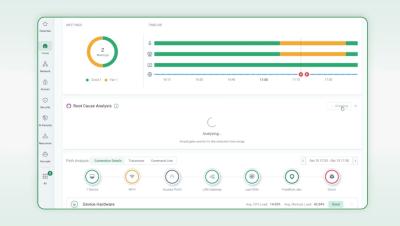
When users report slow application performance, where do you start troubleshooting? The Wi-Fi, ISP, network, or application itself? With Cato Digital Experience Monitoring (DEM), IT teams can move beyond guesswork and identify the root cause of performance issues using evidence from across the user-to-application path. In this demo, a user reports slow Zoom performance at a branch location. Watch how Cato DEM Root Cause Analysis investigates the issue, examines latency, jitter, and packet loss, and identifies the branch wireless LAN as the source of the slowdown. See how Cato DEM helps IT teams.