Security | Threat Detection | Cyberattacks | DevSecOps | Compliance

Quantum Computing and the Future of Security: What Teams Should Understand Now

Quantum computing is one of the most hyped topics in technology, and for security professionals it carries a particular weight. Beyond the general excitement about a new kind of computing lies a specific and serious question: what will quantum computers mean for the security we rely on today? Much of the encryption that protects data, communications, and systems rests on mathematical problems that ordinary computers cannot solve in any practical amount of time. Quantum computers, at least in principle, could one day solve some of those problems, which would have real consequences for security.
DMARC Explained: How to Stop Attackers From Impersonating Your Domain

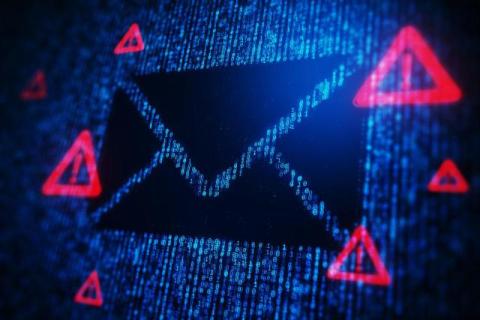
Email is still the most common way attacks begin. Phishing, business email compromise, and brand impersonation all rely on one simple weakness: by default, anyone can send an email that claims to come from your domain. The protocol that email runs on was never built to verify who a sender really is, so a criminal can forge the "From" address to look exactly like it came from your company, and the receiving mail server has no built-in way to know the difference. That is the gap attackers exploit, and it is the gap DMARC was designed to close.

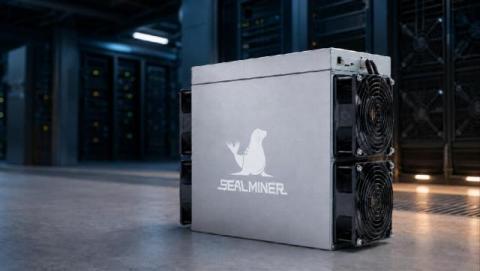
Global Bitcoin ASIC Miner Benchmark 2026: Comparing Efficiency and Rack Density Across Leading Models

In 2026, Bitcoin mining hardware is no longer judged by nameplate hashrate alone. As hashprice compresses and network difficulty rises, Bitcoin ASIC efficiency increasingly determines how long a machine can remain above its shutdown price. Yet J/TH is only the starting point. The power efficiency ratio shapes miner-side electricity demand, while mining rack density determines how much usable hashrate a facility can extract from limited power, cooling capacity and rack space.

From Signal to Story Turning Threat Noise into Board Ready Answers

62% of security leaders can't tell their board whether they're actually getting safer. See how Threat Posture turns thousands of external signals into one board-ready narrative, with the evidence trail attached. Want to learn more? Check out our Interested in finding out more about UpGuard?

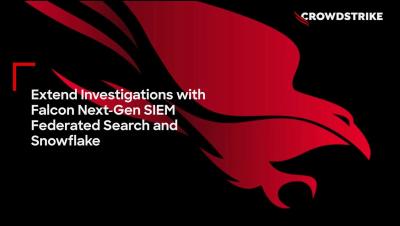
Extend Investigations with Falcon Next-Gen SIEM Federated Search and Snowflake

See how CrowdStrike Falcon Next-Gen SIEM Federated Search extends investigations to security data stored in Snowflake without requiring the entire dataset to be ingested into the SIEM. In this demo, an analyst pivots from suspicious endpoint activity in Falcon to Corelight network telemetry retained in Snowflake. Using remoteTable(), the analyst searches the remote data directly from Advanced Event Search, retrieving only the context needed to investigate the affected host and understand the broader scope of the incident.

Employee Investigations: How to Close the Digital Evidence Gap

Your DLP flags a sensitive file transfer. Your SIEM identifies unusual activity. Your EDR detects an event on an employee’s endpoint. Your security tools did their job. They told you something happened. But now comes the harder question: What actually happened? That is where many employee investigations encounter a visibility gap.