Security | Threat Detection | Cyberattacks | DevSecOps | Compliance

The Blind Spot in Brand Protection: Why App Stores Slip Past Standard Monitoring

Most brand protection solutions rely on one assumption: scam activity happens on the open web. Security teams focus on catching fake domains, social profiles, marketplace listings, paste sites, and dark web forums. While that covers a lot of ground, it leaves out a major risk: the official app stores.

The Evidence Is In: UpGuard Named a Leader in the IDC MarketScape for Worldwide Third-Party Risk Management

UpGuard Vendor Risk was built around the idea that third-party risk management (TPRM) works better when continuous risk intelligence and full lifecycle workflow execution live in the same system. That commitment has earned recognition from one of the most respected analyst firms in the industry. The IDC MarketScape model assesses vendors on both current capabilities and future strategies.

The Human Side of Cyber Resilience: What's Often Overlooked Before a Crisis

Organizations spend considerable time preparing for the technical realities of a cyber incident. Detection capabilities, containment procedures, recovery plans and governance structures are all essential. Yet many of the factors that shape the success of a response have little to do with technology. The most effective incident response programs recognize that cyber resilience is shaped as much by people as technology.

Remote Work Security & Endpoint DLP: How to Prevent Exfiltration on Distributed Laptops

The corporate security perimeter has changed. An employee’s company laptop could easily arrive at work on a Monday morning connected to a home Wi-Fi network, then land in a hotel or workspace at noon on a Tuesday and work away from a hotspot on Wednesday. That leaves corporate data outside the reach of traditional IT and security controls.

What Is Cybersecurity? Types, Threats, and Best Practices

As more businesses are becoming dependent on technology, the role of cybersecurity is more crucial than ever. With so many systems and applications in use, it is difficult to manage and protect devices and data against cyberattacks and unauthorized access. No single tool or team can secure an organization alone. Businesses today use cloud platforms, third-party applications, and remote endpoints, which increase the attack surface.

Graphalgo campaign spreads to Terraform providers and Go Modules

We’ve identified Go malware distributed via at least two Terraform providers and at least two Go Modules. This is the first time we’ve observed malware distributed via Terraform providers. The following packages contain the malware: The malware overlaps with the Graphalgo NPM malware campaign, first reported by ReversingLabs in February 2026, and also reported on in the last week by Safedep, CheckMarx, and JFrog.

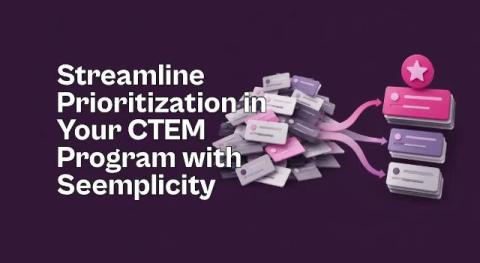
Streamline Prioritization in Your CTEM Program with Seemplicity

Prioritization in CTEM is the process of determining which exposures should be addressed first based on the risk they pose in your specific environment. Rather than relying on severity scores alone, effective prioritization combines internal business and asset context with external threat intelligence, then focuses teams on the fixes that reduce the most meaningful risk.

6 Best Server Virtualization Platforms for Financial Services

Financial services teams don't have room for downtime or loose audit trails - server virtualization has to hold up under both. But the pressure points are predictable: VM sprawl quietly eats resources, licensing gets tangled across changing environments, and high-density workloads expose weak spots fast. We reviewed platforms across deployment scale, performance consistency, and enterprise adoption to narrow it down to six worth considering for financial services environments.