
6 Best Server Virtualization Platforms for Financial Services

Image Source: depositphotos.com
Financial services teams don't have room for downtime or loose audit trails — server virtualization has to hold up under both. But the pressure points are predictable: VM sprawl quietly eats resources, licensing gets tangled across changing environments, and high-density workloads expose weak spots fast.
We reviewed platforms across deployment scale, performance consistency, and enterprise adoption to narrow it down to six worth considering for financial services environments.
Methodology
Rankings are based on publicly available data — official product pages, case studies, and user reviews — limited to vendors with a documented track record in cloud infrastructure. [See the full research breakdown →]
The 6 Best Platforms, at a Glance
- Sangfor — Best for enterprise cloud infrastructure and network security
- Scale Computing — Best for edge computing and hyperconverged infrastructure
- Proxmox — Best for enterprise virtualization and infrastructure management
- VergeIO — Best for private cloud infrastructure consolidation and VMware replacement
- Nutanix — Best for enterprise hybrid multicloud infrastructure
- VMware — Best for enterprise cloud infrastructure and app modernization
Why the Platform Choice Matters
Picking the wrong one doesn't just slow things down — it compounds across your VM-to-host consolidation ratio, your mean time to provision, and your ability to stay ahead of uncontrolled resource consumption.
For financial services specifically, any dip in performance under high-density workloads puts availability SLAs at risk — and compliance teams don't forgive that easily.
The right platform keeps hypervisor CPU and memory overhead low, makes provisioning predictable, and gives infrastructure teams visibility without adding management overhead. That's not easy to get without choosing deliberately.
-
Sangfor - Best for Enterprise Cloud Infrastructure and Network Security
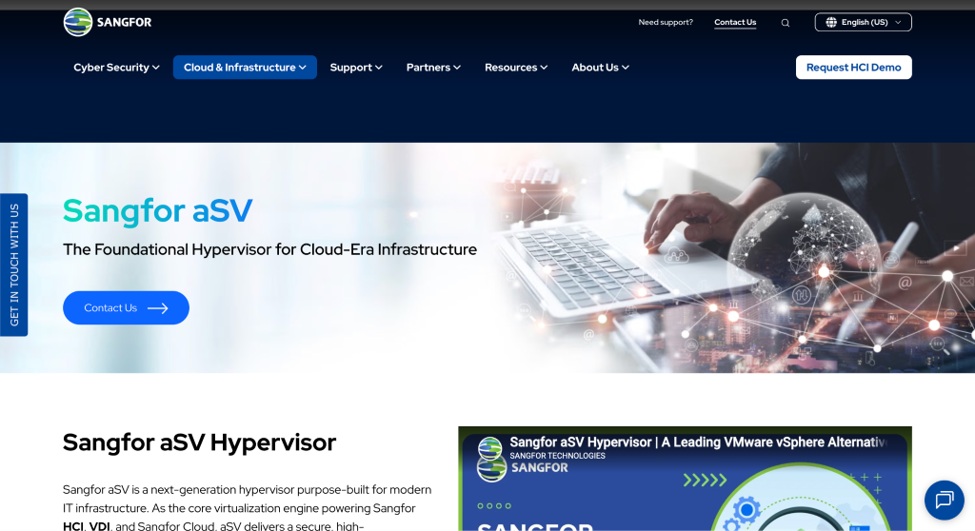
How Is Sangfor Different?
Sangfor Technologies has been building cloud and network security products since 2000, and that depth shows across the product lineup. Their ASV hypervisor sits inside a broader stack covering HCI, VDI, firewall, endpoint protection, and advanced threat detection through XDR and MDR. For financial services teams, having virtualization and security in one vendor relationship is genuinely useful rather than a marketing convenience. They put at least 20% of yearly revenue into R&D across five global centers, which keeps their quarterly product releases from feeling stale.
What Sets Sangfor Apart for Server Virtualization Platforms?
Financial services infrastructure needs security built into the virtualization layer, not added on afterward, and Sangfor's approach addresses exactly that gap. With over 3,000 patent applications and a publicly listed track record since 2018, they bring the kind of institutional accountability that enterprise procurement teams actually care about.
Reviews
Customers consistently point to Sangfor's support network as a real differentiator (500+ service technicians globally is not a small bench). The 2023 Frost & Sullivan APAC Company of the Year Award and the 2024 Cybersecurity Excellence Awards recognition both reflect a pattern that goes beyond marketing. Feedback across enterprise deployments tends to focus on how well the platform holds up under production pressure, not just in demos.
-
Scale Computing - Best for Edge Computing and Hyperconverged Infrastructure
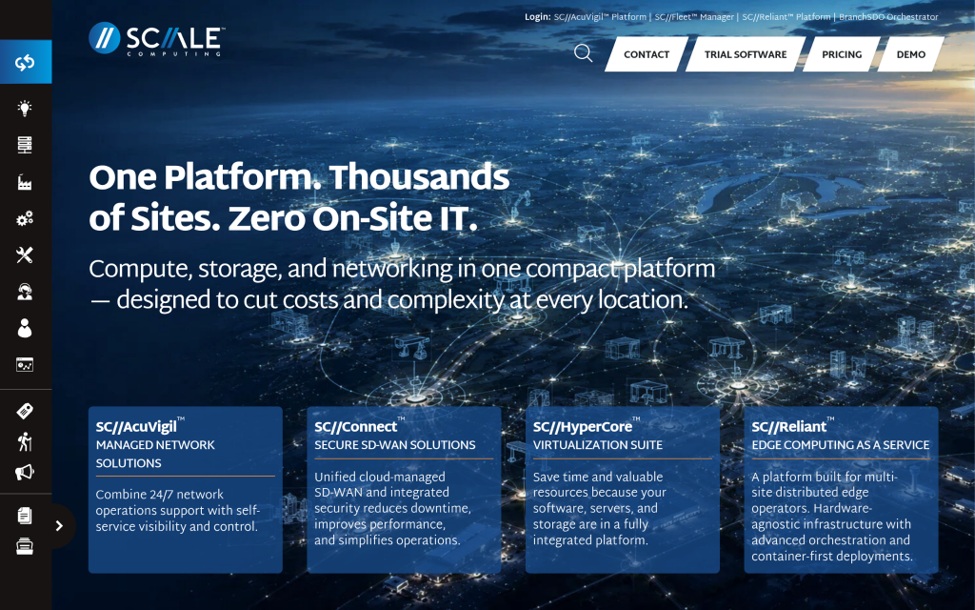
How Is Scale Computing Different?
Scale Computing built its reputation around making hyperconverged infrastructure work at the edge, and their HyperCore technology is the reason why. The platform automatically identifies, mitigates, and corrects infrastructure problems in real time without manual intervention. That self-healing capability matters a lot for distributed financial services environments, where a branch location going dark is not just an IT problem but a business and regulatory one. Their system scales from one location to 50,000, which is a range few competitors can credibly claim.
What Sets Scale Computing Apart for Server Virtualization Platforms?
Scale Computing solves the problem of managing distributed infrastructure without needing large on-site IT teams at every location, which is a real constraint for regional financial services branches. Their recognition as the number one edge computing vendor by CRN reflects genuine market validation, not just strong marketing.
Reviews:
Scale Computing's customers tend to mention reliability and low operational overhead as the standout qualities. The self-healing infrastructure piece gets mentioned repeatedly in case studies across transportation and retail, industries that share the same availability pressure financial services teams face. That kind of cross-industry proof is reassuring.
-
Proxmox - Best for Enterprise Virtualization and Infrastructure Management
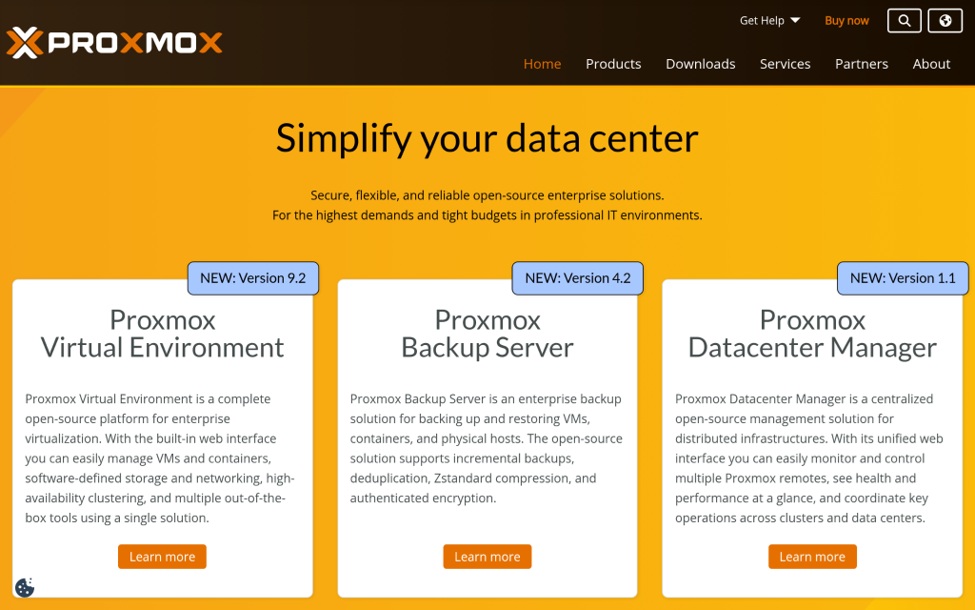
How Is Proxmox Different?
Proxmox takes an open-source approach to enterprise virtualization that a lot of financial services teams find refreshing after years of proprietary licensing bills. Their platform combines KVM hypervisors and Linux containers with an integrated web interface, and they've paired it with Proxmox Backup Server and Proxmox Datacenter Manager for a genuinely unified management experience. Managing 1.5 million hosts globally across 60,000+ enterprise support plans puts them in territory most open-source projects never reach. Their claim that roughly 95% of VMware setups can migrate to their platform is worth paying attention to for teams evaluating exit strategies.
What Sets Proxmox Apart for Server Virtualization Platforms?
For financial services organizations watching licensing costs climb, Proxmox addresses the tension between capital expenditure on proprietary hypervisors and the operational reliability of open-source alternatives. Their 1,000+ reseller network across 142 countries and a community of over 200,000 members means support resources are genuinely accessible, not just theoretical.
Reviews:
Feedback around Proxmox tends to split between two groups: teams migrating from VMware who are pleasantly surprised by how smoothly the transition runs, and existing users who stay because of the active community and commercial support combination. Telecom and web hosting deployments get referenced most often, but municipal data center use cases show the platform handles compliance-sensitive environments reasonably well.
-
VergeIO - Best for Private Cloud Infrastructure Consolidation and VMware Replacement
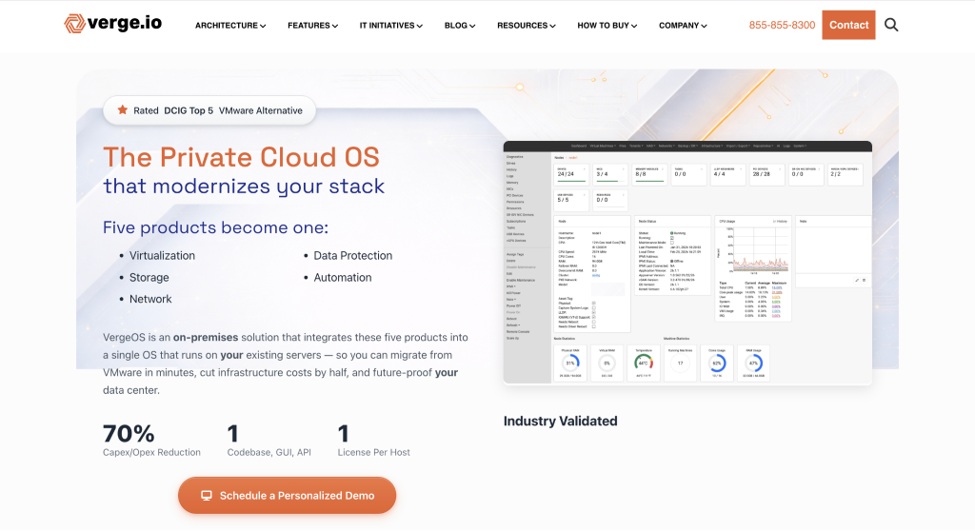
How Is VergeIO Different?
VergeIO takes a different angle from most vendors by building everything into a single operating system rather than stitching together separate products for virtualization, storage, networking, and data protection. Their VergeOS platform runs on existing x86 hardware, which removes the SAN dependency that makes infrastructure refreshes so expensive (and so politically complicated inside large organizations). Infrastructure-wide deduplication and distributed file system capabilities are built in, not add-ons. For financial services teams running ransomware exposure assessments, the built-in data protection layer is worth paying close attention to.
What Sets VergeIO Apart for Server Virtualization Platforms?
VergeIO directly addresses the cost and fragmentation of infrastructure stacks, with documented cases of organizations cutting both capital and operational expenditure by up to 70%. The fact that Kit Colbert, former Chief Technology Officer of VMware, invested in the company and joined its board adds a layer of technical credibility that's hard to manufacture.
Reviews:
Customers who've moved from VMware to VergeOS frequently mention how much simpler day-to-day management feels after the migration. The DCIG Top 5 VMware Alternative rating and the Most Innovative Startup recognition from FMS both point to a platform that earns its reputation through actual performance, not just positioning.
-
Nutanix - Best for Enterprise Hybrid Multicloud Infrastructure
How Is Nutanix Different?
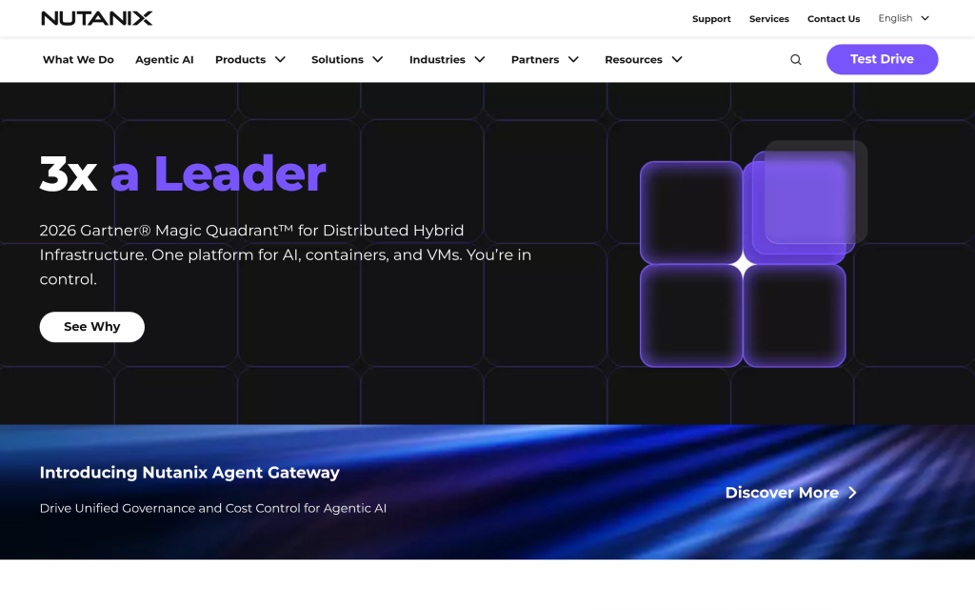
Nutanix built its product around the idea that compute, storage, and networking shouldn't require separate purchasing conversations, and their subscription-based Cloud Platform reflects that. Their bundled AHV hypervisor comes at no extra cost, which changes the total cost math significantly for financial services teams used to paying separate hypervisor licensing fees. The platform supports hybrid multicloud environments across data centers, edge locations, and public clouds, and it handles Kubernetes alongside traditional VM workloads. London Gatwick Airport and Edward Jones both run on Nutanix, which signals real enterprise-grade deployability.
What Sets Nutanix Apart for Server Virtualization Platforms?
Nutanix solves the licensing complexity problem by consolidating everything into one subscription, which makes budget forecasting much cleaner for financial services procurement. Their 2026 Gartner Magic Quadrant Leader recognition for Distributed Hybrid Infrastructure is a meaningful signal, not just a badge to display on the website.
Reviews:
Feedback around Nutanix consistently highlights cost savings and response time improvements as the two most frequently cited outcomes. References to $1.6M in annual savings and 90% improvements in response times come up in documented client cases, and those numbers reflect real deployment results rather than best-case projections. The platform earns strong marks for day-two operations, not just initial deployment.
-
VMware - Best for Enterprise Cloud Infrastructure and App Modernization
How Is VMware Different?
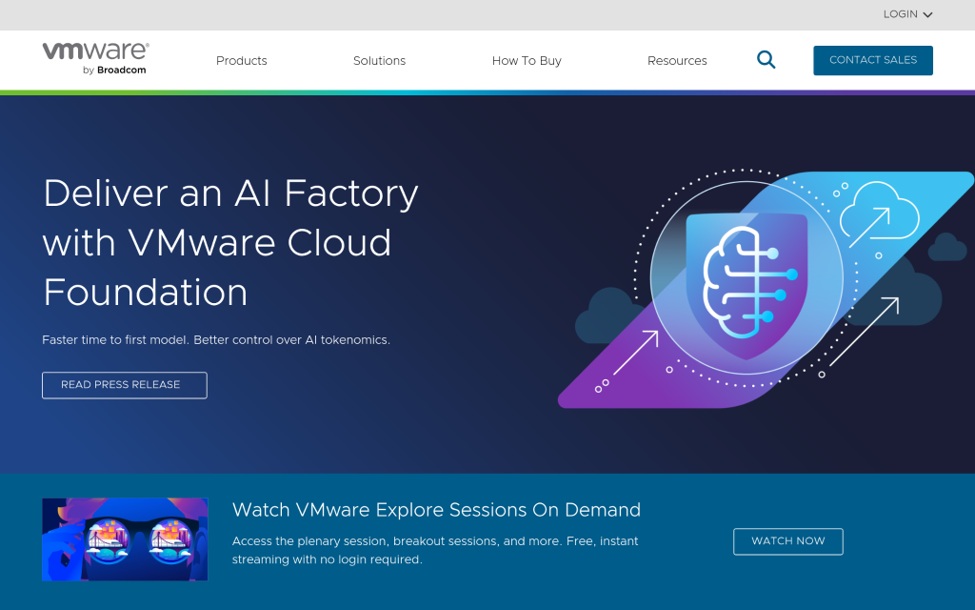
VMware pioneered commercial x86 virtualization and has spent over two decades deepening that foundation into a full cloud infrastructure stack. Their portfolio covers cloud infrastructure, app modernization, networking, security, and digital workspace management, so financial services teams can address multiple infrastructure layers through one vendor relationship. Over 99% of Fortune 1000 companies run VMware in some capacity (not cheap, but clearly trusted at scale), and clients like Zoom and Moderna rely on their platform for mission-level workloads. Following the 2023 Broadcom acquisition, the product direction continues to shift, which is worth watching closely.
What Sets VMware Apart for Server Virtualization Platforms?
VMware carries more than 5,000 patents and the kind of enterprise trust that comes from decades of production deployments across virtually every industry. For financial services teams that need a platform with deep ecosystem support and broad hardware vendor certifications, VMware's position in the market reflects that depth.
Reviews:
VMware's long-standing customer base tends to cite ecosystem maturity and third-party integration depth as the reasons for staying. Post-Broadcom acquisition, there's more conversation in review forums about licensing changes and pricing shifts, so teams evaluating VMware right now should factor that into the total cost conversation. The platform's technical reputation remains strong.
Methodology Behind These Picks
Gathering Information From Your Sources
The research process started by pulling together a broad list of server virtualization platforms from multiple sources, including vendor directories, technical review platforms, community forums, and official product documentation. Case studies from enterprise deployments were treated as important signals, since they reflect real-world conditions rather than feature sheets. Platforms with limited public-facing documentation or no verifiable deployment history were set aside early in the process.
The Shortlist Cut
After building the initial list, options without a verifiable presence in cloud infrastructure environments were removed. Review patterns across multiple platforms were analyzed for consistency, not just volume. A platform with 20 detailed, experience-based reviews carries more weight than one with 200 shallow ratings. Options that showed inflated or inconsistent review profiles were filtered out at this stage, regardless of brand recognition.
Fact-Checking the Picks
Each platform's product claims were cross-referenced against independent user accounts and publicly documented deployment outcomes. Where a vendor described specific performance gains or migration capabilities, those claims were checked against third-party case studies and community discussions. Gaps between marketing claims and documented results were noted and factored into the final assessment.
Authority Signals and Industry Standing
Industry recognition was evaluated as a supporting signal rather than a main criterion. Awards from credible bodies like Gartner, Frost & Sullivan, and CRN were weighed against the context in which they were awarded. Original research contributions, hardware vendor certifications and ecosystem partnerships, and mentions in technical publications all fed into how each platform's standing was assessed within the broader infrastructure community.
Server Virtualization Platforms Track Record
Each platform was assessed for evidence of deployment in server virtualization contexts. This included dedicated service pages covering VM management, live migration, high availability, and storage integration, as well as verified reviews from infrastructure architects and data center administrators. Case studies showing proof-of-concept to production deployment outcomes were given particular weight, since financial services environments require confidence in the path from testing to live infrastructure.
Picking the Right Server Virtualization Platforms for You
Choosing between six solid options gets easier once you know which variables matter most for your specific environment. Financial services infrastructure has its own set of constraints, so the right answer for a regional bank looks different from the right answer for a global asset manager. Here's where to focus.
- Industry/Domain Experience: Look for platforms with documented deployments in regulated, compliance-sensitive environments. A vendor who has worked through air-gapped environments, government or defense constraints, or export-controlled deployments understands the stakes involved.
- Features and Service Offerings: Match the platform's capabilities to your actual workload mix. If you're running high VM density across distributed locations, edge computing capabilities matter. If consolidation is the goal, look at VM-to-host consolidation ratios and live migration track records.
- Pricing Structure: Open-source platforms like Proxmox change the licensing math significantly. Subscription models like Nutanix simplify forecasting. Proprietary options like VMware carry deeper ecosystem depth but require honest total cost conversations, especially post-acquisition.
- Results Measurement: Ask vendors for real recovery time objective and recovery point objective data from comparable deployments, not benchmark conditions. VM availability percentages and mean time to provision a new VM should come with supporting evidence.
- Industry Knowledge and Compliance: Platforms operating in financial services need familiarity with NIST, CIS Benchmarks, SOC 2, and ISO 27001 at a minimum. Check whether the vendor's documentation and support teams actually speak that language or just reference it in marketing materials.
The Verdict
Server virtualization platform selection in financial services comes down to three things: how well the platform handles VM density under real production loads, whether the licensing model fits your budget structure long-term, and how deeply the vendor understands regulated environments. Each of the six platforms here brings something distinct. The space is moving fast, particularly around private cloud consolidation and open-source alternatives to legacy hypervisors, so teams that evaluate deliberately now will be much better positioned as those shifts continue.