
How Surf AI Is Bringing Agentic AI to Everyday Security Hygiene
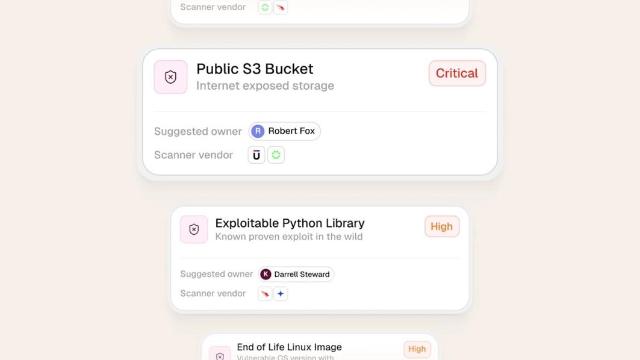
Those stale accounts aren't ready to close just because you've found them. Before giving the go-ahead, the approver needs evidence about the business processes affected by the change; the owner's details sit in another system. Even with those exposures on your team's radar, the handoff delays keep them open and leave asset records you can't trust. A ticket alone doesn't complete the handoffs needed before a change can be made. The owner's approval is still required to disable an account, even as Surf AI's agentic operations move cleanup past handoff delays.
For security teams, Surf.ai is an AI-powered agentic operations platform. Surf AI connects scattered security context and uses specialized AI agents to close exposures end to end while keeping teams in control.
Why Manual Security Hygiene Falls Behind
Detection leaves work to do. An exposure can't be closed until someone finds the affected asset's owner and checks what a configuration change would do. IT can't schedule the patch listed in a vulnerability ticket without the service owner's approval when that approval is required. Disabling an account flagged by an identity finding may need a manager's confirmation. An issue can sit untouched with either handoff stuck in the approval queue.
In Verizon’s Data Breach Investigations Report, vulnerability exploitation as an initial access method increased 180% year over year and accounted for 14% of breaches covered by the report. Once patches became available, organizations needed an average of 55 days to remediate half of their critical vulnerabilities.
Those findings give you a reason to watch the remediation queue after detection. Blaming manual work for every delay goes beyond those findings. The exposure remains accessible to attackers while your team waits for a change window or searches for the owner's details.
Next comes another owner handoff. After checking an asset record, the analyst contacts whoever's listed as owner. If they've changed teams, routing goes back to the start. After approval, there's still work to do.
Keep an evidence trail for that change. Before a request is called complete, the closed ticket should show what someone actually changed in the affected system. Meanwhile, a critical patch remains open while the team clarifies ownership in an outdated asset record.
How Surf AI Security Hygiene Works Continuously
Surf AI's agentic AI supports security hygiene by connecting security context, identifying ownership and coordinating approval as it carries an exposure through remediation. Teams keep control over approvals. In Surf's stated model, approval and the recorded outcome stay tied to a finding through the work needed to close it.

A wide branded graphic featuring the white “surf.ai” wordmark inside a dark burgundy organic shape. Image: Surf.ai
1. Connect the relevant context
In Surf's description, connections span more than 100 systems, with the context graph continuously updated. By joining related records, the graph links findings to assets and identities, rather than leaving alerts on their own. Those links let a workflow check who owns the asset and which operations depend on it before requesting approval for a change.
Activity data lets the team spot an account that's inactive. The account's HR record and the processes depending on it determine what happens next. In Surf’s model, connected context provides the evidence for that ownership check.
Update owner fields. When a reorganization leaves the original owner field pointing to the wrong person, the name saved at asset creation is outdated.
2. Understand the effect of a proposed fix
Base your choice of the proposed fix on the records. Basic automation usually executes a predefined trigger and response, such as opening a ticket when an account meets an inactivity threshold. Before that ticket closes, an agentic workflow can line up dependent actions across systems.
Surf describes likely-impact modeling with compliance guardrails and human involvement. A cleanup signal isn't the same as a decision that the records you have right now support. The workflow won't disable an inactive account until it's checked that no required process depends on it.
3. Drive the remediation workflow
According to Surf, specialized agents work with stakeholders to carry out approved actions across connected systems. Surf lists these operational jobs among its use cases:
- Exposure management operations focus on closing exposures.
- Zero-day response supports action on newly disclosed vulnerabilities.
- Non-human identity posture addresses hygiene for identities used by software or services.
- Data held in the configuration management database falls under CMDB hygiene.
- Surf says it targets idle cloud spending by focusing on underutilized cloud resources.
Some changes don't need to be made autonomously. The action needs approval before the workflow executes it and writes back the result. A request for approval is a different workflow state from a disabled account or an updated CMDB record.
What Automated Security Cleanup Looks Like
A stale-account workflow
Surf’s automated security cleanup example follows an inactive account through a sequence of controlled steps. After first checking the corresponding HR record and process dependencies, the agent asks the owner to confirm. Until approval arrives, the agent won't disable the account. Revoking tokens can come next, along with a CMDB update, while the record shows the change's timestamp and outcome plus who approved it.
There's a separate checkpoint for approval.
“Surf AI doesn’t just find risks, it resolves them. By automatically remediating dormant and guest accounts, it helps us continuously strengthen our security posture and reduce unnecessary exposure.”
Chief Security Officer at Vetcor, as presented in Surf’s materials
Continuous asset and exposure maintenance
CISA’s Cross-Sector Cybersecurity Performance Goals recommend keeping an inventory of organizational IT and operational technology assets and updating it at least monthly. An up-to-date inventory lets you distinguish unknown or shadow assets, including unmanaged systems, from the ones you know. When a new vulnerability is disclosed, responders can check those asset records.

A wide screenshot of Surf.ai’s homepage hero section with a pink gradient background, navigation bar, central play button, and demo calls to action. Image: Surf.ai
As teams finish approved remediation, they can keep reducing stale identities and unresolved exposures, repeatedly correlating current records and assigning owners along the way. Periodic cleanup projects aren't the team's only option for all that work. Surf’s CMDB hygiene and exposure management use cases put this model to work on asset records and remediation workflows.
For example, an outdated owner field can send a vulnerability ticket to the wrong team even when the technical finding is correct. Keeping the ticket's routing record correct means you won't have to sort out who owns the asset during another handoff.
|
Workflow stage |
Manual cleanup pattern |
Agentic operating pattern |
Control retained by the team |
|---|---|---|---|
|
Context |
Analysts search separate systems |
Related records are connected |
Teams review the assembled evidence |
|
Ownership |
Tickets wait for routing |
The workflow traces the responsible owner |
Stakeholders confirm responsibility |
|
Action |
Changes depend on repeated follow-up |
Approved steps proceed across systems |
Guardrails govern permitted actions |
|
Evidence |
Records require later reconciliation |
Outcomes are written back to the workflow |
The audit trail records approval and timing |
Control Matters as Much as Automation
Changes still need review, however fast you fix exposures. Surf’s description pairs likely-impact modeling with compliance guardrails and human participation, and it calls for an audit trail for each resolution. Those controls aren't a compliance guarantee, so check them against your own change-management rules.
Agentic AI can help with fragmented asset context and repetitive coordination between security stakeholders. Along with helping clean up dormant accounts or guest access, it can move unresolved vulnerabilities through approved remediation workflows. In Surf’s model, the connection between those jobs is shared context followed by controlled action across systems.
You're still the one who decides. During enterprise review, don't treat permission to investigate as permission to change a system. Without a traceable approval, for example, an account shouldn't be disabled just because nobody has objected.
The completed action is still yours to answer for. The record should let reviewers trace a fix from why it was needed through approval to the completed change, including who approved it and the completion timestamp.
Turning Hygiene Into an Ongoing Operation
Finding an exposure doesn't finish the work of remediation. You still need enough context to authorize a change and enough coordination to carry it through. Surf AI’s model helps security teams pursue remediation across that gap using connected context and specialized agents, while still requiring approval and keeping the outcome on record. In practice, work keeps going. Security hygiene can keep running without a separate cleanup campaign or another periodic backlog sweep, as long as the workflow returns to current records and carries controlled actions through to completion.