Behind The Kite: Free SOC 2 Readiness
Hear from Kintent CEO, Sravish Sridhar, and Gary Chan on why we made SOC 2 and NIST-CSF readiness free for startups.


Cybercriminals continuously adapt to stay a step ahead of the organizations they target. Over more than a decade, CrowdStrike has carefully tracked the evolution of eCrime tactics and capabilities and codified them in more than 4,900 intelligence reports. Today’s threat landscape is dominated by sophisticated ransomware operators and data extortionists that are supported by a robust and increasingly specialized market-based ecosystem of criminal service providers.
Over the last few years, we have seen more and more organizations moving into hybrid and remote working environments. With that change, IT teams have learned that they cannot trust the network like they have in the past. Using the internet, employees now have direct access to your organization's resources, circumventing traditional security tools like virtual private networks (VPNs) and firewalls.
The holiday season has arrived, and cyberattacks are expected to increase with the upcoming celebratory events. According to The Retail & Hospitality Information Sharing and Analysis Center (RH-ISAC) 2022 Holiday Season Threat Trends and summary report, ransomware and phishing attacks are expected to increase in retail. With the FIFA World Cup 2022, many cybersecurity experts have advised heightened caution about online impersonation scams and phishing campaigns.
Law enforcement agencies in the United States, UK, Netherlands, Poland, and Germany have brought down the most popular DDoS-for-hire services on the internet, responsible for tens of millions of attacks against websites. 50 of the world's biggest "booter" sites used to launch disruptive distributed denial-of-service attacks have been taken down as part of "Operation Power Off" - a joint action by the US Department of Justice, FBI, the UK's National Crime Agency, and their equivalents.
In our latest Snyk in 30, Jason Lane (Director of Product Marketing) and I (Marco Morales, Partner Solutions Architect) showcased Snyk Open Source with a focus on our integration with Bitbucket Cloud. They covered why open source security is vital for modern app development, along with tips on taking a holistic approach to application security that goes beyond just shifting left.
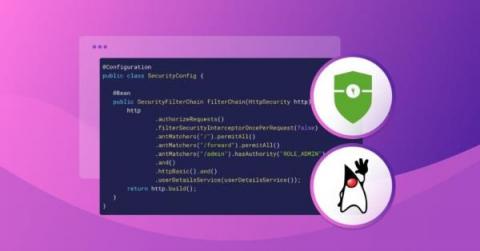
In early November, a new authorization bypass vulnerability was found in Spring Security 5. Now, before we panic let’s look into this problem to see if you are vulnerable. Although the vulnerability is classified as high, there is only a specific set of use cases that are vulnerable. This means that not everyone is vulnerable, and I will show that in a second. Regardless, the advice is to upgrade to the newer version of the Spring Security.
At CrowdStrike, we’re always looking for new ways to share the power of CrowdStrike Falcon® LogScale, our log management and observability solution. The latest advancement to Falcon LogScale, previously known as Humio, is adding Corelight demo data to the Falcon LogScale Community Edition.