Security | Threat Detection | Cyberattacks | DevSecOps | Compliance

The cybersecurity problem hiding in your later list

Let's be honest: Every IT team has that one thing. That ancient server that nobody wants to touch somehow still runs. That vulnerability that has been sitting in the remediation queue because there were more critical issues to handle, and then there's the active service account that was created for a temporary project three years ago. Or perhaps there's a security exception that was only supposed to last for 30 days and quietly became permanent. Nothing has exploded yet, so it is easy to leave it alone.

Application Security for PCI DSS Compliance: A Complete Guide

If your organization stores, processes, or transmits cardholder data, then application security for the Payment Card Industry Data Security Standard (PCI DSS) is a discipline you sustain. And with PCI DSS v4.0.1 now in effect, the standard has stopped accepting passive, point-in-time testing as evidence of a mature security posture. It wants continuous proof.

Keeper Security Surpasses 100,000 Enterprise Customers as Organizations Consolidate Identity Security Solutions in the Agentic Era

Keeper Security, the leading zero-trust and zero-knowledge identity security platform, today announces it now protects more than 100,000 organizations globally. Keeper’s customer growth builds on consistent company milestones including surpassing $240 million in Annual Recurring Revenue (ARR) and also earning recognition from Gartner as the second fastest-growing competitor in the worldwide security software market in 2025.

Zero Trust for AI Agents: Enforcing Anthropic's Framework

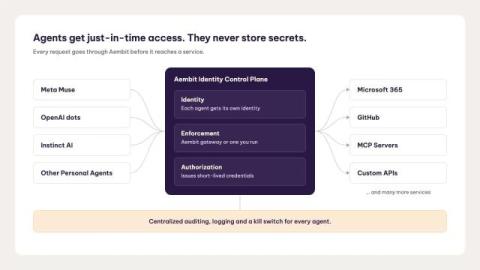
AI has changed how work gets done. Agents can plan tasks, query enterprise repositories, invoke tools, write code, call application programming interfaces (APIs), and take actions across connected systems. As they work, they create, copy, fragment, transform, and share data across workflows. A perimeter and a one-time authorization decision do not provide enough control for this operating model. An agent can chain permissions, tools, integrations, and data sources while completing a task.

Request, Aggregate, Bypass: How Attackers Can Evade LLM Safety Classifiers

Modern frontier AI models deploy safety classifiers. These are second AI models that sit between the user and the frontier model, evaluating every request in real time. If a request is flagged as harmful, the classifier blocks it before the model can respond. Significant investment and safety model expertise have made these classifiers effective. Anticipating how adversaries circumvent these systems is a security problem that requires different expertise.