Arsen Launches Smishing Simulation to Help Companies Defend Against Mobile Phishing Threats

Arsen, the cybersecurity company dedicated to helping organizations defend against social engineering, today introduced its new Smishing Simulation module: a feature designed to let companies run realistic, large-scale SMS phishing simulations across their teams. Designed to address the growing wave of mobile-based attacks, the new module gives CISOs, MSSPs, and risk officers a practical way to assess exposure and train employees to spot and respond to malicious SMS messages.

Phishing Campaign Impersonates Google Careers Recruiters

A phishing campaign is impersonating Google Careers to target job seekers, according to researchers at Sublime Security. “The scam is simple,” the researchers write. “An adversary sends an ‘are you open to talk?’ message impersonating an outreach email from Google Careers. If the target clicks the link, they’re taken to a landing page designed to look like a Google Careers meeting scheduler. From there, they’re taken to the phishing page.

AI Chatbots Aren't Taking Your Jobs: They're Your New Assistants

I have never been one to jump on most technology bandwagons early; I am very pragmatic about what technology can do rather than what it promises. This extends to generative AI. I was not the first to play with ChatGPT and Gemini when they came out in the early 2020s. Maybe it’s because I work in fields that use machine learning very effectively. Even though I was aware of the leap Google made in 2012, I wasn’t eager to dive into the new wave of AI when it first appeared.

Cloudflare Connect 2025 Highlights: Common, James Allworth, David Tuber & Kenton Varda

We cover Cloudflare’s partnership with Mastercard & Visa on AI agent commerce, highlights from rapper Common, and conversations with: Full interviews with each guest will be published in the coming weeks. Plus: next week’s Cloudflare blog series on Internet Measurement, Resilience, and Transparency — the foundations of a faster, safer, and more reliable web.

Secrets, out: Why workload identity is essential for AI agent security

AI agents aren’t waiting in the wings anymore. They’re approving payments, spinning up cloud resources, and pulling sensitive data at machine speed. Blink, and a swarm of them has already acted a thousand times before anyone can check the logs. But with all that speed and capability comes risk. For many teams, it’s the authentication model—not the tech—that’s breaking.

Agentless Network Monitoring: The New Standard for Cloud Security Visibility

Agentless network monitoring represents a fundamental shift in cloud security strategy. Rather than installing software agents across every cloud resource, this approach leverages existing infrastructure to gather comprehensive security intelligence remotely.

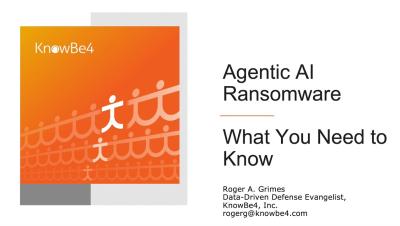
Agentic AI Ransomware: What You Need to Know

Brace yourself for agentic AI ransomware. It's a terrifying fusion of cutting-edge tech and malicious intent that's set to redefine cyber threats as we know them. Unlike traditional ransomware, which follows pre-programmed rules, agentic AI ransomware can adapt its behavior in real-time based on its environment and the defenses it encounters.

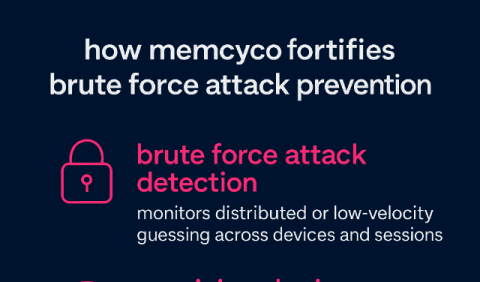
Brute Force Attack Prevention: Why Rate Limiting Isn't Enough for ATO Defense

A brute force attack is a method cybercriminals use to guess login credentials through repeated attempts until one works. It’s a simple idea that’s evolved into one of the most persistent enablers of account takeover (ATO). According to the 2024 Verizon Data Breach Investigations Report, brute force and credential-stuffing techniques accounted for nearly 70% of all password-related breaches that year, underscoring how these attacks remain a dominant entry point for ATO.