The Future Of Cybersecurity: How AI And Machine Learning Are Transforming Penetration Testing

In today's rapidly evolving digital landscape, the protection of sensitive information and critical infrastructure has become more paramount than ever. Traditional cybersecurity measures are increasingly being augmented with advanced technologies like Artificial Intelligence (AI) and Machine Learning (ML). These innovations are now transforming the realm of penetration testing, offering enhanced capabilities for identifying and mitigating vulnerabilities.

Enterprise Platform Engineering Explained: Strategy, Scale, and Success

Every second your team spends working on a product counts, so enterprise-level businesses are exploring ways to scale. Enterprise platform engineering is reshaping how organizations think about developer tools and infrastructure, moving away from ad hoc stacks toward a consistent, self-service internal platform.

Link11 Identifies Five Cybersecurity Trends Set to Shape European Defense Strategies in 2026

Link11 releases new insights outlining five key cybersecurity developments expected to influence how organizations across Europe prepare for and respond to threats in 2026. The findings are based on analysis of current threat activity, industry research, and insights from the Link11 European Cyber Report, alongside broader market indicators such as PwC's Global Digital Trust Insights 2026.

LevelBlue and Tenable Introduce Unlimited Enterprise-Grade Vulnerability Scanning in USM Platform at No Additional Cost

LevelBlue is redefining what clients and partners can expect from a managed security provider. Through a new partnership with Tenable, a world-class leader in vulnerability management, LevelBlue is introducing unlimited, enterprise-grade vulnerability scanning for all clients and partners using the LevelBlue USM platform — included at no additional cost.

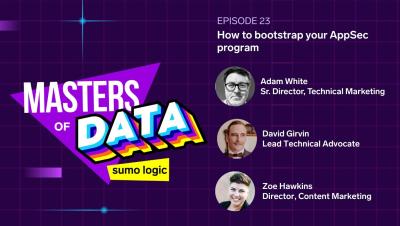
Ep 23: How to bootstrap your AppSec program

On this episode of Masters of Data, Adam sits down with Zoe Hawkins and David Girvin to talk AppSec programs that don't suck. David's hot take from his 1Password and Red Canary days? AppSec is a people problem, not a tooling problem—stop being the person devs dodge at standup. We cover the essentials: build relationships first, threat model based on actual business risk (not your anxiety), and ditch the "shift left" obsession with scanning everything. Instead, start with offensive testing that finds vulnerabilities attackers can actually exploit.

How Seal Security Helps You Meet FedRAMP Vulnerability Detection and Response Standard

Earlier this year, FedRAMP RFC-0012 signaled a coming shift in how cloud service providers (CSPs) working with the U.S. federal government are expected to handle vulnerabilities. It outlined plans to move FedRAMP away from simple CVSS-score thresholds and toward continuous, context-aware, exploitability-driven, and automation-first vulnerability management.

Platform enhancements strengthening security across every child org

Multi-org environments introduce complexity that most tools simply weren’t built for. Analysts are often forced to jump between different orgs, duplicate configuration work, and maintain parallel dashboards, alerts, and content–inefficiencies that increase risk, overhead, and time-to-response. Every minute spent managing infrastructure is one you’re not spending serving your clients or responding to threats.

OT resilience demands rapid recovery: Rethinking traditional backup

Industrial organizations face a stark reality: Downtime is costly, disruptive and cannot be entirely prevented. Whether it’s a cyberattack, hardware failure or simple data corruption, operational technology (OT) environments must be ready to recover quickly. In a recent podcast, Stephen Nichols, Country Manager for Canada at Acronis, shared his perspective on why rapid recovery is now a fundamental pillar of industrial resilience and how modern backup strategies are evolving to meet the challenge.