

How to Sell Premium Web Security Retainers
For the last decade, the agency model relied on a simple formula: Build a high-value asset, hand it over, and charge a nominal fee to keep the lights on. That model is breaking and the smartest agencies have already moved on. This guide shows you how to package, price, and sell that assurance without hiring an internal security team.
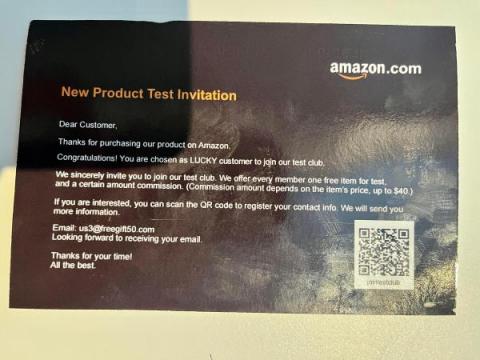
Warning: "Fancy" QR Codes Are Making Quishing More Dangerous
Scammers are increasingly using visually stylized QR codes to deliver phishing links, Help Net Security reports. QR code phishing (quishing) is already more difficult to detect, since these codes deliver links without a visible URL. Attackers are now using QR codes with colors, shapes, and logos woven into the code’s pattern. “Fancy QR codes further complicate detection,” Help Net Security says. “Their layouts no longer resemble the familiar black and white grid.

CVE-2025-3248: Critical Langflow Unauthenticated Remote Code Execution Vulnerability
A critical vulnerability in Langflow’s code validation mechanism allows unauthenticated attackers to execute arbitrary Python code on exposed systems. Tracked as CVE-2025-3248, the vulnerability resides in a publicly accessible API endpoint and affects all Langflow versions prior to 1.3.0. Active exploitation has been confirmed, with attackers using the vulnerability to deploy malware and onboard compromised systems into botnet infrastructure.
CVE-2026-21962: Maximum-severity Vulnerability in Oracle HTTP Server/WebLogic Proxy Plug-In
On January 20, 2026, Oracle patched a maximum‑severity vulnerability in its Fusion Middleware suite affecting Oracle HTTP Server and the WebLogic Server Proxy Plug‑in, tracked as CVE‑2026‑21962. An unauthenticated remote threat actor can exploit this flaw to gain unauthorized creation, deletion, or modification access to critical data. The issue stems from improper handling of incoming requests by the WebLogic Server Proxy Plug‑ins for Apache HTTP Server and Microsoft IIS.
The Rise of DLL Side-Loading Cyber Attacks and Browser Data Theft
Content originally created and published by Venak Security. Cybercriminals are increasingly adopting stealthy and advanced techniques, notably Dynamic-Link Library (DLL) side-loading and browser memory scraping, to install malware that stealthily harvests users’ passwords, credit card data, cookies, session tokens and more. These attacks blend social engineering, search manipulation and memory-level exploitation to bypass traditional defenses and compromise victims at scale.
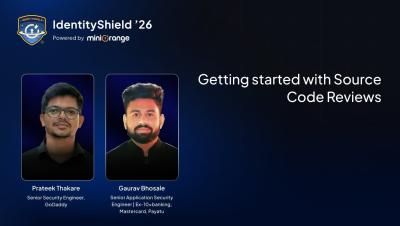
Getting started with Source Code Reviews | IdentityShield '26
Secure coding starts with deeply understanding code and vulnerabilities, and secure code reviews are crucial in finding issues early. In this hands-on secure code review workshop, we will teach the participants how to perform effective code reviews with both manual and automated techniques. Speaker: Prateek Thakare Senior Security Engineer, GoDaddy Bengaluru, India& Gaurav Bhosale Senior Application Security Engineer | Ex-10xbanking, Mastercard, Payatu Indore, India.

Automating User Access Reviews: How IGA Delivers Real Business Value
Still managing user access reviews manually? You’re not alone — and it’s costing you. This teaser highlights how automated User Access Reviews (UARs can reduce effort, improve audit readiness, and deliver real business value. In the full webinar, CyberArk experts share real-world examples, ROI insights, and how automation can cut review effort by up to 80%. Watch the full webinar on our website to learn how automated IGA transforms access reviews from a burden into a business advantage.
How Protecto Delivers Format Preserving Masking to Support Generative AI
Generative AI systems are designed to work with real data that expects structure, rely on patterns, and infer meaning from formats, relationships, and consistency across inputs. While real data facilitates better outputs and advanced training, making these systems useful has a tradeoff – it carries privacy, security, and compliance risk. This puts business on a difficult conundrum – either you block sensitive data entirely and lose context, or accept the privacy risks of using real data.

How to Protect Your AI Agents from Invisible Risks? | IdentityShield '26
AI agents power innovation but face hidden hacks, leaks, and tricks. This session uncovers 7 key risks, like cyberattacks, insider threats, bias abuse, and rogue actions, with best practices and real demo videos. Speaker: Vipika Kotangale Technical Content Writer, miniOrange Pune, India.