Business Continuity Strategy: A 2026 Guide to Downtime Prevention

A resilient business continuity strategy is no longer optional – it’s the difference between surviving disruption and becoming a cautionary tale. According to ITIC’s 2024 Hourly Cost of Downtime survey, over 90% of large and mid-size enterprises report that a single hour of downtime costs upwards of $300,000. For 41% of those organizations, hourly costs exceed $1 million.

Datadog Cloud SIEM: Driving innovation in security operations

Security can quickly become overwhelming for large organizations, with teams processing logs that are fragmented across cloud providers and SaaS platforms, staggering alert volumes, and the need to scale operations efficiently as environments grow. Datadog Cloud SIEM is designed to help teams manage this workload by centralizing insights, detecting threats faster, and prioritizing investigations with rich risk context.

Torq HyperAgents: The Next Evolution of Agentic SecOps

See how Torq harnesses AI in your SOC to detect, prioritize, and respond to threats faster. Request a Demo Tal Benyunes was one of the first engineers at Torq and now leads Product for HyperAgents, Torq’s agentic AI initiative. Shaped by early career roles in mission-critical cybersecurity environments and leading companies, Tal brings deep technical expertise and strategic insight to the development of AI Agents.

What's new in Tines: November 2025 edition

Using the AI Agent action, you can now connect to and utilize tools from MCP servers. This connection allows you to extend the reach of your workflows by bridging the gap between Tines and your AI implementations. Whether using a remote server or one created in Tines, the opportunity to do more is at your fingertips. Read the docs for more information.

Secure your code at scale with AI-driven vulnerability management

As development teams adopt generative AI at an unprecedented pace, security teams face an evolving set of challenges in securing the software development life cycle. The increasing speed and scale of code changes make it more difficult for organizations to manage risk effectively. Legacy scanners often fail to keep up, returning slow results and noisy alerts that increase remediation time and leave organizations exposed to potential breaches.

Scammers Are Exploiting the Holiday Shopping Season

Users should be particularly wary of holiday-themed scams over the next few weeks, according to researchers at Malwarebytes. “Mobile-first shopping has become second nature, and during the holidays, it’s faster and more frantic than ever,” Malwarebytes says. “Fifty-five percent of people get a scam text message weekly, while 27% are targeted daily. Downloading new apps, checking delivery updates, or tapping limited-time offers all feel routine.

Detect and block exposed credentials with Datadog Secret Scanning

Securing secrets is a difficult task. Developers frequently hardcode credentials for quick testing or use AI-generated code snippets that include live API keys or tokens. This means that enterprise secrets can inadvertently make their way into repositories and pipelines, exposing organizations to security and compliance risks without anyone noticing. When a secret is committed to a repository, it spreads quickly across branches, becomes difficult to track, and leads to leaks that are hard to clean up.

Can Claude Opus 4.5 Build a SECURE Note Taking App?

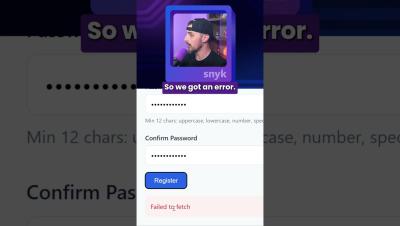
Can Claude Opus 4.5 actually build a secure, fully functional note-taking app? In this video, I challenge the latest Claude model to create an app with real features — create, edit, update, delete, plus basic security — and see if the code holds up in practice. This is a real test of how far AI can go in building usable software.

The Efficiency Shift: Protection That Scales with Your Team

Cybersecurity has a people problem. Threats scale faster than teams. Every new customer, every new endpoint, and every new alert adds pressure. Efficiency is no longer a nice-to-have; it is the only way to maintain effective and sustainable protection. That is where endpoint security efficiency comes in. Endpoint security efficiency is the ability to deliver maximum protection with minimum operational effort, turning noise into clarity and alerts into meaningful incidents.