Featured Post

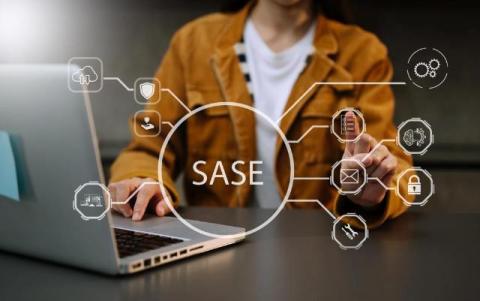
Why SASE Success Starts with a Specialist Partner

Secure Access Service Edge (SASE) is quickly becoming a top priority for business leaders, particularly those with remote teams, cloud-focused plans, and growing security challenges, as they recognize the benefits of bringing networking and security into a single, flexible, cloud-based solution. In fact, the global SASE market is projected to reach $10.89 billion in 2026, up from $9.27 billion in 2025.

Vibe check your vibe code: Adding human judgment to AI-driven development

Remember when open meant visible? When a bug in open-source code left breadcrumbs you could audit? When you could trace commits, contributors, timestamps, even heated 2:13 a.m. debates on tabs versus spaces? That kind of openness created confidence in the code and made it possible to hold contributors accountable when issues arose. Today, as AI changes how code is created and shared, those familiar markers of trust and transparency are becoming harder to find.

A CISO's Honest Take on Regulation

Cybercriminals don't care about borders. So why do we have 12 different regulatory frameworks for the same threat? Olivier Busolini, Group Head of Information Security at Mashreq Bank, voiced the frustration every global CISO feels: "In every country, I have 12 countries at Mashreq. In every country, there is a slightly different or sometimes vastly different requirement that I have to abide to.".

Apache Commons Text Code Injection Vulnerability (CVE-2025-46295)

A critical code injection vulnerability has been identified in Apache Commons Text, a widely used Java library for text processing and interpolation. Tracked as CVE-2025-46295, the vulnerability carries a CVSS v3 score of 9.8 (Critical) and affects all versions of the library prior to 1.10.0. The vulnerability has an EPSS score of 0.253%, indicating a low short-term probability of exploitation.

Bots vs. Barcodes: The Resource Quota Failure. #ticketmaster #bla #ratelimiting #businesslogic

The infamous Ticketmaster case highlights BLA 1: Resource Quota Violation. Attackers used bots for mass purchasing and employed ingenious evasion: they reverse-engineered the barcoding logic to rotate and authenticate tokens, bypassing security controls. The core failure? Flawed rate limiting and business logic expiration. You must protect your inventory and your purchasing flows as if they were financial assets.

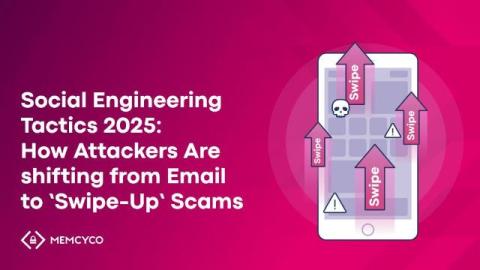
Social Engineering Tactics 2026: How Attackers Are shifting from Email to 'Swipe-Up' Scams

The image of the cyber attacker is changing. For years, the industry focused on email gateways and typo-squatted domains like citi-bank-security.com. But according to Tzoor Cohen, CTI Lead at Memcyco, the battleground has shifted. In 2026, the most dangerous social engineering tactics typically don’t start in an inbox. They start on social media, utilize legitimate infrastructure like Bitly, and exploit the user interface (UI) of mobile devices to hide malicious intent.

The State of IoT Identity Security in 2026: Why Machine Identity Is the New Perimeter

By 2026, the idea of a fixed security perimeter is no longer realistic. Organisations now operate across cloud platforms, industrial environments, remote sites, and edge locations, often supported by tens or hundreds of thousands of connected devices. These devices are not users in the traditional sense, yet they authenticate, communicate, update, and make decisions autonomously.