SCADA Cybersecurity Framework

SCADA stands for Supervisory Control and Data Acquisition. It is a control system architecture that comprises computer systems, networked data communications, and Graphical User Interface (GUI) for a high-level process supervisory management. In addition, SCADA also incorporates other peripheral devices such as discrete Proportional Integral Derivative (PID) and Programmable Logic Controllers (PLC) to interface with process machinery or plant.


Using Splunk to Detect Abuse of AWS Permanent and Temporary Credentials

Amazon Web Services provides its users with the ability to create temporary credentials via the use of AWS Security Token Service (AWS STS). These temporary credentials work pretty much in the same manner like permanent credentials created from AWS IAM Service. There are however two differences.

Simplify Your Security Operations

Overwhelmed by complexity when it comes to Cybersecurity? Simplify your security operations with Arctic Wolf. One platform, delivered by experts, 90% less IT effort, and 24x7 security operations. Spanning thousands of installations, the Arctic Wolf® Platform processes over 65 billion security events every day. Collecting and enriching endpoint, network, and cloud telemetry, and then analyzing it with multiple detection engines. Machine learning and custom detection rules then deliver personalized protection for your organization.

Is Your Business Data Safe from the Dark Web?

You may never venture to the dark web, but many bad actors are active on the dark web and they may have access to your corporate data. Sensitive, proprietary business data could already be on there for sale to the highest bidder. That could lead to a security breach, fraud, damaged business reputation, or loss of competitive advantage. You won’t know until it’s too late! Download our ebook, “The Dark Side of the Internet.

Fix now: High risk vulnerabilities at large, August 2020

Since April 2020 we’ve been writing about the latest CVEs to look out for in our risk based vulnerability management blog. Going into August we are highlighting a CVE affecting a popular password vault – KeePass, along with a few interesting ones. Read on for more information on how to prioritize these vulnerabilities for patching to mitigate risk.

Bot Detection - Tips to secure your payment ecosystem from account takeover attacks

With an estimated 37.9% of all internet traffic attributed to bots, and bad bots accounting for more than 50% of that, retailers and financial organizations are struggling to defend against a constant barrage of account takeovers, credential stuffing, card cracking attacks and fake account creation.

Combating cyberthreats with a sound PAM strategy in 2020

In this on-demand webinar, we'll walk you through reasons a PAM program is necessary, introduce the typical PAM maturity curve, and discuss real-world use cases on how a PAM program will fit into your overall enterprise IT operations. In addition, we'll look at ManageEngine's strategy and offerings to help you build a sound, foolproof PAM program.

Enforcing Enterprise Security Controls in Kubernetes using Calico Enterprise

Hybrid cloud infrastructures run critical business resources and are subject to some of the strictest network security controls. Irrespective of the industry and resource types, these controls broadly fall into three categories. Workloads (pods) running on Kubernetes are ephemeral in nature, and IP-based controls are no longer effective. The challenge is to enforce the organizational security controls on the workloads and Kubernetes nodes themselves.

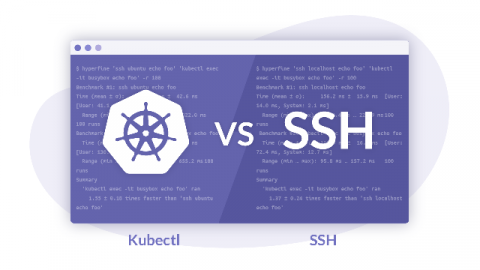
SSH vs. kubectl exec

Let’s have a look at two popular ways of opening remote shells: the good ol’ ssh and its modern counterpart, kubectl exec. Below, I will only look at the “kubectl exec” subcommand and its friends. kubectl itself is a swiss-army knife for all things Kubernetes. Comparing all of it to ssh is like comparing systemd to BSD init. Also, I will use “SSH” to mean “OpenSSH”, which is the de-facto standard for SSH protocol implementation.