What is FIPS 140-3? The Critical Updates You Must Be Aware Of

FIPS 140-3 is the long-awaited update to FIPS 104-2 which was established on May 25, 2001. This updated validation process is finally capable of addressing the cryptographic modules that have evolved since 2001. This validation process includes testing with respect to certain standards or protocols and then the issuing of an official certificate from NIST (National Institute of Standards and Technology) confirming compliance with FIPS 140-3.

SuiteCRM: PHAR deserialization vulnerability to code execution

SuiteCRM is a free and open source Customer Relationship Management application for servers. This advisory details a PHAR deserialization vulnerability that exists in SuiteCRM which could be leveraged by an authenticated administrator to execute commands on the underlying operating system. This issue has been fixed in release 7.11.19. In PHP, PHAR (PHP Archive) files can be used to package PHP applications and PHP libraries into one archive file.

What is inherent risk? Your sensitive data could be In danger

Inherent risks are the cyber risks and vulnerabilities within an organization before security measures are implemented. In contrast, residual risk is calculated after cybersecurity protections have been put in place to protect against all of these inherent risks; its calculation includes every possible attack vector that could affect a system or data.

How has COVID-19 disrupted on-the-ground intelligence for cross-border asset tracing investigations?

In our Asset Tracing webinar, hosted by the Kroll Amsterdam Team, Managing Director Rens Rozekrans discusses how COVID-19 has disrupted on-the-ground intelligence gathering for complex, cross-border asset tracing investigations.

What is an attack vector? Assess your attack surface and how to avoid cyber attacks.

Attack vectors are defined as the means or paths by which hackers gain access to computers remotely with malicious intentions such as delivering payloads or carrying out other harmful activities. Some common ones are malware, social engineering, phishing and remote exploits.

Pull Requests for Infrastructure Access

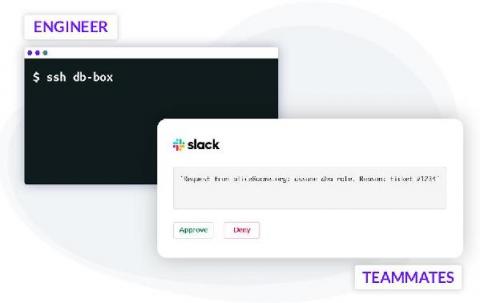
Making frequent changes to cloud applications running in production is the de-facto standard. To minimize errors, engineers use CI/CD automation, techniques like code reviews, green-blue deployments and others. Git pull requests often serve as a foundational component for triggering code reviews, Slack notifications, and subsequent automation such as testing and deployments. This automated process enforces peer reviews and creates enough visibility to minimize human error.

Device management blind to 125 percent increase in financial sector phishing attacks

As guardians of valuable monetary assets and highly sensitive data, financial institutions are the perfect target for cybercriminals. According to IBM, the financial services sector was the number one target of cyberattacks in 2020 among all industries. This means these organizations continue to be challenged and invest heavily in both people and technology to make sure they can withstand attacks of any type.

NSA offers advice: connecting OT to the rest of the net can lead to "indefensible levels of risk"

The US Defense Department and third-party military contractors are being advised to strengthen the security of their operational technology (OT) in the wake of security breaches, such as the SolarWinds supply chain attack.