RKVST - the Archivist of the modern internet

RKVST (pronounced Archivist) is an evidence platform that delivers a reliable chain of custody for supply chain data. It proves and verifies who did what when to any asset in the supply chain which can then be shared with supply chain partners. Jon Geater , Chief Product Officer, talks about RKVST at InfoSecurity Europe, London, June 2022.

8 Ways Indian Organizations Can Mitigate Cyber Threats

Global cybersecurity is becoming more reliant on using advanced, more complex safety mechanisms to resolve vulnerabilities. Governments and businesses worldwide struggle to safeguard their data and networks and prevent future crises. At the same time, cyber threats are becoming just as complex. With each new step in cybersecurity innovation, cyber threats also gain momentum, eventually posing major security challenges for governments.

Software Supply Chain Risk Management

Can you imagine a world without software? No, neither can I. The same goes for many other technology-based products, such as cell phones. Software is everywhere and it’s critical to businesses of all sizes. In this article, we discuss the software supply chain risk management process needed to protect your business from risks in the software supply chain and how that affects product development speed in what seems like an ever-changing market landscape.

Guacamaya Group

The Guacamaya group is a fairly new hacktivist group based in Latin America. The group was first seen around March 2022 as they released sensitive data of several companies based in Chile, Ecuador, Brazil and Colombia. As mentioned, the group is mainly focusing on LATAM but dabbles every now and then with campaigns in Russia. The group is defined as a data leakage threat group, which means they do not encrypt but only leak the stolen data, often they do it for free.

From Access-centric Security to Data-centric Security

In the early days of internet security, an access-centric security model made sense. Access lists on routers were complemented by firewalls and, later, intrusion detection systems. Given the processing capacity available at the time, this was absolutely adequate and appropriate for protecting a website, even with e-commerce. But that was the 1990s, and the internet has become so much more than websites with some shopping capabilities. Now, it’s the backbone of our society.

Insta-Phish-A-Gram

Following Trustwave SpiderLabs’ blog on social media-themed phishing on Facebook, comes another flavor of ‘infringement’ phishing. In this case, the targets, still under the umbrella of Meta, are Instagram users. This theme is not new, and we have seen it from time to time over the last year. It’s the same copyright infringement trickery again, but this time, the attackers gain more personal information from their victims and use evasion techniques to hide phishing URLs.

Critical Remote Code Execution Vulnerability in VMware Cloud Foundation NSX-V: CVE-2021-39144

On Tuesday, October 25th 2022, VMware disclosed a critical remote code execution vulnerability (CVE-2021-39144, CVSS 9.8) in VMware Cloud Foundation NSX-V versions 3.x and older. A threat actor could perform remote code execution in the context of ‘root’ on the appliance due to an unauthenticated endpoint that leverages XStream for input serialization.

Web Server Penetration Testing: Definition, Checklist & Tools

As web servers become an increasingly popular target for cybercriminals, it is more important than ever for businesses to ensure that their systems are secure. One of the best ways to do this is through web server penetration testing, which involves simulating a cyberattack to identify vulnerabilities. This blog will introduce web server penetration testing and how to carry it out effectively.

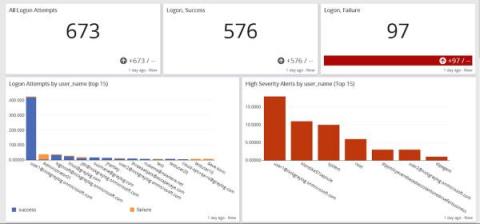
Centralized Log Management for Incident Response

Today’s reality is that you’ll never be 100% secure. Remote work and digital transformation add more access points, devices, and applications than ever before. At the same time, your team is constantly responding to alerts that could be an incident. Although, most often, it’s not. Basically, you need to reduce the mean time to investigate (MTTI) and the mean time to respond (MTTR).