The 2026 AI SOC Leadership Report: What 450 Security Leaders Told Us

See how Torq harnesses AI in your SOC to detect, prioritize, and respond to threats faster. Request a Demo When we started building Torq four years ago, we had a thesis: the SOC was broken, and automation — real automation, not another tool bolted onto the stack — was the way to fix it. AI has since changed the game entirely. But has it streamlined the SOC, or introduced new complexity? We wanted to find out.

Tackling alert fatigue with AI & automation: How MSSPs scale Tier 1 triage

For managed security service providers (MSSPs), alert fatigue doesn’t just burn out your analysts: it’s a real risk to your business. From the financial costs of missed SLAs and security incidents to the customer trust lost when critical alerts are overlooked, alert fatigue negatively impacts customer outcomes, client retention, and your profitability.

Mythos and Beyond: Cato Addresses the Generational Shift in Cyber Threats with Agentic Security Researchers

Anthropic’s upcoming Mythos model points to something far more consequential than another leap in artificial intelligence. It signals a shift that could redefine the balance between attackers and defenders in cyberspace.

Episode 29: When AI becomes a security problem ft. Tamaghna Basu

AI has quietly moved from experiments to real-world systems that now write, decide, and reason alongside us. But as these systems scale, so do the risks. From hallucinations and data leakage to prompt injection and model abuse. In this episode of Server Room, we sit down with Tamaghna Basu, Founder of DeTaSECURE, to explore what it really takes to build and secure AI systems in production and why the future of AI will depend not just on intelligence, but on trust.

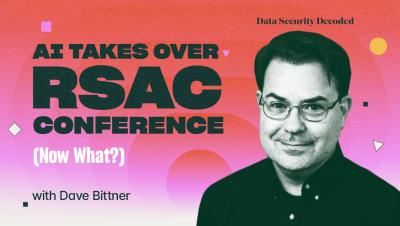
AI Takes Over RSAC Conference (Now What?) with Dave Bittner

In this RSAC 2026 Conference recap, Dave Bittner, Host of the CyberWire Daily podcast, joins Data Security Decoded host Caleb Tolin from the guest seat to discuss the biggest theme dominating the conference: artificial intelligence, and, more specifically, agentic AI. From wall-to-wall AI messaging across San Francisco to in-depth conversations with security leaders and analysts, one thing became clear: the industry has moved past debating whether AI will take hold. It already has. Now, the focus has shifted to making it safe.

How to Improve Work-From-Home Productivity with a Minimal Tech Setup? Know Here!

Working from the comfort of your home sounds like a beautiful dream. There's no commute, it allows for flexible working hours, and, if you are an introvert, you can get through the day without intrusive small talk. But somewhere along the way, the beautiful dream got cluttered with endless tabs, constant notification buzzes, and an overload of productivity apps trying to keep you efficient.

How Black Box Data Can Strengthen Your Truck Accident Case

A truck crash can shatter your body, your work, and your sense of safety. You may not remember every second. The truck's black box does. This small device records speed, braking, engine time, and other key facts in the moments before impact. That data can expose careless driving, unsafe company rules, or poor truck care. It can also prove that you did nothing wrong. Yet black box data can vanish fast. Some companies repair trucks or erase data before anyone asks questions. You need quick action to protect that evidence.

Why Personal Injury Attorneys NY Are Essential for Accident Victims

Getting hurt in an accident turns your world upside down almost immediately. In New York, though, the legal fallout after that moment can honestly feel just as brutal as the injury itself. Insurance companies don't play nice. Deadlines arrive before you've caught your breath. And New York's legal rules? Entirely different from every other state in the country.

How to Plan for Unexpected Medical Emergencies

Nobody expects that phone call. One moment you're standing in the kitchen, and the next, someone you love is being rushed out the door on a stretcher. Here's the uncomfortable truth, unexpected medical emergencies hit ordinary families constantly, and most of those families aren't remotely prepared. Research confirms that 33% of people who recently lived through a medical emergency believe better daily support and planning could have prevented it altogether.. A thoughtful plan doesn't just sharpen your response, it can reduce whether a crisis ever unfolds in the first place.