DLP Security: Benefits, Implementation, and Common Pitfalls

Regardless of the industry, the risks associated with data loss are significant. Financial services, healthcare, government, technology, and many other fields – all rely heavily on sensitive data. The Identity Theft Resource Center (ITRC) reports that the number of data compromises in the United States hit a record high of 1,802 in 2022. This emphasizes the alarming increase in data security incidents.


Top 5 Myths About API Security and What To Do Instead

Discover the top five myths about API security and learn the effective strategies for protecting your digital assets. Understand why attacks are common, the limitations of perimeter security, and the importance of a zero trust model in this comprehensive overview. Uncover the realities of API security, from the prevalence of attacks to the challenges of relying on perimeter defenses. Learn why a zero trust approach and better developer engagement are key to robust API protection.

Effective Cybersecurity Incident Response: What to Expect from Your MDR Provider

Companies engage with a managed detection and response (MDR) provider to help ensure they detect cyber threats before they do any damage. The "response" part of the MDR moniker is key to that effort, making it vital to determine up front exactly what your chosen provider will do when it detects a threat in your environment.

The Growing Challenge of Fraud in Neobanking: Strategies for Protection (2024 Guide)

Neobanks, which operate exclusively online without traditional physical branch networks, are facing an increasingly challenging landscape due to a significant rise in fraud cases. In recent years, financial institutions have reported a marked increase in fraudulent activities, with the average cost of fraud for institutions with assets over $5 billion rising by 65% from $2.3 million in 2022 to $3.8 million in 2023.

CVE-2024-3400: Critical Vulnerability in GlobalProtect Feature of PAN-OS being Actively Exploited

On April 12, 2024, Palo Alto Networks published a security advisory detailing an actively exploited maximum severity vulnerability (CVE-2024-3400, CVSS: 10.0) affecting the GlobalProtect feature of PAN-OS. This vulnerability affects PAN-OS 10.2, PAN-OS 11.0, and PAN-OS 11.1 firewalls when configurations for both GlobalProtect gateway and device telemetry are enabled. An unauthenticated remote threat actor can exploit this vulnerability to execute arbitrary code with root privileges on the firewall.

Palo Alto Networks Vulnerability: CVE-2024-3400

On April 12th, Palo Alto Networks released a CVE advisory for CVE-2024-3400, a critical vulnerability identified in the GlobalProtect Gateway feature of PAN-OS, the operating system for Palo Alto Networks firewalls. This command injection vulnerability allows unauthenticated attackers to execute arbitrary commands with root privileges on the affected devices.

Securing Your NTP Client for Accurate and Reliable Timekeeping

The Network Time Protocol (NTP) was developed in the 1980s to address the growing need for time synchronization between an individual’s computer or device and others on the same network. The Windows NTP (Network Time Protocol) client is a component of the Windows operating system responsible for synchronizing the system’s clock with a time server on the internet or a local network.

CVE-2024-3400: Follow Up: Patches Released for Actively Exploited Critical Vulnerability in GlobalProtect Feature of PAN-OS

On April 14, 2024, Palo Alto Networks (PAN) released hotfixes to address the maximum severity (CVSS: 10) vulnerability, CVE-2024-3400, affecting the GlobalProtect Feature of PAN-OS. An unauthenticated remote threat actor can exploit this vulnerability to execute arbitrary code with root privileges on the firewall. Volexity identified CVE-2024-3400 as a zero-day vulnerability and found that the threat actor UTA0218 was implanting a custom Python backdoor on firewall devices.

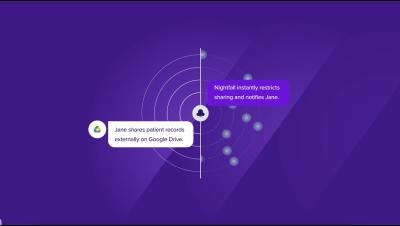
Nightfall AI: The First AI-Native Enterprise DLP Platform

Legacy DLP solutions never worked. They're point solutions that generate an overwhelming number of false positive alerts, and block the business in the process. But no longer. Enter: Nightfall AI, the first AI-native enterprise DLP platform that protects sensitive data across SaaS, generative AI (GenAI), email, and endpoints, all from the convenience of a unified console.