Homing the Cyber Risk Analysis Lens: Exploring Macro to Micro Trends

‍The process of achieving goals, whether long-term, short-term, personal, or professional, starts with harnessing the available relevant data. In fact, the more information gleaned beforehand, the more likely the mission will be a success. However, the details required for devising an effective plan exist at various granular levels, some overarching, focusing on the broader elements, and others more minute.

The Education Sector Experienced the Highest Number of Data Breaches in 2023

New data from Verizon makes it clear that the Education sector is under attack, but also breaks down which threat actions and patterns are used most. We’ve seen Education institutions become a major focus for cybercriminals and entities like the New York State Education Department and the FBI have issued warnings.

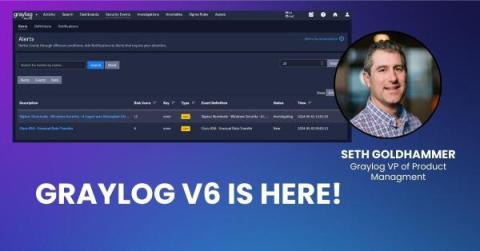
From the Desk Of the VP of Product - Delivering on the Promises of SIEM

I’m thrilled to share some incredibly exciting news – Graylog’s v6.0 is officially here! It’s been quite the journey getting to this point, filled with late nights, endless cups of coffee, and an unwavering commitment from our amazing team. As we unveil this latest version, I can’t help but reflect on how far SIEM technology has come over the past two decades. Gone are the days when Intellitactics and NetForensics reigned supreme.

Best API Security Product: Wallarm wins 2024 Cybersecurity Excellence Award

We are thrilled to announce that Wallarm has clinched the sought-after 2024 Cybersecurity Excellence Award, under the category Best API Security Product. Our unwavering commitment to pioneering solutions that safeguard digital ecosystems, and fortify API security amidst the evolving cyber threat landscape, has garnered industry-wide recognition. This accolade reaffirms Wallarm's position at the forefront of cybersecurity innovation, empowering businesses with confidence and resilience.

Beware! These Are Some Major Active Directory Threats Lurking in Your Network

95% of Fortune 1000 organizations use Active Directory (AD) to organize their IT systems. This statistic emphasizes the relevance of AD in modern enterprise networks. AD, as a centralized database including user accounts, group objects, workstation objects, security information, and much more, is critical for managing and securing IT resources. However, the very capabilities that make Active Directory so important, also make it an ideal target for cyber criminals.

7 Steps for Developing a Data Breach Response Plan

Data breaches are a constant threat these days. One click on a malicious link could send tons of customer information flying out the window. Even with all the strategies and tools to prevent them, unauthorized people keep gaining access to sensitive data. So, maybe it’s not a matter of whether your company will ever experience a data breach but about when. The million-dollar question is: will you be ready to respond effectively against hackers when the time comes?

Verizon: Nearly 80% of Data Breaches Involve Phishing and the Misuse of Credentials

Innovative analysis of data breaches shows which attack vectors are being used and how they’re enabled, highlighting the roles phishing and credentials play. In light of the recent release of the Verizon Data Breach Investigations Report this week, we have delved into the findings to continue our coverage of important cybersecurity issues, specifically data breaches and phishing.

Integrating Snyk Code SAST results in your ServiceNow workflows

Application security teams often lack the crucial information and visibility needed to find, prioritize, and remediate risks in their most business-critical applications. To solve this application security challenge, ServiceNow and Snyk have partnered to provide a singular view of the risk within these applications — exposing the severity and criticality of vulnerabilities while providing actionable workflows to boost your overall security posture.

The OSFI's Intelligence-Led Cyber Resilience Testing (I-CRT) Framework - What You Need to Know

In April 2023, the Office of the Superintendent of Financial Institutions (OSFI), Canada’s agency responsible for regulating financial institutions, released their Intelligence-led Cyber Resilience Testing Framework (I-CRT)1. Canada’s I-CRT framework is based on similar intelligence-led frameworks which have been used in other countries, such as the Bank of England’s CBEST framework2 and the European Union’s TIBER-EU3.