Common Ransomware Attack Types

When it comes to cybersecurity, ransomware is probably one of the first threats you think of. It seems like it’s everywhere — and it is. Ransomware is one of the most notorious cyber threats affecting individuals, businesses, and organizations globally. The frequency and impact of these attacks have surged in recent years, making it crucial to understand their nature and how to protect against them.

Keeping Financial Services Organizations Secure in an AI World

When we talk about financial services and technology, security and regulatory compliance are always top of mind. And now, Generative AI has entered the chat - one of the most talked-about technologies of recent years. And Financial Services institutions have only begun to scratch the surface of what generative AI can do. The problem is, so have cyber threat actors. In this session from Splunk, and IDC, you’ll hear key insights into how financial services companies are improving their security posture in an AI World, and how those practices can benefit your organizations.

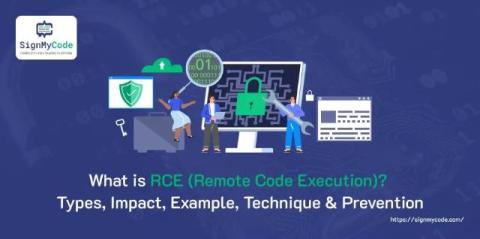
What is Remote Code Execution? Types, Impact, Technique and Prevention

Remote Code Execution (RCE) is an attack technique where an attacker can execute remote code on a target system or device while smiling from ear to ear without physical access. In this attack, a hacker exploits system weaknesses such as software, operating systems, or network protocols to gain unauthorized access and execute malware onto the target system.

Advantages of Calico's DNS Policy Implementation over Cilium's DNS Policy Implementation

DNS policies play a critical role in managing and securing workload communication for cloud-native applications running on Kubernetes clusters. Two popular options for implementing DNS policies are Calico and Cilium. While both have their merits, Calico’s approach offers several distinct advantages over Cilium’s, particularly in terms of flexibility, scalability, and overall operational simplicity.

Don't Pass on Combining iPaaS with a DFPM Platform

Businesses are under an ever-increasing pressure to maintain exceptional experiences for their customers, making seamless connectivity across tools a must. This is true for industries like financial services that need to provide enhanced digital payments, or for healthcare organizations that need to share critical data across systems quickly. The need for connected infrastructures has become the norm.

How To Improve Email Security with Data Loss Prevention (DLP)

Email remains a critical communication channel for businesses of all sizes, but it also presents significant data security risks. Data loss prevention (DLP) for email is an essential component of any robust cybersecurity strategy that can help your organization safeguard sensitive information from accidental leaks, malicious insiders, and external threats.

Red Teaming vs Penetration Testing: Understanding the Differences

In today’s rapidly evolving cybersecurity landscape, organisations must stay ahead of emerging threats and vulnerabilities to remain competitive. Two critical approaches to bolster security are Red Teaming and Penetration Testing. While these terms are often used interchangeably, they serve different purposes and employ distinct methodologies. Understanding the differences between Red Teaming and Penetration Testing is essential for implementing an effective cybersecurity strategy.

Bitsight GIA: AI-Powered Asset Mapping and Attribution

Last month, my colleague Arzu Ozbek Akay shared some insights about the impact that Bitsight Groma, our next-generation scanner, is already having on our products. Today, I’m going to follow that up with an update on the momentum we’re seeing with the second core component of our data engine: Bitsight Graph of Internet Assets (GIA). As a quick refresher, GIA uses advanced graph technology and AI models to map assets to specific organizations and build Ratings Trees at a global scale.

Understanding Out-of-Bounds Memory Access Vulnerabilities and Detecting Them with Fuzz Testing

Out-of-bounds memory access, also known as buffer overflow, occurs when a program tries to read from or write to a memory location outside the bounds of the memory buffer that has been allocated for it. This type of vulnerability is particularly dangerous because it can lead to various issues, including crashes, data corruption, sensitive data leaks, and even the execution of malicious code.