Inside the Cloud: Unintended Privileges

This is the third article in a series about cloud-based attack vectors. Check out our last article about Cloud-Based ransomware! As Identity Access Management (IAM) becomes more complex, it becomes possible for an attacker to exploit the capabilities of legitimate permissions alone or in combination, escalating privileges and gaining potentially devastating levels of access. Because these privileges are legitimate, these attacks can be difficult to detect until the damage is already done.


Leveraging Cyber Risk Quantification for NIS2 Compliance

‍In response to the growing number of disparate cyber regulations across its member states, resulting in inconsistent cybersecurity practices, the EU drafted Directive 2022/2555, more commonly known as NIS 2. This sweeping directive, officially in effect in October 2024, aims to ensure a more uniform, proactive approach to cyber risk management across the union in the face of an interdependent market and increasingly costly risk landscape.

The Role of Zero Trust Architecture in Enhancing SSO Security

Securing virtual identities and entry points has become a critical priority as cyber threats grow more sophisticated. A Single Sign-On (SSO) system offers ease and allows multi-functionality with a single set of identity verification, but they are enticing targets for cyber attackers. Organizations need Zero Trust Architecture to alleviate this risk. Zero Trust Architecture (ZTA) is a protection framework that is designed on the principle of never trust and always verify.

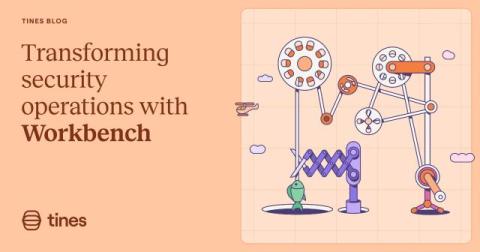
Transforming security operations with Workbench

Enterprise data consolidation and access have long posed significant challenges in the Security Operations Center (SOC). They often hinder security teams from effectively investigating and taking action on the vast amounts of data they are tasked with protecting. Traditional security tools frequently operate in isolation, lacking the compatibility to create a cohesive data strategy.

NESA Standard Ensures Security of UAE's Cyberspace

To allay dependence on oil revenue and expand the private sector, the United Arab Emirates (UAE) has committed, in recent years, to establishing a knowledge-based economy. Consequently, they have become a formidable competitor in Information Communication Technology (ICT). As the ICT industry has grown, so have government agencies to regulate it, namely the Signals Intelligence Agency, formerly known as (and often still referred to as) the National Electronic Security Authority (NESA).

What does it take to become a Top Builder in Tines?

We’ve just introduced the Tines Top Builder score, a measure of user activity that shows just how much hands-on experience you’ve had in Tines in a given year. Why track our Top Builders? We realized we were seeing a high level of achievement from our users – to the extent that it warranted some recognition. We set out to identify exactly who our Top Builders were, with the intent to celebrate their achievement at the end of each year.

Dive into AI and LLM learning with the new Snyk Learn learning path

Snyk Learn, our developer security education platform, just got better! We have expanded our lesson coverage and created a new learning path that covers the OWASP Top 10 for LLMs and GenAI, and is entirely free! As AI continues to revolutionize industries, ensuring the security of AI-driven systems has never been more critical.

The First Step in Creating an Offensive Security Program: Managed Vulnerability Scanning

An offensive security program is an excellent component of a mature cybersecurity program, but kicking off that process can be overwhelming for some organizations. After all, offensive security has several components, such as Penetration Testing, Red Team exercises, incorporating threat intelligence, etc., so it can be hard to decide where to start. The answer to this dilemma starts with Managed Vulnerability Scanning (MVS).