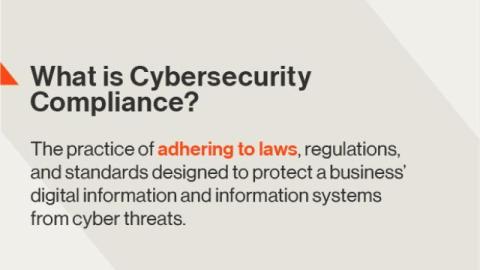
What is Cybersecurity Compliance? List of Compliance Regulations by Industry

Cybersecurity compliance refers to the practice of adhering to laws, standards, and regulatory requirements established by governments and industry authorities. These compliance regulations are designed to protect a business’ digital information and information systems from cyber threats, including unauthorized access, use, disclosure, disruption, modification, or destruction.


Top Tips To Combat Fraud Targeting Older Generations

In this episode, Mike is joined by Christopher Fielder, Field CTO at Arctic Wolf to delves into the vulnerability of seniors to cybercrime. With over 101,000 Americans aged 60 and above falling victim to digital fraud in 2023, it’s evident that scammers exploit seniors’ digital unawareness for significant financial gain. Christopher sheds light on the risk-reward dynamics, manipulation tactics, and emphasizes the importance of maintaining control, asking questions, and practicing cyber hygiene.

Anomaly Detection Algorithms: A Comprehensive Guide

Data anomalies indicate serious issues like fraud, cyberattacks, or system breakdowns. It is crucial to preserve operational integrity and security as the complexity and volume of data is increasing as days pass by. To find anomalies in your datasets, anomaly detection uses a variety of algorithms be it statistical or machine learning or deep learning. To protect sensitive assets and ensure seamless operations, organizations require a robust anomaly detection system.

Top 11 cyberattacks that impacted 2024

2024 is behind us, but the cybersecurity lessons it left behind are still highly relevant. Data breaches remain a persistent threat to large enterprises and government agencies, as the data they store is prized by organizations and a prized target for cybercriminals. Attacks have economic consequences and serious reputational and legal repercussions, putting business stability at risk.

The State of GitHub Threat Landscape for GitHub Admins - 2024 In Review

In 2024 threat actors were trying to abuse GitHub even more severely than before. There were detected thousands of “ghost accounts” spreading malware. Hackers were also trying to succeed in their malware campaigns using not only repositories but also comments. Moreover, multiple organizations that store their source code on GitHub have experienced data leakage and data breaches. Among those companies are The New York Times, Mercedes Benz, Ultralitics, etc.

Cyber Security Monitoring: 5 Key Components

Cyber security monitoring is the practice of continuously observing IT systems to detect cyber threats, data breaches, and other security issues. By helping to identify threats early, monitoring solutions can help to mitigate attacks faster and limit the damage they can do. Monitoring solutions may track activity on networks as well as endpoints like individual laptops, mobile phones, desktop computers, and IoT devices.

Top Security Threats Worldwide Q3 2024

CISO Corey Nachreiner and Director of Security Operations Marc Laliberte dissect the findings of WatchGuard’s Q3 2024 Internet Security Report. This quarter's report reveals a shifting threat landscape, with attackers employing increasingly sophisticated techniques to bypass traditional security measures. Whether you're a seasoned security professional or just starting your cybersecurity journey, this webinar offers crucial insights into emerging threats and practical steps to strengthen your organization's defenses.

The Evolving Importance of Attack Surface Management

As enterprises continue to adopt hybrid and multi-cloud environments, the complexity of managing network security has increased significantly. Attack Surface Management (ASM) has emerged as a critical capability for identifying, monitoring, and mitigating risks across these dynamic environments. Forward Networks’ innovative digital twin technology delivers a compelling solution that addresses the challenges of effective ASM practices.

A 2025 Guide to SOX Compliance

The Sarbanes-Oxley Act (SOX), enacted in 2002, is a U.S. federal law established to enhance corporate governance and strengthen the accuracy and reliability of financial reporting for publicly traded companies. SOX aims to protect investors and the public by enforcing stringent reforms to improve financial disclosures and prevent corporate fraud.