#196 - Security challenges in the Arctic with Deepak Dutt, Founder of Zighra

On this episode of The Cybersecurity Defenders Podcast, we talk about security issues in the Arctic with Deepak Dutt, Founder of Zighra. Deepak is a technology leader and entrepreneur on a mission to secure the future against AI-powered threats and to inspire founders to transform their ideas from zero to meaningful impact. Deepak’s career began in the software space, inspired by his father’s passion for technology. In his late teens, he founded his first company in the eLearning space, which he successfully led to an acquisition, relocating to Ottawa at the age of 21.

Credential Coercion Vulnerabilities in Ivanti Endpoint Manager

Multiple vulnerabilities have been discovered in Ivanti Endpoint Manager, affecting various file hashing functions. These vulnerabilities—CVE-2024-10811, CVE-2024-13161, CVE-2024-13160, and CVE-2024-13159—allow credential coercion, which can lead to path traversal and potentially enable remote code execution (RCE).

HIPAA and Cybersecurity Compliance - An Overview

In today’s digital world, protecting sensitive patient information is more critical than ever. The Health Insurance Portability and Accountability Act (HIPAA) sets strict standards to safeguard healthcare data, requiring organizations to maintain robust cybersecurity measures. Compliance with HIPAA is not just a legal requirement—it’s essential for maintaining patient trust and avoiding costly penalties.

Vulnerability Scanning and How It Works in Cyber Security?

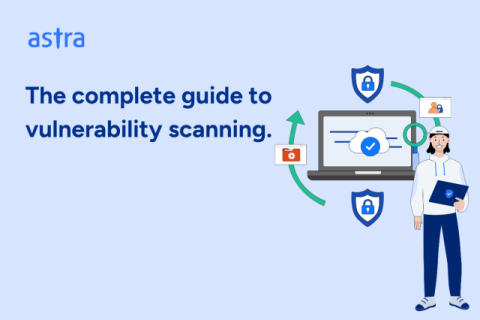
Vulnerability scanning refers to the process of evaluating applications, APIs they consume, systems, networks, and cloud environments to identify and pinpoint vulnerabilities within your organization’s digital infrastructure. It involves using automated tools trained to scan for known CVEs, misconfigurations, and potential attack vectors. Vulnerability scanning today is more than just ticking checkboxes.

How AI is Transforming Cyber Attacks

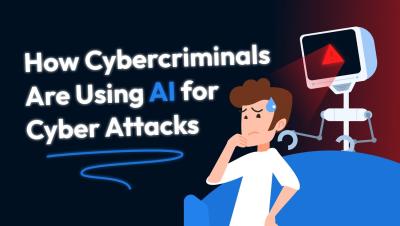
Since its introduction into cybersecurity in the late 1980s as a tool for detecting unusual activity, artificial intelligence (AI) has grown in popularity and functionality, with a major surge of adoption happening in the past few years, thanks to its growing ability to perform tasks faster and more accurately than humans. However, AI has never operated in isolation; it has always relied on human input. And any advanced technology that requires human input can be used for both good and bad.

AI-powered assessments: A new era in TPRM

UpGuard's Vendor Risk is a third-party risk management tool that delivers instant vendor insights, 360-degree assessments, and time-saving workflows—all in a centralized platform. Conduct vendor assessments at scale with an AI-powered security profile that scans vendor evidence to uncover control gaps and risks in minutes. Streamline risk management with actionable insights that help you prioritize, remediate, and track risks with precision. Generate AI-powered, point-in-time risk assessments in under 60 seconds to scale your program efficiently.

Fortifying Financial Services Cybersecurity with Threat Intelligence and Cybersecurity Automation

The World Economic Forum’s Global Cybersecurity Outlook 2025 Insight Report paints a bleak picture of what the year ahead holds for technology security teams worldwide. However, some industries are likely to be worse off than others.

Guide: What is the CMMC-AB (Accreditation Body)?

Every year that goes by shows an improvement in technology, often by leaps and bounds over previous technology. What used to be the realm of far-off science fiction so unbelievably exotic that it defined genres is now a commonplace reality. With new technology comes new threats. We’ve seen a dramatic increase in digital threats, from the SolarWinds supply line attack, to the compromised Outlook services, to the currently-ongoing Salt Typhoon attack on telecom companies.