Report: Phishing Remains the Most Prevalent Cyber Threat

INKY has published its annual report on email security, finding that phishing accounted for 30% of all reported cybercrimes last year. “Phishing threats grew in both volume and sophistication, introducing new attack vectors like QR codes, cross-site scripting, and weaponized file types (e.g., RTF and DOT),” the report says. “Cybercriminals also increasingly exploited trusted services such as DocuSign and PayPal, underscoring the urgent need for adaptive, robust security solutions.”


Safeguarding Classified Information: How to Prevent Insider Data Breaches

Protecting military secrets is critical to national security. It’s not just about securing information; it’s about ensuring our safety and maintaining a strategic advantage. Sweeping legislation, technology, and security protocols are in place to prevent classified information leaks within Defense, which extend down to Defense contractors. However, despite technological advances, humans remain the weakest link when it comes to protecting national secrets.

Ransomware and Healthcare: How To Defend Against Evolving Cyber Threats

Given today’s reality of cyber security, healthcare organizations are always at risk of getting attacked. A Sophos‘s study outlines that out of the surveyed organizations, 59% have been impacted by ransomware attacks in 2024. What is more – only 22% have actually fully recovered in less than a week. However, for 37% of those institutions, it took over a month to recover. This is why it is crucial to adhere to regulatory frameworks and keep your data secured to the highest standard.

Five Reasons to Transition Away from On-Premises Identity Systems

Traditional on-premises identity management solutions are no longer adequate to support small and midsize organizations. Moreover, modern Cloud alternatives have significantly eased the complexity and inefficiencies of premises-based identity management.

Increase visibility into your infrastructure processes with Process Tag Rules

Monitoring the health of your infrastructure and services requires you to understand the performance of fundamental system processes. But particularly in large environments, the sheer volume of processes can make their performance and resource usage difficult to track, let alone troubleshoot.

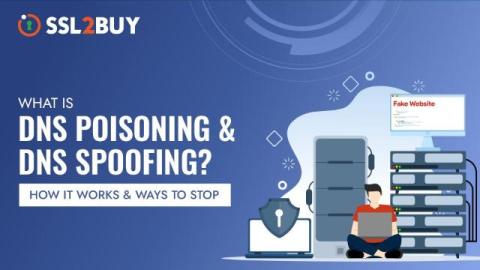
What is DNS Poisoning & DNS Spoofing? Mitigation Tactics for 2026

When you type a familiar website address in your web browser, you expect to land on a particular webpage, but what if you are redirected to a fake website designed to steal your sensitive data? Cyber attackers trick your internet settings into sending you to fake websites instead of the real ones. This is called a DNS spoofing or poisoning attack which exploits vulnerabilities in the Domain Name System (DNS) to compromise the entire network.

What is vendor fraud and how to protect your business from vendor fraud

Vendor fraud is a type of financial abuse that occurs when fraudsters pose as legitimate businesses to trick companies and individuals into paying for services they’ll never receive. These schemes exploit organizations, putting their victims at risk for financial and reputational losses. Moreover, the occurrence of vendor fraud has been rising in the last few years.

BONUS: Live Panel with Top China & Cyber Experts at The New York Stock Exchange

For this special live recording of To Catch a Thief at The New York Stock Exchange, host and former lead cybersecurity and digital espionage reporter for The New York Times, Nicole Perlroth sits down with those who have been directly targeted by, traced, or directly engaged China’s state-sponsored hackers, diplomatically, or in the cyber domain.

Meet LUNAR SPIDER: The Inner Workings of an eCrime Adversary

To anticipate threat actors’ behavior, we must understand them. That’s why CrowdStrike closely tracks the evolution and activity of 257 named adversaries, including the eCrime actor LUNAR SPIDER. “They almost behave like a startup; they’re constantly testing and innovating and developing what they’re doing,” Adam says of the group. “It’s an interesting paradigm when you think about how these eCrime actors operate.”