Security | Threat Detection | Cyberattacks | DevSecOps | Compliance

What a 3-Year Plan to Cut Software Risks by 75% Looks Like

Organizations face an increasing number of software security threats that can compromise their sensitive data and disrupt business operations. To effectively manage these risks and enhance their security posture, it’s crucial for organizations to adopt modern application risk reduction strategies that not only mitigate potential vulnerabilities but also provide clear, actionable next steps and insights for reporting purposes.

How to Safely Integrate LLMs Into Enterprise Applications and Achieve ISO 42001 Compliance

Enterprise applications, whether on-premise or in the cloud, access LLMs via APIs hosted in public clouds. These applications might be used for content generation, summarization, data analysis, or a plethora of other tasks. Riscosity’s data flow posture management platform protects sensitive data that would otherwise be accessible to LLM integrations.

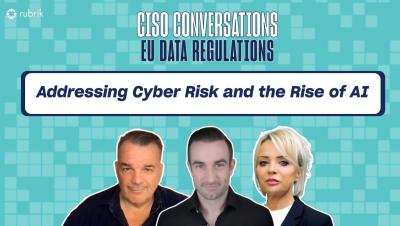
Addressing Cyber Risk and the Rise of AI

In this episode of CISO Conversations: EU Data Regulations, Pierre-François Guglielmi, EMEA Field CISO at Rubrik, is joined by Trish McGill, an Executive Subject Matter Expert for Cyber Security IT/OT at De Heus Voeders and Nobian, Brian Wagner, Chief Technology Officer at Revenir, and Tim Clements, Owner of Purpose and Means. Together, they explore the impact of cyber-attacks and data regulations on business resilience, particularly concerning critical infrastructure, and how these factors ultimately affect profits.

Healthcare IT Security and Compliance in 2024 and Beyond: A Comprehensive Guide

The healthcare industry remains a prime target for cyberattacks, with the growing adoption of digital health technologies escalating the risk. Hospitals and clinics, custodians of vast amounts of sensitive patient data, are particularly vulnerable. As the industry navigates the digital landscape, ensuring cybersecurity compliance is paramount to protecting patient privacy and maintaining operational integrity.

Security Awareness Isn't Enough - It's Time to Adapt

October 1st marks the start of Security Awareness Month. A global campaign launched two decades ago to improve cyber security awareness and equip people with the knowledge and resources they need to be secure online. But what impact has this campaign truly had in the workplace? Yes, it spotlights the issue and boosts high-level awareness of threats like phishing.

How to Optimise Your GRC Tools: Improving Value, Efficiency & True Risk Management

In this episode of Razorwire, we're joined by Jack Jones, creator of the FAIR risk model, to explore the complexities of Governance, Risk and Compliance (GRC) tools. We cut through the noise to deliver actionable insights on how to truly manage risk and improve the value and efficiency of your GRC solutions.

Complete Third-Party Risk Management Guide for 2025

Third-party risk management (TPRM) is the structured process of identifying, assessing, and mitigating risks posed by external vendors, suppliers, and service providers. These risks can include cyber threats, data breaches, regulatory violations, and financial instability, all of which can severely impact your organization’s security and compliance posture.