Security | Threat Detection | Cyberattacks | DevSecOps | Compliance

How Crypto Projects Are Revolutionizing Customer Acquisition Through Web3 Marketing

Remember when the biggest marketing decision for a new project was whether to buy Google Ads or Facebook Ads? Those days feel like ancient history now. I've been watching the crypto space evolve since 2019, and honestly, the way projects are acquiring users today is unlike anything I've seen in traditional business. We're not just talking about different platforms - we're talking about completely reimagined approaches to building communities and driving adoption.

Security Hardening Explained: Why is it Critical for Your Security Program?

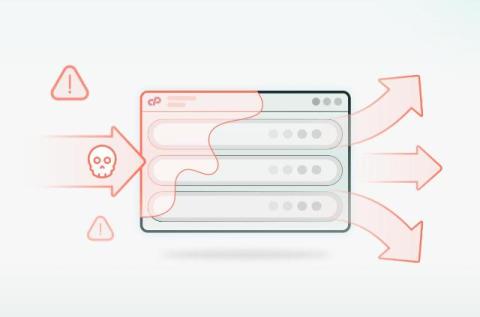
Security hardening is the practice of systematically reducing the ways an attacker can get into, move through, or persist in your environment.The reason this is a priority is that the gap between "deployed" and "properly configured" is where most breaches actually live. This guide covers the core principles of hardening, how it maps to compliance requirements, and how automated tooling has changed the way mature security teams operationalize it at scale.

Threat Brief: CVE-2026-41940: Critical cPanel & WHM Authentication Bypass Actively Exploited in the Wild

CVE-2026-41940 is a critical authentication bypass vulnerability in cPanel & WHM, including DNSOnly, and WP Squared. The issue affects cPanel software versions after 11.40 and can allow an unauthenticated remote attacker to gain unauthorized access to exposed hosting control panels. cPanel released patched versions and published official remediation and detection guidance.

What is XDR (Extended Detection and Response) in Cybersecurity? A Quick Guide

Extended Detection and Response (XDR) is a comprehensive security solution that integrates various security products and data into a simplified, unified system. XDR security combines prevention, detection, investigation, and response to provide a holistic cloud-based security approach.

PhantomRaven Wave 5: New Undocumented NPM Supply Chain Campaign Targets DeFi, Cloud, and AI Developers

Mend’s security research team has identified a previously undocumented fifth wave of the PhantomRaven campaign, an ongoing NPM supply chain attack that has been stealing developer credentials and secrets since August 2025. This new wave uses a fresh command-and-control server, 33 new malicious packages, and a more sophisticated three-stage payload chain.

Emerging Threat: (CVE-2026-41940) cPanel & WHM Authentication Bypass via CRLF Injection

CVE-2026-41940 is a pre-authentication remote authentication bypass in cPanel and WHM caused by a CRLF (Carriage Return Line Feed) injection in the login and session handling logic. An unauthenticated remote attacker can inject raw \r\n characters into a malicious basic authorization header, which cpsrvd then writes into a session file without sanitization.

Cato Joins OpenAI's Trusted Access for Cyber (TAC) to Advance AI-Driven Defense

Over a decade ago, Cato Networks helped shift cybersecurity to a new frontier: a converged, cloud-native platform that combines security and networking. As a long-time security researcher, the Cato platform was a radical change, providing researchers with the rich context and end-to-end visibility we needed to identify threats faster and deliver accurate protections.

CVE-2026-42208: Pre-Authentication SQL Injection in LiteLLM Exposes API Credentials

A critical vulnerability in LiteLLM is turning AI infrastructure into an open vault; no login required. Tracked as CVE-2026-42208, this vulnerability allows attackers to extract API keys, cloud credentials, and provider authentication tokens without any credentials or prior access to the system. The root cause is fundamental lapse in input handling. LiteLLM’s API key validation blindly injects the Bearer token from the Authorization header into a SQL query without sanitization.

Tanium + Moveworks + ServiceNow: Showcasing end-to-end incident resolution in a single experience

IT fulfillers typically juggle multiple systems to resolve a single incident: the ticket in ServiceNow, endpoint data in a separate console, and a knowledge base full of prior resolutions. The upcoming Moveworks integration with Tanium changes that. Real-time endpoint intelligence appears directly in the chat window where fulfillers already work, whether that is Slack, Microsoft Teams, or the ServiceNow web experience.

AI just became the world's most dangerous exploit writer. Here's why Sophos Endpoint is built to stop it.

AI just became the world's most dangerous exploit writer. Here's why Sophos Endpoint is built to stop it. AI-generated zero-days are here. Sophos Endpoint was architected to stop exploits that have never been seen before — blocking the techniques every attack must use, at the moment of execution, with no signature, no cloud lookup, and no configuration required.