Security | Threat Detection | Cyberattacks | DevSecOps | Compliance

Sysdig and Snyk use runtime intelligence to eliminate vulnerability noise

One of the greatest challenges in cloud environments today is to ensure rapid development cycles while keeping up with security vulnerabilities. Sysdig and Snyk announced today a partnership to deliver integrated code to container runtime security that eliminates up to 95% of vulnerability alert noise, optimizes remediation, and protects runtime. Developers can be fast with security barriers removed, and yet without sacrificing security.


Talking About the CISO Mental Health Crisis

For the past 20 years, I’ve served as CISO for companies across different sectors. In this role, I have shouldered responsibility for protecting each organization from a wide swath of rapidly developing cybersecurity threats. I have also learned firsthand how much stress security leaders face day-to-day. Recent conversations with my peers have shown stress in cybersecurity is an industry-wide problem. The CISO role is one of the most stressful in any organization.

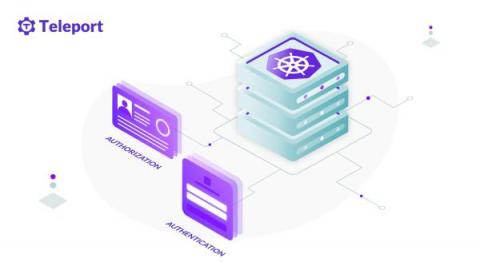
Authentication (AuthN) and Authorization (AuthZ) Tutorial for Kubernetes

Kubernetes is an API-centric orchestration platform. Every request, from the cluster components to users interacting with the system, has to go through the API server. The API server is a component in the control plane, and acts as a gatekeeper for the operation requests originating from both inside and outside of the cluster.

The Winter Olympics and Cybercrime: Caution Is Urged

Hosting the Olympics is always a source of national pride for any nation chosen to do so. Whether in winter or summer, the prestige of the world’s eyes being on an event that transcends political differences and has sport at the fore is a prize many countries and regions aspire to achieve. This all sounds fantastic and at one level is exactly what is happening at the 2022 Winter Olympics.

5 Naughty Little Things Even the Nicest Sysadmins Do

Being a sysadmin is definitely not for the average human being. You have to always be ready to help people, fight hackers, use tech gadgets … actually, a sysadmin’s typical day sounds a lot like the life of a superhero! But even superheroes have a dark side. We asked our sysadmin community to share some naughty things they’ve ever done — or keep doing. Naturally, their responses will remain anonymous due to the delicacy of the topic!

Logit.io Achieves Cyber Essentials Certification

We are pleased to announce that we’ve recently attained Cyber Essentials certification with the NCSC in addition to our existing compliance with PCI DSS, SOC 2 & ISO 27001. The NCSC (National Cyber Security Centre) is the UK authority for monitoring cybersecurity incidents, conducting threat assessments and acts as an overarching technical authority for mitigating cyber threats.

Cybersecurity Sessions recap: Artificial Engagement and Ad Fraud

In a recent episode of the Cybersecurity Sessions podcast, Netacea CTO Andy Still quizzed Beacon CTO Stewart Boutcher about ‘artificial engagement’, a term Stewart has championed as a member of the Data and Marketing Association North Council. Artificial engagement refers to fake clicks and impressions generated by bots on ad networks, costing marketeers huge chunks of their digital advertising budgets.

The factors that determine the cost of cyber insurance

In our predictions, we highlight how cybersecurity will become a key area for insurers in 2022. The seriousness and growth in damages caused by cyberthreats has raised the price of policies sharply in 2021, according to experts. Given this situation, companies must either be prepared to take out new insurance at higher rates or expect a rise in the cost of their current policy. But what elements determine the cost of cyber insurance for insurers? There are 5 key factors, both internal and external.

CVE-2021-44521 - Exploiting Apache Cassandra User-Defined Functions for Remote Code Execution

JFrog’s Security Research team recently disclosed an RCE (remote code execution) issue in Apache Cassandra, which has been assigned to CVE-2021-44521 (CVSS 8.4). This Apache security vulnerability is easy to exploit and has the potential to wreak havoc on systems, but luckily only manifests in non-default configurations of Cassandra.