Security | Threat Detection | Cyberattacks | DevSecOps | Compliance

Best Application Security Testing Tools: Top 10 Tools in 2025

What Are Application Security Testing Tools? Application security testing (AST) tools identify vulnerabilities and weaknesses in software applications. These tools assess code, application behavior, or its environment to detect potential security risks. They help developers and security teams prevent cyberattacks by addressing security issues during the development and deployment phases.

A Comprehensive Guide to Python Development Services by Intexsoft

Python isn't just a programming language-it's the engine behind many of the digital tools and platforms we use daily. Think of it like the electricity that powers our homes-essential, often unseen, and remarkably flexible. If you've ever used Instagram, browsed YouTube, or checked Dropbox, you've interacted with software built using Python.
Featured Post

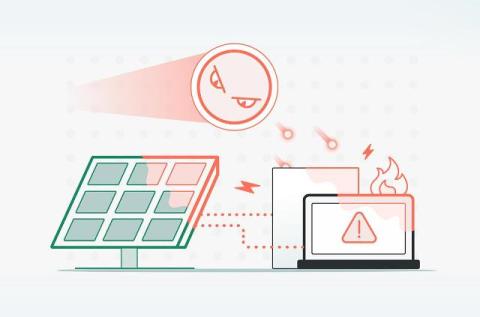
Keeping the Lights on: Cybersecurity Automation in Critical National Infrastructure

Ask anyone who was scheduled to fly in or out of London Heathrow airport in the UK on March 20 and 21 2025, and they'll tell you that disruption to critical national infrastructure (CNI) is no joke. A fire at a local electricity substation resulted in thousands of journey disruptions and cancellations as one of the world's busiest airports was closed and incoming planes were diverted to alternative locations. The knock-on effect of the closure continued for days, and lost tourism revenue for the UK.

Generative AI Security: Why Protection Can't Keep Pace with Innovation

The artificial intelligence revolution isn’t coming. It’s here and it’s moving faster than anyone predicted. Children now trust ChatGPT more than their parents for information. AI-generated content is becoming indistinguishable from human work. Entire industries are being reshaped by technology that seemed like science fiction just a few years ago.

Seamless API Security with Postman x Aikido

We’re teaming up with our friends at Postman to bring API security even closer to where developers already work. With the upcoming Aikido Security + Postman integration, you’ll be able to view recent security scans for your API collections—without ever leaving Postman. No new tabs. No switching tools. Just quick, clear security insights as you’re building. It’s never been easier to build and scale secure APIs as your organization grows.

Why RBAC Doesn't Work with AI Agents [And How to Fix It]

Role-Based Access Control (RBAC) is a fundamental, critical part of security architecture that prevents data from falling into the wrong hands. In regular data-based environments (deployed on the cloud or on-premise), RBAC is an effective measure in preventing unauthorized access, with a few exceptions, like successful hacking attempts or breaches. However, this system breaks down once AI comes into the picture. Let’s understand why – and what you can do about it.

Email Leaked to the Dark Web? Risks & Fixes Explained

Having email on the dark web is disturbing and more indicative of the fact that you are a target for cybercriminals. If your email address has been found in leaks stemming from a major data breach or somewhere due to unkept security, it makes you more vulnerable to identity theft, financial fraud, or personal extortion. But exactly what happens if your email is on the dark web?

Rewriting the Rules of Financial Services Content Management

AI and automation hold massive potential, but they can’t come at the expense of trust and control. That perspective, shared by Jerry Silva of IDC during our Financial Services Summit 2025 keynote, underscores a central tension in financial services: How do we adopt transformational technologies without undermining the very controls that define our industry? For decades, firms have operated under a familiar set of rules about compliance, security, data management, and efficiency.

Comparing MDR and MXDR: Key Differences, Suitability, and Trustwave's Solutions

As cyber threats grow in frequency and sophistication, organizations are increasingly turning to managed security services to help monitor, detect, and respond to attacks. Two prominent security solutions have emerged to these needs: Managed Detection and Response (MDR) and Managed Extended Detection and Response (MXDR). While both aim to enhance an organization's ability to detect and respond to threats, they differ significantly in scope, capabilities, and suitability for various environments.