Security | Threat Detection | Cyberattacks | DevSecOps | Compliance

Link11 Identifies Five Cybersecurity Trends Set to Shape European Defense Strategies in 2026

Link11 releases new insights outlining five key cybersecurity developments expected to influence how organizations across Europe prepare for and respond to threats in 2026. The findings are based on analysis of current threat activity, industry research, and insights from the Link11 European Cyber Report, alongside broader market indicators such as PwC's Global Digital Trust Insights 2026.

Finding the Best AI Governance Software for Enterprises

‍ ‍AI governance software provides GRC leaders and security and risk managers (SRMs) with a dependable way to understand how AI is being used across the business and whether safeguards are functioning as intended. The software can translate a complex ecosystem of tools and models into concrete insights that stakeholders can evaluate.

LevelBlue and Tenable Introduce Unlimited Enterprise-Grade Vulnerability Scanning in USM Platform at No Additional Cost

LevelBlue is redefining what clients and partners can expect from a managed security provider. Through a new partnership with Tenable, a world-class leader in vulnerability management, LevelBlue is introducing unlimited, enterprise-grade vulnerability scanning for all clients and partners using the LevelBlue USM platform — included at no additional cost.

Why Network Validation Matters and Why GigaOm Names Forward Networks as a Leader and an Outperformer

Enterprise networks are highly dynamic environments. They span campuses, data centers, and multiple clouds, requiring constant maintenance. Configuration updates, security policies, patches, capacity shifts, and automation-driven enhancements occur continuously. At this scale and velocity, every change carries risk unless it is verified against intended network behavior.

How Cyberhaven Uses Data Lineage to Revolutionize DLP

The concept of data loss prevention (DLP) is simple: stop sensitive information from leaving your organization through unauthorized channels. But in practice, traditional DLP solutions struggle to deliver on that promise. They rely on rigid rules, limited visibility, and a shallow understanding of how data is actually used. The result is missed threats, noisy alerts, and frustrated security teams.

OT resilience demands rapid recovery: Rethinking traditional backup

Industrial organizations face a stark reality: Downtime is costly, disruptive and cannot be entirely prevented. Whether it’s a cyberattack, hardware failure or simple data corruption, operational technology (OT) environments must be ready to recover quickly. In a recent podcast, Stephen Nichols, Country Manager for Canada at Acronis, shared his perspective on why rapid recovery is now a fundamental pillar of industrial resilience and how modern backup strategies are evolving to meet the challenge.

Introducing WatchGuard's Zero Trust Bundle: Zero Trust for the Way You Work

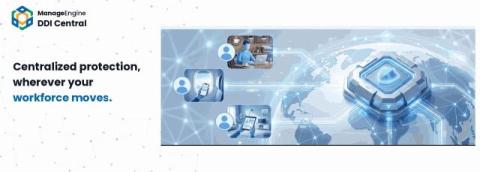
Hybrid work, cloud apps, and constant connectivity have completely reshaped how people get things done. But they've also reshaped how attackers operate. Today, most breaches begin with fundamental issues: stolen credentials, compromised devices, or remote access tools that weren't designed for a world of distributed users. That's why WatchGuard is introducing the Zero Trust Bundle, a unified approach that secures people, devices, and access decisions every time someone connects to your business.

Building an Intelligent and Autonomous Search Agent at Egnyte

Finding the right information quickly is a necessity for our customers—they rely on Egnyte to manage 100s of petabytes of data, from financial reports and legal contracts to marketing assets and engineering plans. Until now, we provided this capability through a powerful search engine equipped with keyword matching, boolean operators, and UI-based filters. But, as the volume and complexity of data grow, traditional search becomes a frustrating exercise in guesswork.

The New Mandate: CISA CPG 2.0 and the Evolution of Critical Infrastructure Security

The digital threats facing critical infrastructure—from energy grids and water treatment plants to hospitals and financial systems—are no longer theoretical. Nation-state actors and organized cybercrime are relentlessly targeting these essential services. The U.S. Cybersecurity and Infrastructure Security Agency (CISA) has responded with the updated Cybersecurity Performance Goals (CPG) 2.0, moving the industry beyond simple compliance toward verifiable cybersecurity resilience.