Security | Threat Detection | Cyberattacks | DevSecOps | Compliance

Modernizing with agile SASE: a Cloudflare One blog takeover

Return to office has stalled for many, and the “new normal” for what the corporate network means is constantly changing. In 2026, your office may be a coffee shop, your workforce includes autonomous AI agents, and your perimeter is wherever the Internet reaches. This shift has forced a fundamental change in how we think about security, moving us toward a critical new architecture: agile SASE.

Agentic AI Security: Spin Up a Fully Configured Tenant in Minutes

LimaCharlie built a SecOps Cloud Platform that connects every component, including agentic AI, via API. This architectural approach unlocks the full potential of AI, allowing it to do more than advise. We call it the Agentic SecOps Workspace. With LimaCharlie, AI can provision tenants, deploy rulesets, configure integrations, and manage infrastructure directly. Our bring-your-own-LLM approach makes AI a native part of your security stack, not a layer on top of it.

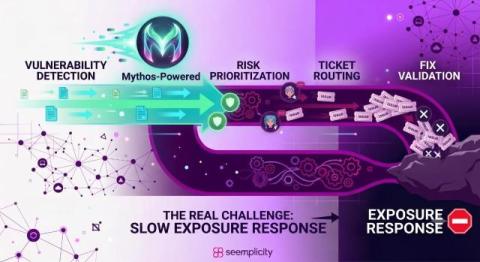
Stove Off, Windows Closed: What CMDB Accuracy Has to Do with Home Security

Have you ever left your home without checking if all the windows were closed? And have you ever sat in the office wondering whether you turned off the stove? When it comes to our own homes, most of us care a lot about safety. But what about corporate IT? Have you turned off the virtual stove and secured all doors and windows against unauthorized access? Do you even know how many doors and windows exist in your IT environment?

The Post-Quantum Journey Begins: Enforce, See, and Evolve with Quantum-Safe SASE

Encrypted data has a shelf life, and for many organizations it must remain secret for years. The post-quantum risk is not a dramatic collapse of encryption, but a quieter threat: attackers harvesting encrypted traffic today so they can decrypt it in the future. That is why post-quantum readiness is increasingly a board and CEO-level responsibility, with the CISO leading execution, because quantum risk threatens long-term business stability, compliance expectations, and trust.

Everyone Knows About Broken Authorization - So Why Does It Still Work for Attackers?

Broken authorization is one of the most widely known API vulnerabilities. It features in the OWASP Top 10, AppSec conversations, and secure coding guidelines. Broken Object Level Authorization (BOLA) and Broken Function Level Authorization (BFLA) account for hundreds of API vulnerabilities every quarter. According to the 2026 API ThreatStats report, authorization issues ranked ninth in the API Top 10, “reflecting chronic difficulty in managing roles and permissions at scale.”

CrowdStrike Achieves NCSC CIR Assurance for Incident Response

CrowdStrike has been independently assessed and assured against the National Cyber Security Centre (NCSC) Cyber Incident Response (CIR) Standard, a UK government-backed standard designed to help organizations identify incident response providers with the capability, governance, and technical competence to manage serious cyber incidents.

LevelBlue Security Colony Vendor Assessment: Know Your Vulnerabilities Before Others Do

Self-evaluation in any area, especially cybersecurity, can be difficult, but in an age when supply chains are long and third-party attacks are common, understanding your vendor’s cybersecurity posture is key. To address this cybersecurity challenge, LevelBlue Security Colony, a service founded under the legacy Trustwave brand, offers a Vendor Risk Assessment tool. It enables organizations to hold a mirror up to their online presence and see how it appears to others, particularly threat actors.

Scaling Threat Intelligence: Building Threat Intelligence Capabilities Without Expanding Headcount

As cyber threats grow and hiring slows, security leaders must scale smarter. This blog explores how to strengthen threat intelligence capabilities through automation, integration, and risk-led prioritisation, without expanding headcount.

How Early Signals Surfaced by Dark Web Intelligence Enhance Supply Chain Cyber Resilience

Organizations are facing a complicated and unwieldy cybersecurity perimeter due to the sprawling web of third-party dependencies that now account for 30% of all data breaches. This network of interconnected applications and infrastructure gives threat actors an opportunity through an extended attack surface to exploit organizations. Attackers are also moving faster by leveraging AI to weaponize zero-day vulnerabilities in days rather than weeks, and most organizations remain dangerously behind the curve.

Last call on 398-day certificates

The bell rings. Last call for 398-day certificates is March 15. After that, every CA is required to cut you off at 200 days. Some have already stopped serving them early. The rest follow in two weeks. The irony of good certificate management is that when it works, nobody notices. No alerts, no outages, no 2am pages. The only time it gets attention is when something expires. Which means the teams doing it well rarely have the budget or the political capital to fix the process before it breaks.