Security | Threat Detection | Cyberattacks | DevSecOps | Compliance

Endpoint management system breach: why privileged access management (PAM) is now critical

Endpoint management system breaches stem from compromised privileged access, not unpatched vulnerabilities. Attackers use legitimate credentials to operate undetected within trusted workflows, bypassing traditional controls. Eliminating standing privilege with just-in-time access and enforcing least privilege reduces attack paths, while identity threat detection and response ensures misuse of valid access is identified and contained in real time.

SOC 2 penetration testing requirements

For organisations pursuing SOC 2, demonstrating effective security controls is central to the audit process. While the framework does not prescribe specific technologies or testing frequencies, it does require evidence that risks are identified, assessed, and mitigated through appropriate controls. This is where SOC 2 penetration testing becomes particularly relevant.

Comprehensive Guide to Backing Up Office 365 Emails

Do you regularly back up Office 365 emails? If not, there’s bad news. Even cloud giants like Microsoft can experience outages and disruptions. And contrary to popular belief, Microsoft holds your organization responsible for any data loss due to these events. Moreover, according to Microsoft’s Shared Responsibility Model, protecting all your data within Microsoft 365 infrastructure is solely your responsibility.

Certificate distribution is the last mile nobody solved

Certbot is good software in the classic Linux tradition: it does one thing simply and expects you to chain it together with everything else. One server, one certificate, done. The trouble is that most environments are not simple. And the moment yours isn’t, you discover that renewing a certificate and getting it deployed are two different problems, and deployment is your problem.

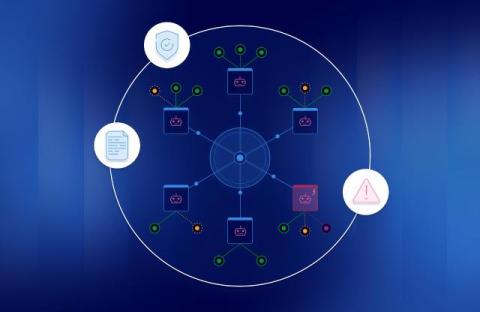
The Shift to Continuous Context and the Rise of Guardian Agents

AI agent risk doesn’t emerge in a single moment. It develops over time across configuration changes, runtime behavior, long-horizon tasks, and interactions between agents, users, and enterprise systems. Their behavior and exposure can shift in real time as agents rewrite instructions, update memory, and dynamically alter execution.

OpenClaw Needs Real Security Controls; We Built Them Open Source

AI agent adoption and development are evolving quickly. The tooling used to build agents is improving fast, but the security controls around those agents are often rigid, opaque, or difficult to adapt to real environments. As more teams experiment with OpenClaw, one challenge becomes clear: developers need ways to inspect what agents are doing, evaluate risky behavior, and intervene when necessary.

From Endpoint Visibility to Business ROI: Why Workforce Analytics Is Becoming A Boardroom Priority

In most organizations, the largest line item on the balance sheet isn’t technology, it’s people. Labor accounts for 70% of total operating expenses in most SaaS businesses, yet executives often lack a clear view of how that investment translates into productivity, risk exposure, software utilization, and operational efficiency. At the same time, organizations are facing a new wave of hidden costs: These blind spots quietly drain millions from operating budgets.

The Hidden Third-Party Risks Behind Domain Hijacking

Domains are foundational to digital trust. You visit your favorite online store or log in to your email without thinking twice about the web address in your browser. But what happens if that domain has been hijacked and you have just entered your personal information into an attacker’s trap?