Security | Threat Detection | Cyberattacks | DevSecOps | Compliance

AgentForger Showed Why Securing AI Agents Takes More Than a Patch

• Zenity secures ChatGPT Workspace Agents across their full lifecycle, from posture management at build time to detection and response at runtime. • AgentForger showed how a single link could forge an autonomous AI agent that inherits a real employee's identity and access, a risk legacy security tools can't see. • Zenity's AISPM catches the misconfigurations these attacks rely on, such as agents that auto-approve sensitive actions or connect to privileged systems.

Refused at the Worst Moment: Guardrail Asymmetry and the Trajectory Problem Behind the Hugging Face Breach

When Hugging Face's security team sat down to reconstruct what had torn through their production infrastructure in mid-July, they had more than 17,000 recorded attacker actions to sort through, spread across a swarm of short-lived sandboxes with decoy activity planted to slow them down. They did what any competent team would do in 2026 and reached for a frontier model to help triage the logs. However, the commercial APIs refused.

Exabeam vs. Splunk: Which Approach Improves Security Operations Outcomes?

Not every SIEM solution is built for modern security operations. While Splunk is widely used for log management, many teams face unpredictable pricing, complex tuning, and slow investigations as environments scale. New-Scale Fusion takes a different approach, It combines behavioral analytics, dynamic risk scoring, and coordinated AI agents to help teams detect risk earlier and move investigations forward faster. Here are six ways Exabeam improves outcomes compared to Splunk.

The Definitive Guide to Security Misconfiguration

The constant evolution of today's threat landscape has organizations counting on security controls to keep the bad actors out and safeguard their people, sensitive data, critical infrastructure, operations, and brand. However, even the most sophisticated security tools can present a risk when improperly configured. And unfortunately, even the best security teams can make mistakes.

How Does DLP Detect Data Exfiltration

Most data exfiltration does not look like a policy violation while it is happening. An employee moves a file to a personal cloud account they use every day. A contractor pastes source code into a chatbot to get help debugging. An AI agent with standing access to a shared drive pulls a document into a workflow no one is watching. None of it trips a keyword match, because none of it was written with a banned word in the payload.

5 Best Model Context Protocol (MCP) Server Plugins for WordPress (2026)

Managing a WordPress site no longer means logging in to the dashboard for every update or routine task. With the Model Context Protocol (MCP), AI assistants such as ChatGPT, Claude, and Cursor can securely interact with your WordPress site through natural language. They can retrieve content, update posts, manage WooCommerce stores, and perform other actions without custom integrations.

HIPAA Compliance Reporting: A Playbook for Security Teams

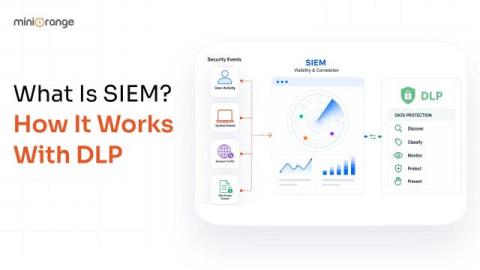
A healthcare security team rarely gets a clean warning before hipaa compliance reporting becomes real. One week it's a patient complaint about access, the next it's an OCR request for records, and the next it's a suspected breach that needs a defensible timeline, not a scramble for screenshots. In that environment, a SIEM is more than a detection tool, it's the system that turns logs, alerts, and evidence into a reporting record auditors can follow.

What Is a Cyber Risk Register? Definition, Structure, and Best Practices

A cyber risk register is a centralized, continuously updated record of every cybersecurity threat, vulnerability, and scenario an organization is tracking, structured so security, risk, and executive teams can prioritize, quantify, and act on each entry. Done well, it becomes the operational backbone of the cyber GRC program, translating technical security data into the business language leadership needs to make investment decisions.

What to Look for in an AI Security Platform for Enterprise Deployment

The enterprise AI security market in 2026 is crowded and confusing. Vendors that built their products to use AI for cybersecurity operations now market themselves alongside vendors that built their products to secure AI systems and govern AI usage. These are fundamentally different product categories solving different problems, and conflating them leads to evaluation errors that leave organizations protected against external threats but exposed to the risks their own AI systems introduce. ‍

Compliance Stopped Being a Checkbox. Most Companies Haven't Caught Up.

For a long time, compliance meant paperwork. Fill out the right forms, pass the annual audit, file it away. Done. Now, your development pipeline is generating code at a pace no human team can review manually, your supply chain runs three layers deep into open-source packages and AI plugins you didn’t choose, and regulators are watching in real time. The old approach doesn’t just underperform; it creates a false sense of security.