Security | Threat Detection | Cyberattacks | DevSecOps | Compliance

85% of Attacks Leverage RDP for Lateral Movement

Ransomware is pivoting toward faster, more targeted data-extortion models, where encryption is no longer the primary objective. According to WatchGuard’s 2026 cybersecurity predictions, crypto-ransomware will lose ground to models driven by data exfiltration and reputational leverage, lowering the technical bar for threat actors while increasing their attack velocity. This shift has a direct consequence.
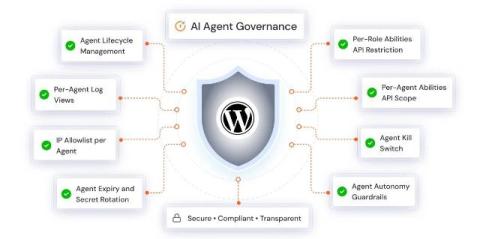
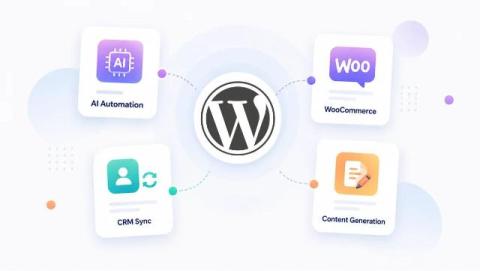
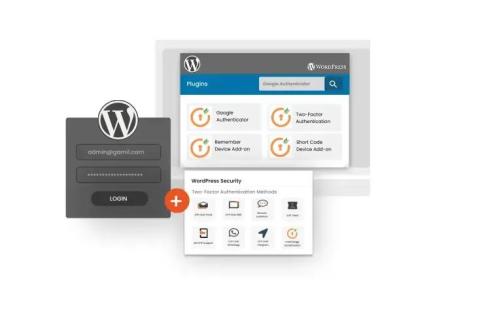
AI Governance for WordPress: How to Ensure Safe and Ethical AI Use

WordPress sites are adopting AI faster than any other web technology category, and the impact is already visible. Over 61% of WordPress site owners now use at least one AI tool for content creation or marketing. WordPress teams are using that access to write content, automate workflows, run chatbots, and process customer data at a scale that was simply not possible before. But as AI adoption grows, so does the risk.

AI Agent for WordPress: The Complete 2026 Guide

In 1997, IBM’s Deep Blue, the first AI agent, made history by defeating Garry Kasparov at chess. Since then, AI agents have advanced dramatically, evolving from single‑task systems to agents like OpenAI’s Operator, which can autonomously fill out forms, place orders, and schedule appointments. WordPress is a popular CMS that powers more than 20% of the top one million websites. Bringing AI agents into WordPress opens up new possibilities, making sites more capable and adaptive.

Veracode's 20th Anniversary: Two Decades of Data Powering the Future of Software Security

Twenty years ago, the idea of continuously scanning software for vulnerabilities at scale was ambitious. Today, it’s essential. As Veracode marks its 20th anniversary, we’re not just looking back at what we’ve built; we’re looking forward at what the data tells us about where software security needs to go next. And the data says a lot.

Stopping the Agentic Breach: How to Operationalize Your Defense Against Mythos-Speed Attacks

The industry has spent the past few weeks focused on Claude Mythos Preview and the rise of autonomous offensive AI. As outlined in Claude Mythos, Project Glasswing, and the Machine-Speed Security Race, this shift is not only about faster attacks. The same AI-driven acceleration that helps attackers discover weaknesses faster can also help defenders validate exposure sooner. For security operations teams, the challenge is turning that strategic shift into action.

Agentic AI Security: Governing Shadow Agents on Endpoints

Most enterprise security programs were built around a simple assumption, not invalid assumption that data moves when a person decides to move it. AI agents have broken that model, and now act autonomously, reading files, calling APIs, executing code, and transferring data across systems without waiting for a human to approve each step. Many of these agents were never sanctioned by IT or security.

Disrupting Glassworm: Inside CrowdStrike's Takedown of a Developer-Targeting Botnet

On May 26, 2026, at 14:00 UTC, the CrowdStrike Counter Adversary Operations team executed a coordinated takedown of the Glassworm botnet, a global threat targeting software developers through the open-source supply chain. In collaboration with Google and the Shadowserver Foundation, we struck all four of Glassworm's command-and-control (C2) channels simultaneously, severing the operators from their infected machines and their ability to deliver new malicious payloads.