Security | Threat Detection | Cyberattacks | DevSecOps | Compliance

Top Dark Web Forums to Watch in 2026

If you listen to the news, the “Dark Web” sounds like a digital version of a back-alley movie set. But if you’re a threat researcher, it looks a lot more like a marketplace one that is surprisingly organized, highly volatile, and increasingly sophisticated. As we move through 2026, the underground isn’t just one big scary place; it’s a fragmented collection of forums, each with its own “culture” and specialty.

CVE-2026-1281 & CVE-2026-1340: Actively Exploited Pre-Authentication RCE in Ivanti EPMM

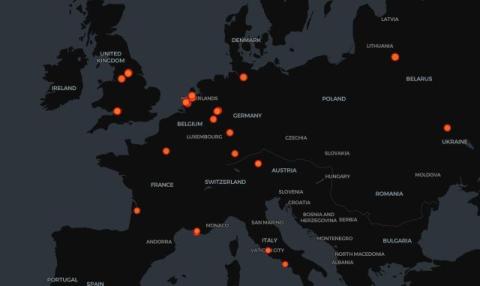
Approximately 1,600 Ivanti Endpoint Manager Mobile (EPMM) instances are currently exposed globally, creating a significant attack surface for enterprise mobile infrastructure. Ivanti has disclosed two critical vulnerabilities, CVE-2026-1281 and CVE-2026-1340, that allow unauthenticated remote code execution on affected on-premises deployments. CVE-2026-1281 has been confirmed exploited prior to disclosure and is now listed in CISA’s Known Exploited Vulnerabilities (KEV) catalog.

Why Your MSP Could Disqualify Your CMMC Assessment

Now that CMMC is a mandatory part of participating in the defense supply chain, a lot of businesses are starting to grapple with the requirements and what they mean for operations. One of the biggest roadblocks is the use of an MSP, or Managed Services Provider. MSPs are the backbone of many businesses that don’t have the resources to spin up entire architectures on their own. It’s a huge benefit and allows companies to exist when otherwise the investment to get started would be way too high.

From Shadow APIs to Shadow AI: How the API Threat Model Is Expanding Faster Than Most Defenses

The shadow technology problem is getting worse. Over the past few years, organizations have scaled microservices, cloud-native apps, and partner integrations faster than corporate governance models could keep up, resulting in undocumented or shadow APIs. We’re now seeing this pattern all over again with AI systems. And, even worse, AI introduces non-deterministic behavior, autonomous actions, and machine-to-machine decision-making. Put simply, shadow AI is much, much riskier than shadow APIs.

How Cloud-Native Applications Defend Against DDoS Attacks

As organizations migrate critical applications to the cloud, cloud-based DDoS attacks and defenses have become a growing concern amid the increasing number of cyber threats. Unlike traditional threats, these attacks are increasingly targeted, sophisticated, and capable of disrupting services in ways that can impact entire business operations and business continuity.

Why Confusing ChatGPT and LLMs as the Same Thing Creates Security Blind Spots

When news broke that the Head of CISA uploaded sensitive data to ChatGPT, the response was predictable: panic, headlines, and renewed questions about AI safety. But this incident reveals more about confusion than actual risk. The real issue? Most organizations don’t understand what they’re actually risking when they use AI tools. Let’s fix that.

Why Every Website Needs a Reliable URL Checker

Links are the connective tissue of the web. They guide users to content, help search engines understand structure and distribute authority across pages. When links fail, everything from user trust to search visibility can suffer. This is where a URL checker becomes essential. A URL checker is more than a quick "does this page load?" tool. At its most basic level, it confirms whether a URL resolves successfully. At a deeper level, it reveals status codes, redirect chains, DNS issues and server errors that aren't obvious from simply clicking a link.

The best risk management software for 2026

For many organizations, risk management is still stuck in the past—reliant on spreadsheets, manual reviews, and static registers that go stale shortly after they’re created. Without clear ownership or automation, treatment plans linger, and accountability slips. Risks remain fragmented across departments, disconnected from business impact and board visibility. ‍ At the same time, emerging threats are evolving faster than ever.

How to Implement Separate B2B and B2C Login & Onboarding in Shopify

Shopify stores are evolving beyond simple retail operations. What once was a primarily consumer-focused platform is now powering complex B2B experiences with tiered pricing, customer groups, and negotiated catalogs catering multiple B2B vendors and companies. However, as stores diversify their audiences, authentication becomes a critical pain point. A login flow designed for retail customers might be fast and convenient.