Security | Threat Detection | Cyberattacks | DevSecOps | Compliance

How Behavior Sequences Reveal Insider Risk Earlier

AI agents don’t hack their way in. They don’t need to. They carry real credentials. They run inside approved systems. They read data, call APIs, and execute workflows on their own. Every action looks authorized because it is. That’s exactly the problem. The risk doesn’t show up in any single action; it emerges in the pattern as behavior shifts and drifts over time.


Premier Contact Point Features for Contact Centre Efficiency

If you want better customer service without adding more complexity, Premier Contact Point is worth a close look. This cloud contact centre approach is built to simplify workflows, connect channels, and improve customer experience across every interaction. For businesses that need smarter tools and reliable support, it offers a practical path forward. The result is a setup that helps your team work faster, respond better, and create a smoother experience for every customer.
Featured Post

Solving the SOC Data Dilemma: Maximising Detection Without Maximising Cost

Today's Security Operations Centres (SOCs) operate under the pressure of data proliferation, high alert volumes, and tight budgets. Most SOC leaders face a data dilemma: they must choose which data to analyse and which to ignore. That choice directly determines threat detection capabilities and impacts the security posture of the business.

Protecting data in the cloud: Risks, responsibilities, and best practices

Cloud storage feels like an ocean—vast, endless, and deeper than Everest is tall. While it feels like there is limitless space for your data, the reality is not so harmonious. It's truly a case of survival of the fittest. With the right policies and data protection practices in place, your data remains safe. If not, it could either be lost in the abyss as dark data or end up as the next meal of a great white.

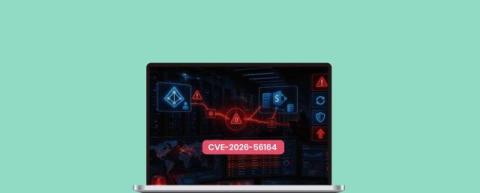
CVE-2026-56164: Unauthenticated SharePoint Zero-Day Grants Farm Administrator Access

Microsoft released patches for over 570 vulnerabilities in its July 2026 Patch Tuesday, the largest security update in the company’s history, including two zero-days already under active exploitation. Among them, one stands out for how it is being exploited right now: an unauthenticated vulnerability in SharePoint Server that allows an unauthenticated attacker to elevate privileges to Farm Administrator.

Top Vulnerability Scanner Tools Open Source 2026

Running a vulnerability scan is the easy part. The hard part starts when your queue fills with duplicate findings, stale CVEs, and reports that don't tell you what's exposed in production. If you're trying to build a practical vulnerability scanner tools open source stack in 2026, the key question isn't which scanner exists, it's which scanner fits your environment and feeds cleanly into your SIEM/XDR workflow so you can prioritize what matters.

The Coding Agent Attack Surface Needs More Than Posture Checks

Coding agents have a misconfiguration problem. YOLO mode enabled to reduce approval friction, sandbox enforcement disabled, Model Context Protocol (MCP) servers installed from public marketplaces without security review. These are common configurations in enterprise developer environments, and remediating them is genuinely valuable work. AI Security Posture Management (AISPM) addresses exactly this class of risk, surfacing misconfigurations before they create the conditions for a successful attack.

The ECB's AI Cybersecurity Action Plan: Why Speed, Visibility, and Evidence Matter

AI is compressing the cybersecurity timeline faster than most institutions can adapt to it. Not only do security leaders have to deal with this new reality, they have to answer key questions to internal and external audiences about their efforts — including regulators.

No Hackers Required: 10 Shadow AI Leaks Hiding in Plain Sight

“The call is coming from inside the house.” It’s one of horror’s oldest lines, and you already know how the scene goes. The team scrambles, rechecks every firewall, audits every login, hunting for an intruder. Then the trace comes back, and there isn’t one because there is no malware or forced entry. Just an employee, at their own desk, with their own login, who pasted a confidential spreadsheet into an unapproved AI tool to save 10 minutes before a deadline.