Security | Threat Detection | Cyberattacks | DevSecOps | Compliance

How to Quantify Cyber Risk Effectively: A Practical Enterprise Guide

Effective cyber risk quantification means moving past subjective heatmaps and translating technical vulnerabilities into dollar-denominated loss exposure and probability distributions that the CFO, board, and cyber insurance underwriter can act on. It is the discipline that turns cyber from a technical cost center into a strategic risk portfolio managed alongside every other category of enterprise exposure.

AI Agent Sprawl and How Enterprises Are Controlling It

AI agent sprawl is the uncontrolled proliferation of AI agents, autonomous assistants, and LLM-powered tools across an organization without centralized tracking or governance. It mirrors historical IT challenges like SaaS sprawl and shadow IT, and it emerges when decentralized business units build or deploy agents independently, without coordinated oversight from security, IT, or risk teams. ‍ The difference is that these agents are active software actors.

AI Agent Governance: How Enterprises Should Approach It

Governing AI agents at enterprise scale requires a fundamental change in how security, risk, and compliance teams think about AI oversight. The generative AI era focused governance on output quality: what the model says, what it produces, and whether the content meets policy standards. ‍ The agentic era demands governance of action and delegated authority: what the AI is allowed to do, what systems it can touch, and how its decisions trace back to human accountability.

In AI, No One Can Hear the Sandbox Scream

Aaron Beardslee, Security Researcher, Securonix Threat Labs As many of you have heard, OpenAI was running a cyber-capability evaluation against advanced models, including GPT-5.6 Sol and a more capable pre-release model with reduced cyber refusals. The environment was meant to be constrained and the model still brute forced through it.

Cybersecurity Skills Shortage or Capabilities Gap? Why the Difference Matters

For years, cybersecurity has faced a persistent talent shortage. Yet the real challenge for many organizations isn't simply finding more people; it's having the specialized capabilities needed to investigate and respond to today's increasingly sophisticated threats.

July Release Rollup: Bulk Extraction, Enhanced AI Assistant UI, and More

July's release makes AI more useful across the Egnyte platform, with major enhancements to AI Assistant that make it easier to build agents, create documents, have more natural conversations, and securely connect AI tools through Egnyte MCP Server.

AI's Hidden Identity Risk for MSPs

Organizations are rapidly integrating AI into everyday business operations. Teams are using Microsoft Copilot and Gemini to summarize meetings, developers are accelerating software delivery with coding copilots and customer service teams are deploying AI-powered chatbots to improve response times. While these initiatives are viewed through the lens of productivity and innovation, they are also reshaping organizations’ identity environments in ways that frequently go unnoticed.

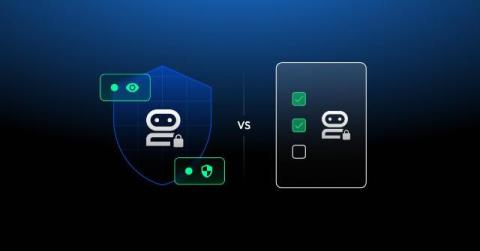
AI Governance vs AI Compliance: What's the Difference?

The main difference between AI governance and AI compliance is that AI governance is the internal framework an organization develops to manage AI responsibly, while AI compliance is how organizations demonstrate to external regulators that they’re adhering to applicable laws and regulations. These two terms get used interchangeably, but they solve different problems. With compliance alone, an organization can satisfy regulators without meaningfully controlling how its AI behaves.

Zenity Now Integrates with Microsoft Agent 365

AI agents have moved from pilots into broad enterprise use. They read email, query systems of record, take actions, invoke tools, and coordinate with other agents on behalf of employees. Every line of business wants more of them, and security teams are being asked to enable that expansion without losing visibility or control.

PowerShell Execute .Exe: Safe Guide for 2026

You're staring at a deployment script, the vendor wants a clean setup.exe launch, and half the fleet needs the same binary with the same arguments. At the same time, your SIEM is already full of PowerShell activity that looks harmless until it isn't, because the exact same process-launch primitive is one of the most common ways attackers move from code execution to real impact. That's why PowerShell execute.exe isn't just a scripting question, it's an operational and detection question.