Security | Threat Detection | Cyberattacks | DevSecOps | Compliance

7 Ways to Improve Microsoft Sentinel Detection Outcomes

See how Securonix Threat Analytics helps security teams improve detection coverage, reduce SOC engineering work, and maximize Microsoft Sentinel ROI. Microsoft Sentinel provides a strong foundation for security operations. As environments grow more complex, detecting sophisticated attacks often requires extensive engineering, custom KQL development, and ongoing content maintenance.

Dojo AI: Agentic security and cloud operations powered by AI-ready telemetry

You’re collecting more telemetry than ever, but chances are it hasn’t made your job easier. Fragmented data, disconnected tools, and manual investigations mean more noise, slower response times, and higher operational costs. The promise of AI is that it will solve it, but in most cases, you just end up trading noise for expensive hallucinations. Point an LLM at raw, unorganized log storage, and you get an assistant that burns through credits to produce generic, unreliable answers.

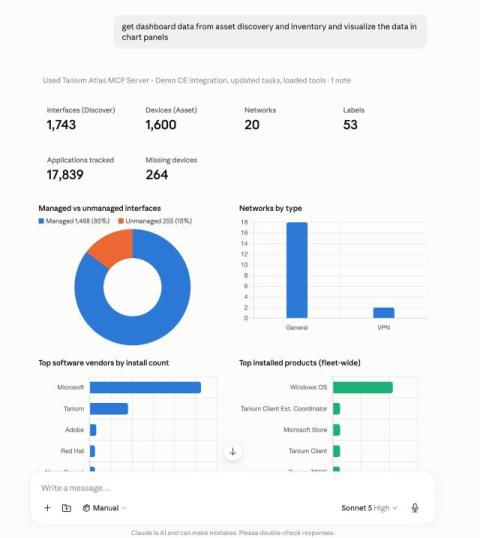
Bringing Tanium's real-time endpoint intelligence into enterprise AI workflows with MCP

Enterprise AI is quickly moving from experimentation to day-to-day operational use. Security analysts, IT operators, and platform teams are increasingly working inside AI-native environments — from Claude and Microsoft Copilot experiences to internally built agents and automation workflows. But there is a practical challenge: AI workflows are only as useful as the enterprise systems they can safely reach.

Introducing Agentic SecOps: Live Endpoint Truth for the AI-Driven SOC

Security operations teams are being asked to move faster than ever. Adversaries are using automation, infrastructure changes by the minute, and the number of alerts, exposures, and investigative paths keeps growing. But too many SOC workflows still depend on scarce expert time. A senior analyst writes the query, translates the hypothesis, pivots across tools, validates the result, and then hands the finding off for action. The craft works.

Tanium and Google Threat Intelligence bring Google-grade threat intel to the live endpoint

Security teams are under pressure to move faster, investigate more confidently, and make better decisions with fewer resources. But even the best security operations teams run into the same problem. They often do not have a reliable place to start. Threat hunting depends on high-quality intelligence and experienced analysts who know how to turn that intelligence into useful pivots. Alert triage depends on knowing which signals matter and which ones are noise.

Deploying Microsoft 365 Policy Management in Complex Environments

Achieving regulatory compliance across a modern enterprise requires a reliable strategy for Microsoft 365 policy management. In complex organizational structures, simply storing documents in cloud libraries is not enough; organizations must actively distribute, track, and verify that critical policies are read and acknowledged. Implementing purpose-built Microsoft 365 policy management ensures your compliance processes transition from passive document storage to an automated, audit-ready policy management system natively integrated into your existing workspace.

How Geo-Targeted Attacks Evade Detection

The era of spray-and-pray cyberattacks is effectively over. Modern threat actors do not launch global, noisy campaigns. They launch highly localized, surgical strikes. They analyze regional vulnerabilities. They deploy localized phishing lures. Most importantly, they perfectly mimic local network traffic. When an attack originates from an IP address that your security perimeter explicitly trusts, traditional alarms stay silent. This is the core danger of geo-targeted evasion.

Havoc Malware: Techniques, Targets, and Threat Overview

Security analysts have noticed a trend among threat actors shifting towards adopting a novel open-source command and control (C2) framework called Havoc as an alternative to paid solutions like Cobalt Strike and Brute Ratel. Developed in the C language and introduced in 2022, Havoc’s Main branch received updates in 2023.

The Anatomy of a Pentest: Where Does AI Change the Game?

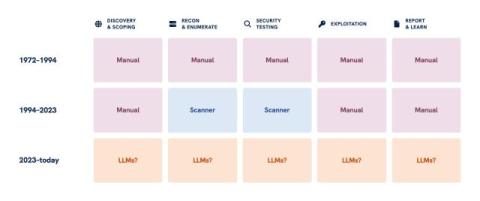
Two weeks ago I sat in on a webinar where CyCognito’s founders walked through continuous AI pentesting. The framing stayed with me: the pentest itself has not changed, only who runs each part of it. AI has reached nearly every corner of cybersecurity, and pentesting is no exception. The promise is an agent that probes applications, uncovers flaws scanners miss, and delivers a report before a human tester has finished scoping the engagement.

Attribute Based Access Control: A 2026 Guide

You're probably already living with the problem this model was built to solve. A finance analyst logs in late from a personal laptop, opens a payroll export, and the old role rule says the request looks fine because the person belongs to the right team. The access engine never asks whether it's midnight, whether the device is managed, or whether the file is sensitive enough to deserve a second look.