Security | Threat Detection | Cyberattacks | DevSecOps | Compliance

The Latest Cybersecurity News & Insights From Around The World

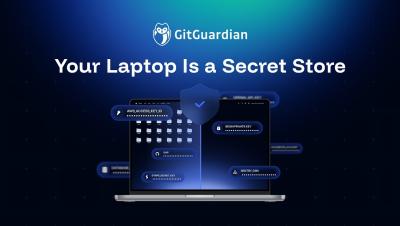
Introducing GitGuardian Developer Endpoint Protection: Inventory Every Laptop's Credentials
A single compromised laptop can mean weeks of manual credential hunting, or hours of clear, prioritized action. See how GitGuardian Developer Endpoint Protection inventories every credential on a developer's machine so your security team can map the blast radius fast. When an attacker compromises a developer laptop, traditional endpoint tools cannot tell you what credentials were exposed.

EU AI Act: risk tiers, timeline, and compliance requirements
The EU AI Act is a regulatory framework governing the development, deployment, and use of artificial intelligence within the European Union. The European Commission proposed it to keep AI systems placed on the EU market safe and transparent and to make sure they respect fundamental rights. The Act sets obligations for AI providers, users, and other stakeholders to address risks associated with AI while still supporting innovation and investment in the sector.

How Two Small Bugs Led to a Critical Vulnerability and a Cryptography Audit of Go's SSH Library
Last summer we found a critical vulnerability in Teleport, our first in a decade. It was assigned CVE-2025-49825. This vulnerability allowed Teleport SSH certificates, issued to users of a cluster, to sign other SSH certificates which would then be incorrectly accepted by Teleport as valid. Once you can sign your own certificates, you can escalate privileges and bypass authentication controls. This is why we classified it as a critical vulnerability.
That's a wrap: Mend.io at Black Hat USA 2026
Another Black Hat USA is in the books, and what a week it was. From a main stage keynote at the AI Summit to candid podcast conversations, a video interview with Cyber Defense Magazine, and a booth game that just wouldn’t quit, Mend.io showed up in Las Vegas ready to talk about the question every security leader is wrestling with right now: as AI reshapes both the software we ship and the systems we have to defend, who do we trust to verify that it’s safe?

Developer Endpoint Protection: Stop Secrets Leaking From Laptops | GitGuardian
Every developer laptop is a credential store: secrets hide in.env files, config files, and shell history, and every AI agent on the machine keeps adding more. Most teams already scan repositories and CI pipelines for secrets, but a secret lands on the laptop long before it reaches either one, and that's the place nobody scans. GitGuardian's Developer Endpoint Protection closes that gap.

How to Use Teleport and GitHub Actions to Deploy to Kubernetes Without Shared Secrets
We live in the era of Kubernetes. And if you are using Kubernetes, you are probably using CI/CD to deploy your applications into it. However, as CI/CD and Kubernetes have grown in popularity, the number of bad actors looking to exploit weaknesses in them has also grown. It is critical that modern security techniques keep your Kubernetes clusters, and the sensitive data and services within them, safe from attack.
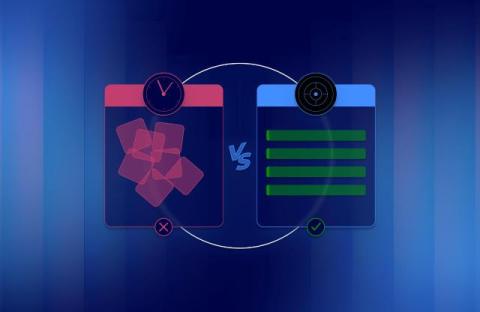
Patch faster isn't the answer. Patch smarter is.
The 30-day patch cycle is dead. Most security teams already know this. What they haven’t fully reckoned with is why it died, and what has to replace it. SC Media recently gathered a range of security leaders on exactly this shift, and the picture they described is stark. AI didn’t just add more vulnerabilities to the pile. It collapsed the time between disclosure and exploitation from weeks to hours.
Mini Shai-Hulud Hits keyv: Trojanized Release Exfiltrates CI Secrets via GitHub
On August 4, 2026, a malicious version of keyv was published to npm as keyv@6.0.0, one of a number of npm packages affected across the Keyv and Cacheable ecosystem. The release follows the Mini Shai-Hulud pattern: a trojanized version of a heavily depended-on package, with an install-time hook that reaches cloud and CI credentials. It leaves the compiled library untouched and instead adds a preinstall hook and two files.