Security | Threat Detection | Cyberattacks | DevSecOps | Compliance

Achieving CI Velocity at Tigera using Semaphore

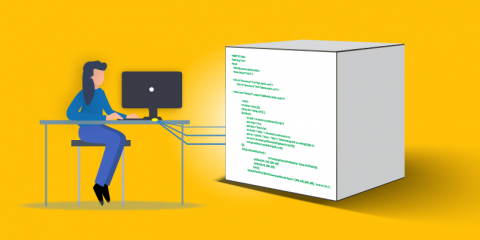
Tigera serves the networking and policy enforcement needs of more than 150,000 Kubernetes clusters across the globe and supports two product lines: open source Calico, and Calico Enterprise. Our development team is constantly running smoke, system, unit, and functional verification tests, as well as all our E2Es for these products. Our CI pipelines form an extremely important aspect of the overall IT infrastructure and enable us to test our products and catch bugs before release.

Why Patch Management Is Important and How to Get It Right

Many software developers tend to see patch management as another tedious security task that gets in the way of the development process. However, considering Forresters’s recent State of Application Security Report for 2020 predicted that application vulnerabilities will continue to be the most common external attack method, patch management is a critical part of the vulnerability management process that organizations can’t afford to neglect.

Webinar | How Decisiv Scaled Global Remote SSH Access and Remained Compliant With Teleport

Learn how Decisiv provides secure access to developers and deals with compliance hurdles. Senior Engineer Hunter Madison will talk about how Decisiv needed to quickly solve the pain of scaling the engineering team, migrating to AWS, maintaining ISO 27002 compliance, and a few of his key learnings from his two-year journey using Teleport.

Why Microservices Require Unified Tools for Authorization

Cloud-native organizations embracing microservices are running into an unavoidable security question: how to handle microservice authorization controls? The central problem is this: unlike monolithic app structures, microservices architectures expose dozens more functionality through APIs, which can leave them vulnerable to attack.

Five OPA and Styra Trends that Prove Kubernetes Adoption

I’m often asked from people outside the cloud-native space how the market is progressing and if Kubernetes is taking off or not. My answer is always the same: Kubernetes is absolutely the de facto approach to managing containerized applications, and, because of that, the market is expanding exponentially. We’re almost two-thirds of the way through 2020, and in the cloud-native space, it’s so far been the year of Kubernetes.

Security Policy Self-Service for Developers and DevOps Teams

In today’s economy, digital assets (applications, data, and processes) determine business success. Cloud-native applications are designed to iterate rapidly, creating rapid time-to-value for businesses. Organizations that are able to rapidly build and deploy their applications have significant competitive advantage.

Our Favorite Web Vulnerability Scanners

Web vulnerability scanners crawl through the pages of web applications to detect security vulnerabilities, malware, and logical flaws. They do this by generating malicious inputs and evaluating an application’s responses. Often referred to as dynamic application security testing (DAST), web vulnerability scanners are a type of black-box testing; they perform functional testing only and don't scan an application’s source code.