Security | Threat Detection | Cyberattacks | DevSecOps | Compliance

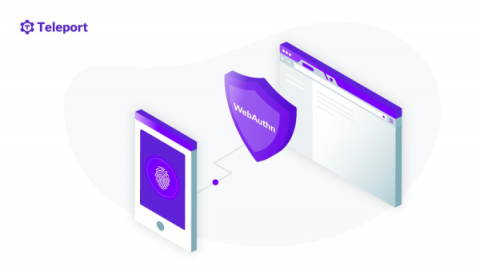
Secure Bots and Service Account Access With Ephemeral Certificates

"Create cryptographically secure access keys" and "Rotate keys frequently" — These are probably the best security recommendations one can get for bot authentication security. In reality, while these are good practices, they simply aren't enough. First, cryptographically secure keys only prevent simple guessable or brute-force attacks, but the impact is catastrophic if the keys themselves are stolen.

Stranger Danger: Your JavaScript Attack Surface Just Got Bigger

Building JavaScript applications today means that we take a step further from writing code. We use open-source dependencies, create a Dockerfile to deploy containers to the cloud, and orchestrate this infrastructure with Kubernetes. Welcome, you're a cloud native application developer! As developers, our responsibility broadened, and more software means more software security concerns for us to address.

Impact Analysis: RubyGems Critical CVE-2022-29176 Unauthorized Package Takeover

On May 6, 2022, a critical CVE was published for RubyGems, the primary packages source for the Ruby ecosystem. This vulnerability created a window of opportunity for malicious actors to take over gems that met the following criteria: Because RubyGems provides data dumps that include a lot of information, it is unfortunately relatively simple to create an automated mining process for these criteria.

3 Ways Developers Can Boost In-App Security

In the past, responsibility for data privacy and security fell on non-development teams, like IT, security or compliance. But this is changing. Thanks to the adoption of cloud native technologies and trends like policy-as-code, developers are more focused on security than ever. According to the Styra 2022 Cloud-Native Alignment Report, over half of developers think their organization should enhance its data privacy efforts in the next 12 months.

How to get a shell in a Kubernetes Pod

Containers are used for packaging software and all its dependencies before deployment. Before the era of containers, software developers had to deal with compatibility issues during deployment. These could occur when software functions properly during the development phase but fails to function due to dependency issues in the production environment. With containers, however, all the software dependencies used for development can be shipped and used in the production environment.

Kubernetes security multidimensional single pane of glass experience

One of the most used buzzwords in our industry is "single pane of glass". But what does it really mean? In most cases, it means a single dimension – either cross-infrastructure or cross-functionality or cross-organization. It usually never AND. Most likely, it's OR. So you will need to use multiple single-pane-of-glass products This led to an interesting discussion between us. Is it a single-pane for all the K8s clusters? Or single-pane for all the K8s security capabilities/functionalities?

Detect infrastructure drift and unmanaged resources with Snyk IaC

As a developer, you’re probably using some infrastructure cloud provider. And chances are, you automate parts of your infrastructure using infrastructure as code (IaC), so deployments are repeatable, consistent, easily deployable, and overall, more secure because code makes parameters more visible.

How to Secure Amazon RDS Access With an Identity-Aware Access Proxy

Databases are sensitive resources that need an additional layer of protection and security. Though database servers have built-in authentication and authorization mechanisms, they are not designed for cloud-based, multi-tenant access mechanisms. Managed databases such as Amazon RDS are accessed and administered by different personas with varying levels of access permissions.