Security | Threat Detection | Cyberattacks | DevSecOps | Compliance

SOC 2 Type 1 vs Type 2: What Security Leaders Need to Know About Audit Readiness

Security and compliance teams don't spend much time debating definitions. They focus on whether controls actually work in practice. That's why understanding the difference between SOC 2 Type 1 and Type 2 matters. The choice affects how controls are designed, how they are tested, and how customers evaluate your security posture. At a high level, Type 1 evaluates whether controls are properly designed at a specific point in time. Type 2 evaluates whether those controls operate effectively over a defined period, typically three to twelve months.

Featured Post

The UK's Cyber Action Plan marks the end of compliance-led security

The UK government's new £210 million Cyber Action Plan signals an important shift in how cyber risk is being addressed at a national level. Designed to strengthen cyber defences across government departments and the wider public sector, the plan establishes a new Cyber Unit and introduces stronger expectations around resilience, accountability and operational capability.

The 4 best Trust Center products for 2026

Accelerating security solutions for small businesses‍ Tagore offers strategic services to small businesses. A partnership that can scale‍ Tagore prioritized finding a managed compliance partner with an established product, dedicated support team, and rapid release rate. Standing out from competitors‍ Tagore's partnership with Vanta enhances its strategic focus and deepens client value, creating differentiation in a competitive market.

How LevelBlue's FedRAMP Authorization Removes the Burden of CMMC Federal Compliance from Clients

Navigating the labyrinth of the U.S. federal procurement system, especially for Defense Industrial Base (DIB) companies, can be challenging, particularly when trying to meet stringent cybersecurity compliance standards like the Cybersecurity Maturity Model Certification (CMMC).

7 tabletop exercise scenarios every cybersecurity team should practice in 2026

The world of cybersecurity is experiencing a shift as adversaries continue to refine their techniques. In 2025, cybersecurity teams will confront a host of new challenges that demand proactive and adaptive responses. Tabletop exercises offer an excellent opportunity to simulate incidents in a controlled environment, allowing teams to evaluate and improve their incident response plans.

Understanding AI Compliance When Choosing AI-Enabled Solutions

2001: A Space Odyssey introduced the world to HAL 9000, the fictional artificial intelligence (AI). HAL’s capabilities include everything from facial recognition to natural language processing and automated reasoning. As HAL malfunctions over time, the computer becomes violent to prevent the humans from disconnecting it. The story serves as a morality tale suggesting that without human oversight, AI is dangerous.

CMMC Assessments and C3PAOs: Preparing for Evolving Governance

As the Cybersecurity Maturity Model Certification (CMMC) program transitions from its early rollout phase to full enforcement, the role of Certified Third-Party Assessment Organizations (C3PAOs) is under increasing scrutiny. Governance expectations are shifting, assessor variability remains a challenge, and contractors face growing pressure to prepare for consistent, fair, and predictable assessments.

The 5 best GDPR compliance software options for 2026

Accelerating security solutions for small businesses‍ Tagore offers strategic services to small businesses. A partnership that can scale‍ Tagore prioritized finding a managed compliance partner with an established product, dedicated support team, and rapid release rate. Standing out from competitors‍ Tagore's partnership with Vanta enhances its strategic focus and deepens client value, creating differentiation in a competitive market.

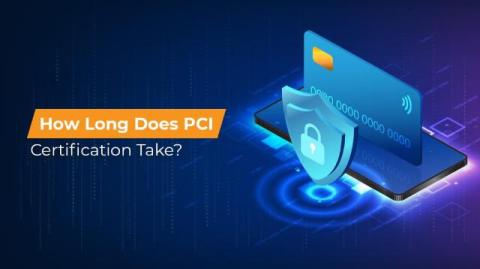
How Long Does PCI Certification Take?

PCI-DSS is one of the most widely used security frameworks around the world. Unlike frameworks like FedRAMP or CMMC, PCI-DSS is a global security standard, not a standard issued by the US Government. It’s the Payment Card Industry Data Security Standard, and it’s required for any business or entity that handles cardholder or authentication data. Merchants, payment providers, gateways, banks; they all need it.

Why Every Industry Now Needs Cybersecurity Leaders

Cyberattacks are no longer rare events that only affect large tech firms. Many businesses today face constant attempts to access their systems, steal data, or disrupt operations. Even in growing cities like Wilmington, NC, where small businesses, startups, and universities are expanding their digital presence, this risk is becoming part of everyday business reality. Many organizations still rely only on technical teams to handle security, but that approach often falls short. Decisions about risk, spending, and response need leadership involvement.