Security | Threat Detection | Cyberattacks | DevSecOps | Compliance

Collaboration: The Key Ingredient to Successful Security Compliance

In the fast-paced world of software development, the clash between developers and security experts could greatly benefit from some much-needed balance. On one side, developers strive for success based on metrics like delivery time, deployment frequency, and number of features. On the other side, security professionals are measured on vulnerability and compliance metrics.

Cybersecurity Compliance in the Education Industry: How to Protect Students' Personal Data

The education industry is facing a growing threat from malicious cyberattackers, both external and internal. According to the Cyber Attack Trends report by Check Point Research, the education and research industry suffered from 44% more cyberattacks in the first half of 2022 compared to the same period in 2021. Therefore, cybersecurity in the academic industry is of paramount importance now.

Data compliance in public sector: Making data secure and accessible isn't mutually exclusive

In the UK, the Information Commissioner’s Office (ICO) has the responsibility of upholding information rights in the public interest. The ICO work with businesses and public sector organisations to offer guidance and best practices for using data and information responsibly, as well as regulating and enforcing relevant laws.

OMB M-21-31: Your Complete Guide

Imagine that you work in IT and security for a federal entity. How do you manage your event data across different systems and networks? When something goes wrong, how do you detect, investigate and remediate these security incidents? That’s what the Office of Management and Budget (OMB) addresses in M-21-31: a memorandum that provides guidance for federal agencies to increase their visibility and response capabilities before, during and after a cybersecurity incident.

Penetration Testing and Digital Operational Resilience Act (DORA)

In this enlightening discussion with expert Paul Dwyer, we explore the changing landscape of penetration testing within the context of the Digital Operational Resilience Act (DORA). Paul addresses the concern of traditional, snapshot-in-time penetration testing being costly and asks whether this will drive organizations towards more regular and ongoing testing to enhance security. The answer is a resounding "yes." DORA includes a dedicated section that mandates various types of tests, ranging from standard assessments to highly specific threat lab penetration testing.

The Consequences of Non-Compliance in Cybersecurity: Risks and Penalties

Non-compliance in cybersecurity marks a grave oversight. It involves neglecting established security protocols, leaving organizations vulnerable to malicious actors. Read on as we examine the potential risks of non-compliance, including heightened susceptibility to cyberattacks, the specter of data breaches, and the erosion of a company's hard-earned reputation.

Navigating the AI Maze: Demystifying Artificial Intelligence and Its Misconceptions

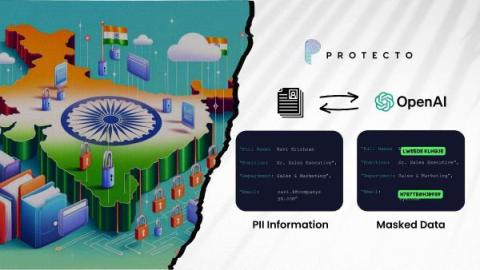
In the world of technology, few concepts have captured our collective imagination like Artificial Intelligence (AI). It’s the promise of machines that can think, learn, and perform tasks with a level of sophistication that mimics human intelligence. Yet, the allure of AI has also given rise to a web of confusion, myths, and misunderstandings.

Organizational Resilience: Insights from Paul Dwyer on DORA

Discover the critical components of organizational resilience with expert Paul Dwyer in this enlightening discussion centered around the Digital Operational Resilience Act (DORA). Paul emphasizes the fundamental aspect of resilience, which revolves around rigorous testing, learning from those tests, and implementing improvements. It's about proving that you've not only conducted tests but have also adapted and grown from the experience.

How to Extend Digital Transformation to GRC Strategies

With today’s dynamic cybersecurity threat landscape, governance, risk management, and compliance (GRC) can’t afford to be stuck lagging and playing catch-up. It needs to be leading the pack, ensuring organizations are compliant, protected, communicative, and driving business success.