Security | Threat Detection | Cyberattacks | DevSecOps | Compliance

Your AI Isn't Broken... Your Data Is #shorts #ai

Your AI works perfectly during testing… but suddenly fails in production. Why? The problem usually isn’t the model — it’s the data. Synthetic data looks clean and structured. But real-world data is messy: typos, missing values, broken formats, and unexpected edge cases. When AI models train only on synthetic datasets, they never learn how to handle real-world complexity. In this video, we explain why synthetic data can break AI systems and how using real production data safely can make AI more reliable.
Delivering the Agentic SOC as a Service: A Turnkey Approach to AI-Driven Cybersecurity

Every year at RSA Conference, I spend time with security leaders who are trying to solve the same fundamental challenge. They know what strong security operations should look like, but the path to building and sustaining that capability inside their own organization has become increasingly difficult. The market is shifting from buying tools to buying outcomes.

Where Cato Sits in the AI Economy

Every major technological shift reshapes the landscape, creating both winners and losers. AI will be no different. The key question is which companies are positioned to capture the value it generates, and which ones may fall behind as it unfolds. If you look at previous technology shifts, the winners were not always the companies building the most visible products. They were often the ones that enabled the shift to happen in the first place, or those that benefited from the structural changes it created.

OpenClaw Needs Real Security Controls; We Built Them Open Source

AI agent adoption and development are evolving quickly. The tooling used to build agents is improving fast, but the security controls around those agents are often rigid, opaque, or difficult to adapt to real environments. As more teams experiment with OpenClaw, one challenge becomes clear: developers need ways to inspect what agents are doing, evaluate risky behavior, and intervene when necessary.

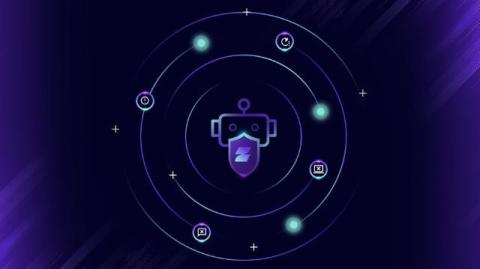
The Shift to Continuous Context and the Rise of Guardian Agents

AI agent risk doesn’t emerge in a single moment. It develops over time across configuration changes, runtime behavior, long-horizon tasks, and interactions between agents, users, and enterprise systems. Their behavior and exposure can shift in real time as agents rewrite instructions, update memory, and dynamically alter execution.

BewAIre: Detecting Malicious Pull Requests at Scale with LLMs

As AI coding assistants accelerate software development, the volume of pull requests at Datadog has grown to nearly 10,000 per week, increasing the risk that malicious changes slip through due to review fatigue. To address this, Datadog built BewAIre, an LLM-powered code review system designed to identify malicious source code changes introduced by threat actors. By reducing approval fatigue for developers while increasing friction for attackers, BewAIre guides human reviewers to the areas where judgment matters most, without slowing developer velocity.