Security | Threat Detection | Cyberattacks | DevSecOps | Compliance

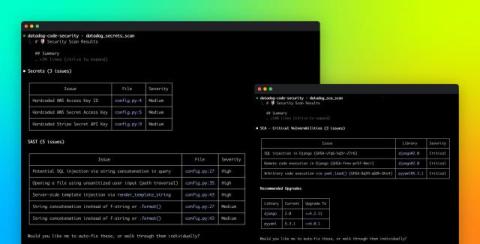
Introducing the Datadog Code Security MCP

AI-assisted development helps teams write code faster, but that speed comes with added security risk. As agents generate more code, they can introduce vulnerabilities, insecure dependencies, or exposed secrets, often before a human reviewer ever sees the change. Security teams are left reviewing more code with the same resources, which makes it harder to catch issues early.
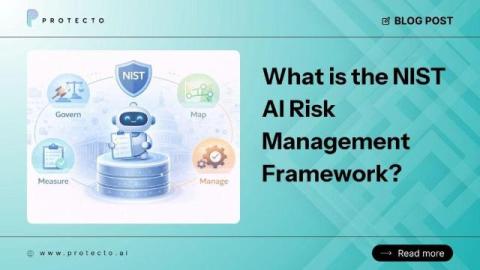

What is the NIST AI Risk Management Framework?

The NIST AI Risk Management Framework is a guide that helps organizations spot and reduce risks in AI systems. This framework was released in January 2023 by the U.S. National Institute of Standards and Technology. The framework is built around four key steps, namely: Govern, Map, Measure, and Manage, and is meant to help teams responsibly use AI. It doesn’t matter which industry you work in or which AI you use; this framework works everywhere.

How Weak AI Governance Is Creating A Security Disaster #cybersecurity #aisecurity

This episode explores why CTEM matters in a world of vibe coding, AI agents and rapidly expanding attack surfaces. It covers prompt injection, hidden threats, deepfakes, weak governance and the growing fear that businesses are deploying AI far faster than security teams can understand or control it.

The Agentic Identity Crisis: Why Your AI Agents Are Your Biggest Identity Blind Spot in 2026

An intern gets admin access to production for a temporary task, but nobody remembers to revoke it. Imagine that intern works at machine speed, never sleeps, and can chain dozens of actions before you’ve read the Slack ping—and has no instinct for when they’re about to do something irreversible.

IREX Upgrades FireTrack AI for Faster and More Accurate Fire Detection

WASHINGTON, DC - IREX has announced a major update to its FireTrack fire and smoke detection module, introducing significant improvements in speed, accuracy, and operational flexibility across a wide range of environments. According to an article on The Next Web, the updated solution is designed to work seamlessly with existing camera infrastructure, enabling organizations to enhance fire detection capabilities without deploying additional hardware.

Q1 at AlgoSec: What innovations and milestones defined our start to 2026?

As we close out the first quarter of 2026, I find myself reflecting on a start to the year that was defined by product momentum, stronger market validation, growing trust from regulated organizations, and meaningful industry recognition. In just three months, AlgoSec introduced important platform enhancements, published fresh research on where network security is heading, strengthened its standing with government and highly regulated customers, and closed the quarter with three major awards.

What Is AI Data Exfiltration and How Do You Stop It?

AI adoption does not happen uniformly across an organization. Some employees have integrated generative AI (genAI) tools into core parts of their workflow. Others have barely opened one. Most are somewhere in between, experimenting on an ad hoc basis, without consistent visibility into what data those tools handle or where it goes. That variance is the problem. Security programs built around either universal AI adoption or zero AI adoption will miss most of the actual risk.

Using Agentic AI to Scale Threat Detection in Healthcare

For every human in a healthcare organization, there are 82 machine identities—service accounts, API keys, cloud functions, medical devices.2 That's the 82:1 ratio, and it means your team is fundamentally outnumbered. The Change Healthcare breach in 2024, which started with one unprotected Citrix credential and disrupted 40% of US claims processing,1 showed exactly what happens when that ratio goes unmanaged. The numbers back this up.