Security | Threat Detection | Cyberattacks | DevSecOps | Compliance

The Latest Cybersecurity News & Insights From Around The World



The Rules Have Changed AI vs AI #aisecurity #ai
Mend.io, formerly known as Whitesource, has over a decade of experience helping global organizations build world-class AppSec programs that reduce risk and accelerate development -– using tools built into the technologies that software and security teams already love. Our automated technology protects organizations from supply chain and malicious package attacks, vulnerabilities in open source and custom code, and open-source license risks.
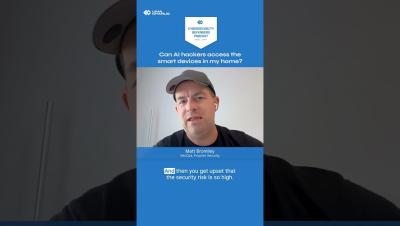
Can AI hackers access the smart devices in my home? #ai #cybersecurity
New research shows how attackers could hijack Google's Gemini AI through a simple calendar invite to control smart lights, shutters, and even boilers. The key insight from our latest podcast is that it's not about the AI vulnerability, it's about network segmentation. The real lesson? Don't give AI systems direct access to your physical devices. The simple fix is to segment your IoT devices on separate networks.

Adapting to the Changing AI Threat Landscape
Adapting to the Changing AI Threat Landscape In this video, A10 Networks' security leaders, Jamison Utter, Madhav Aggarwal, and Diptanshu Purwar, discuss the evolving security risks associated with AI and Large Language Model (LLM) adoption, as well as what organizations must do to stay protected. Diptanshu Purwar outlines key shifts in the approach to AI security.
Complete Guide for SaaS PMs to Develop AI Features Without Leaking Customer PII
Enterprises are making bold, strategic changes in their tech stack to ramp it up by incorporating AI. With positive results of AI showing, investments are rapidly flowing in – but all this does not come without consequences. Today, privacy has become a key concern around safe AI use, especially without strong guardrails. Managing innovation and compliance risks become a challenge for SaaS product managers unless they know the right way of balancing both.

AI Agents in Cybersecurity: Revolutionizing AppSec
We're witnessing a paradigm shift from reactive security tools to proactive, intelligent defenders. AI agents represent the next evolution beyond traditional security systems, fundamentally changing how we approach cybersecurity.
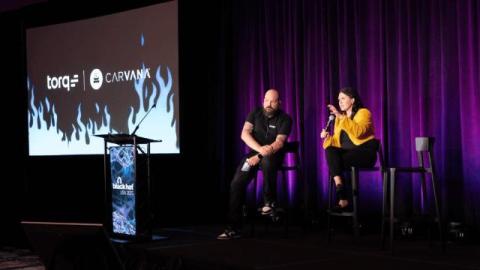
Hyper-AUTO-Mation: Why Carvana's CISO Bet on Agentic AI for 5x SOC Efficiency
CISOs everywhere are feeling the AI fatigue. Every vendor at Black Hat 2025 was hyping ‘AI agents for SecOps,’ so there’s rightfully a lot of skepticism about deploying AI in production, especially in enterprise environments. But the old way of running a SOC just isn’t working anymore. After all the time and money spent on traditional playbooks, we’re still wrestling with the same challenges: alert fatigue, burnout, tool sprawl, and inability to scale.

The Two AI Licenses You Need to Know
Mend.io, formerly known as Whitesource, has over a decade of experience helping global organizations build world-class AppSec programs that reduce risk and accelerate development -– using tools built into the technologies that software and security teams already love. Our automated technology protects organizations from supply chain and malicious package attacks, vulnerabilities in open source and custom code, and open-source license risks.

Secure Cloud Access - CyberArk MCP Server
Take control of cloud access for AI-driven workflows without slowing down your team. CyberArk SCA MCP Server is the latest innovation in identity security, purpose-built for the age of agentic AI. Now available in the AWS Marketplace, CyberArk SCA MCP Server empowers developers and AI agents to securely request elevated access directly from their IDE while enforcing Zero Standing Privileges across multi-cloud environments.

MCP security is non-negotiable for AI-driven organizations
Model Context Protocol (MCP) is gaining traction because it enables LLMs to interact with live systems and enhance context by retrieving and managing relevant real-time information. LLMs can’t query Salesforce, trigger an Okta password reset, or fetch context from your SIEM, for example. MCP bridges that gap by connecting AI models to real-world APIs, powering AI applications like retrieval-augmented generation and multi-step agent workflows. They’re fast to deploy.