Security | Threat Detection | Cyberattacks | DevSecOps | Compliance

Securing AI Workloads in Kubernetes: Why Traditional Network Security Isn't Enough

The AI revolution is here, and it’s running on Kubernetes. From fraud detection systems to generative AI platforms, AI-powered applications are no longer experimental projects; they’re mission-critical infrastructure. But with great power comes great responsibility, and for Kubernetes platform teams, that means rethinking security.

FBI Issues Guidance for Avoiding Deepfake Scams

The FBI and the American Bankers Association (ABA) have issued a joint advisory warning of the growing threat posed by AI-generated deepfake scams. “Criminals may pose as loved ones, government officials, law enforcement personnel, or even celebrities, often using fear and urgency to convince victims to send money or share sensitive information,” the advisory says.

What Is Data Privacy in AI? Explained Simply

If your company is shipping chatbots, copilots, or decision systems, you have probably heard the question many times: what is data privacy in AI, and how do we do it right. The answer is simpler than it looks. Data privacy in AI is a set of habits and controls that limit what personal or sensitive data you collect, how you use it, where you store it, and who can see it. When those habits are part of the build, AI products move faster, customers feel safer, and audits become routine.

Report: Shadow AI Poses an Increasing Risk to Organizations

The use of “shadow AI” is an increasing security risk within organizations, according to a new report from Netskope. Shadow AI is a newer variant of shadow IT, in which employees use unauthorized technology without the knowledge of the IT department. This is generally driven by a desire for increased productivity rather than malicious motives, but employees are often unaware of the risks introduced by unauthorized tools.

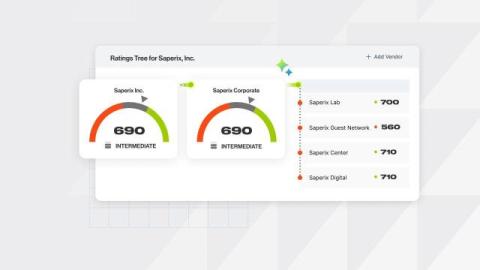
Introducing proactive, AI-powered risk management that breaks the cycle of reactive risk

Risk doesn’t live in just one place—it comes from vendors, suppliers, partners, and from inside your business through processes, people, and systems. ‍ Managing that risk is often fragmented, too. Vendor reviews live in one system, internal issues in another, and leadership reports take hours to compile. And every new vendor, tool, or requirement contributes to another layer of risk.

Bitsight GIA Update: How Gen-AI and LLMs Get You Faster (and Better) Entity Mapping

Bitsight’s mission to keep evolving the capability of our data engine through AI enhancements hit a new milestone today. The latest addition is a new entity mapping capability added to Bitsight AI and the data engine, which uses GenAI agents to create more complete and consistent sets of identifiers for organizations scanned and added to Bitsight’s entity inventory.

Zenity Named a 2025 Cool Vendor in Gartner's Agentic AI TRiSM Report

Your security teams are facing an unprecedented challenge. AI agents are spreading across enterprises faster than anyone anticipated, from Microsoft 365 Copilot processing sensitive emails to custom agents built on AWS Bedrock accessing critical databases. Over 80% of Fortune 500 companies are already deploying these autonomous systems, oftentimes without adequate security guardrails. The result is a rapidly expanding attack surface that conventional security tools simply cannot see or secure.

Apono Releases MCP Server for End Users

We’re excited to announce the launch of our MCP server for end users, designed to boost engineering productivity while keeping security strong. Engineers often know exactly what they need to do—deploy to a new environment, spin up a workload, investigate logs—but not which permissions translate into those tasks. That leads to two common problems: The result is wasted time, frustrated teams, and an inflated attack surface from unnecessary standing privileges.