Security | Threat Detection | Cyberattacks | DevSecOps | Compliance

Latest posts

Sysdig: Align Your Cloud Security Plan with the Cybersecurity Exec Order

Global security breaches and the White House Executive Order (EO) have sped up the timeline to modernize cybersecurity for both the public and private sectors. The way applications are developed and deployed (in the cloud and on containers), means taking a look at cloud security, Zero Trust architectures, and regulatory compliance in order to meet the mandates, keep moving ahead of the hackers and reduce risk.

Sysdig: Securing Google Cloud and Containers

With teams under pressure to accelerate the delivery of applications in the cloud, it can be easy to overlook security. Modern cloud apps require a shift to secure DevOps processes. Are you prepared? Google Cloud's trusted, planet-scale infrastructure helps you deliver services to your users, no matter where they are around the world. Staying on top of misconfigurations, suspicious activity, and threats can be a big challenge.

Introduction to SAST

DevSecOps means countering threats at all stages of creating a software product. The DevSecOps process is impossible without securing the source code. In this article, I would like to talk about Static Application Security Testing (SAST). As development fluency is growing every year, many companies are introducing DevSecOps. Its main message calls for ensuring continuous safety control at every stage of product creation. At the same time, DevSecOps processes are automated as much as possible.

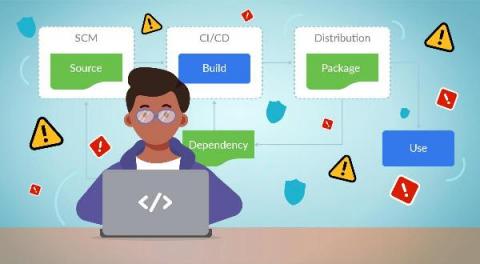
"Chain"ging the Game - how runtime makes your supply chain even more secure

There is a lot of information out there (and growing) on software supply chain security. This info covers the basics around source and build, but does it cover all of your full software supply chain lifecycle? Is your build env at runtime protected? Is your application post deploy protected at runtime? This article will not only discuss what these concepts are, but provide additional discussions around the following: Read on brave reader…

Using Zero Trust to Mitigate Supply Chain Risks

Software supply chain attacks have been on the rise lately. With the current pervasiveness of third-party and open source libraries, which presumably developers cannot control as strongly as the code they create, vulnerabilities in these software dependencies are causing serious security risks to applications. Supply chain attacks abuse the inherent trust that users have with a software provider.

Arctic Wolf Acquires Habitu8 to Advance Security Awareness Training

Arctic Wolf’s acquisition of Habitu8 is a bold step forward in advancing security awareness training programs as attacks like phishing and credential theft continue to thrive. With 85% of attacks against organizations starting with human error, it’s perhaps not surprising that we continue to see low-quality, antiquated, and severely dated content recycled through organizations.

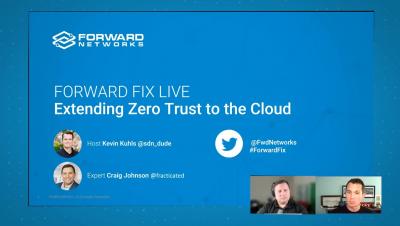
Forward Fix Live: Extending Zero Trust in the Cloud

Trying to make sense of your cloud security posture shouldn't mean flipping between multiple screens and inferring how traffic is behaving. Join this live event to see how you can monitor and verify your security posture across multiple clouds on a single screen.

Supply Chain Security, Compliance, and Privacy For Cloud-Native Ecosystems

Think of the software supply chain as every software element in your organization—from software development of internal systems to open source or third-party enterprise software to vendors, partners, and even past suppliers who still hold access to company data or IT systems. Attacks on this software supply chain can damage individual departments, organizations, or entire industries by targeting and attacking insecure elements of your software fabric.