Mailchimp
Not subscribed to OpsMatters Newsletter


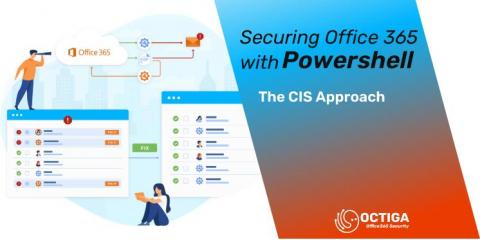
Office 365 is central to your business needs and business continuity. However, it exposes a large (maybe even the largest) risk surface in your organisation. It is, therefore, crucial to secure it enough to mitigate this ever-present and continuous risk but keep it open enough to ensure as fluid a business as possible. Getting this balance right is difficult, and it can be hard to know where to start. Adopting a common security standard can be a great place.
IcedID is a banking trojan, it is designed to be stealthy and built to collect financial information. IcedID harvests user credentials and banking sessions to commit financial crimes, including carding, money laundering, and transferring of funds to foreign financial institutions. In recent research published by Splunk Threat Research Team (STRT) the inclusion of cryptocurrency exchange information was also included by Trickbot in the web inject code.
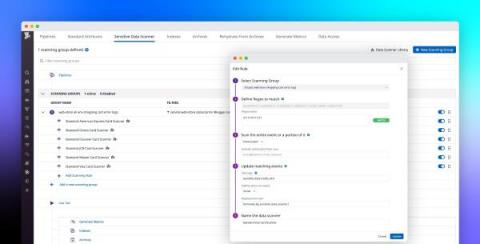
Within distributed applications, data moves across many loosely connected endpoints, microservices, and teams, making it difficult to know when services are storing—or inadvertently leaking—sensitive data. This is especially true for governance, risk management, and compliance (GRC) or other security teams working for enterprises in highly regulated industries, such as healthcare, banking, insurance, and financial services.
Every business has a set of rules and regulations that it must uphold. To maintain compliance, businesses must adhere to the regulations and laws specific to their industry. The problem is, these regulations are constantly changing, and failure to stay up-to-date can lead to serious financial strains and damage to company reputation. Let’s explore how effective compliance management can ensure the continuity and security of your organization.
Reversing binaries is an essential skill if you want to pursue a career as exploit developer, reverse engineer or programming. The GNU Project debugger is a widely used debugger for debugging C and C++ applications on UNIX systems. A debugger is a developer's best friend to figure out software bugs and issues. This tutorial intends to be beneficial to all developers who want to create reliable and fault-free software.
With millions of apps being released every day and ever-changing feature additions, it is more important than ever for enterprises to focus on security to prevent data breaches. According to Checkpoint, in 2020, 97 per cent of enterprises were confronted with mobile threats employing a variety of attack vectors. What is Mobile Security Testing Guide (MSTG)? The MSTG is a comprehensive manual for mobile app security testing.
In a previous blog post, we showed how type manipulation (or type confusion) can be used to escape template sandboxes, leading to cross-site scripting (XSS) or code injection vulnerabilities. One of the main goals for this research was to explore (in the JavaScript ecosystem) how and if it is possible to bypass some security fixes or input validations with a type confusion attack (i.e by providing an unexpected input type).
Most container images are built using Dockerfiles which contain combinations of instructions like FROM, RUN, COPY, ENTRYPOINT, etc. to build the layers of an OCI-compliant image. One instruction that is used surprisingly rarely, though, is LABEL. In this post, we’ll dig into labels (“annotations” in the OCI Image Specification) what they are, some standardized uses as well as some practices you can use to enhance your container security posture.